
Spotting a puddle of water behind your refrigerator is concerning, but it usually points to one of a few common and fixable issues. A leak from the back corner is often a sign of a problem with the defrost system, a damaged water supply line, or excessive condensation.
This guide will walk you through the most common causes and safe troubleshooting steps to help you identify and resolve the issue.
What a Puddle Behind Your Fridge Really Means
Your refrigerator’s water management system is malfunctioning if there is a puddle of water behind it. Modern refrigerators are built to manage moisture from automatic defrost cycles and the cooling process. This water is supposed to evaporate in a pan at the bottom of the unit after passing through a drain. A puddle indicates that this process has been interfered with.
The leak may be continuous, indicating an issue with the water supply line, or sporadic, occurring only during the defrost cycle. The first step in finding a solution is identifying the source.
Quick Guide to Refrigerator Leaks from the Back Corner
This table outlines the common culprits, their symptoms, and the recommended actions.
| Potential Cause | Common Symptoms | Recommended Action |
|---|---|---|
| Clogged Defrost Drain | Puddles appear periodically. You might also see ice buildup inside the freezer, especially at the back. | Safely clear the drain tube using warm water. This often resolves the issue. |
| Damaged Water Line | A constant, slow drip or a fine spray is visible behind the fridge. The ice maker or water dispenser may also malfunction. | Shut off the water supply to the refrigerator immediately. Check for loose connections or call a professional to replace the line. |
| Cracked Drain Pan | A steady puddle forms directly under the refrigerator and does not evaporate. | Inspect the drain pan for cracks or damage. A broken pan must be replaced. |
Addressing the leak quickly is crucial to prevent secondary issues.
Keep in mind that a leak can sometimes be a symptom of a larger issue, like the fridge struggling to maintain its temperature. For more on that, see our guide on refrigerator temperature problems and their causes.
How to Diagnose and Clear a Clogged Defrost Drain
A clogged defrost drain is a primary cause of water leaking from the back corner of a refrigerator. During the defrost cycle, melted frost flows down a small tube to a drain pan. If this tube becomes blocked with food particles, ice, or debris, the water backs up and overflows, eventually leaking onto the floor.
This flowchart illustrates how issues with the defrost system, water line, or condensation can lead to a leak.
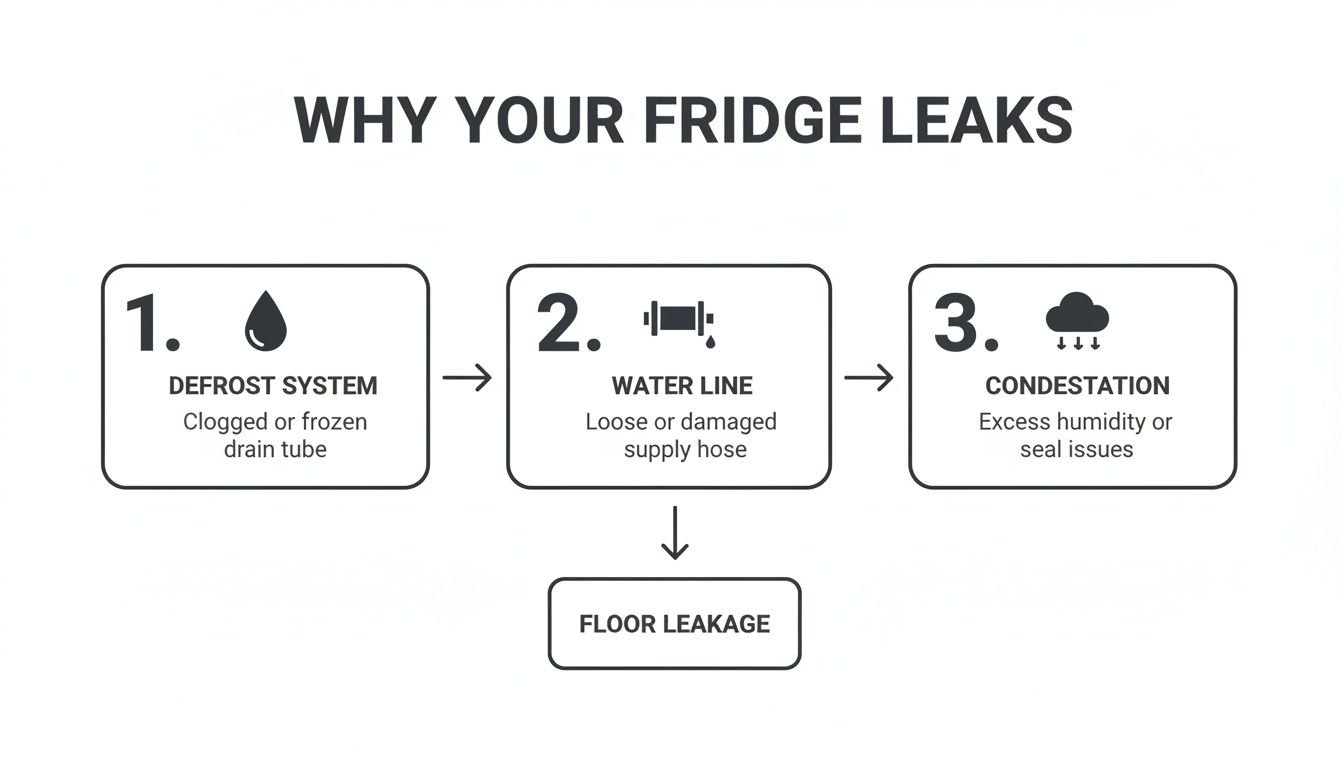
As you can see, a failure anywhere in the water management system can cause water to end up where it shouldn’t be.
Locating and Inspecting the Defrost Drain
First, unplug your refrigerator. The defrost drain is typically located at the bottom of the back panel inside the freezer compartment.
- You may need to remove a plastic panel, often held by screws or clips, to access it.
- A sheet of ice or heavy frost covering the drain hole is a clear sign of a frozen clog.
Once you have located the drain, you can proceed with clearing it.
Safety First: Always disconnect your refrigerator from its power source before you do any kind of inspection or maintenance. Water and electricity are a dangerous mix.
Clearing the Blockage Safely
You can often clear a simple clog with common household items.
- Melt Surface Ice: To gently melt any ice at the drain hole, use towels soaked in warm water or a hairdryer set to low heat. Avoid chipping at the ice with a sharp object as this could pierce the freezer lining and result in irreversible damage.
- Flush the Drain: Pour warm water—not boiling—into a turkey baster. Squeeze hard after placing its tip over the drain hole. Frequently, the pressure is sufficient to remove the obstruction.
- Check Your Work: The issue is probably resolved if the water drains. The blockage is more obstinate if it pools once more. To break up dirt in the drain, carefully move a thin, flexible pipe cleaner into it. Then, flush it again with warm water.
Hard water can contribute to mineral buildup, causing clogs to form more frequently. If you suspect the defrost system itself is faulty, learn more about why your fridge is not defrosting properly.
Checking Your Door Seals for Costly Air Leaks
Your refrigerator may leak from the back corner due to a bad door seal. The rubber gasket surrounding the door cannot produce an airtight seal if it is dusty, damaged, or warped. This permits the appliance to be filled with warm, humid air.
The constant flow of warm air makes the cooling system work harder and produces more condensation than the defrost system can manage. The extra water seeps onto your floor when the defrost drain trough overflows, usually from a rear corner.
The Simple Dollar Bill Test
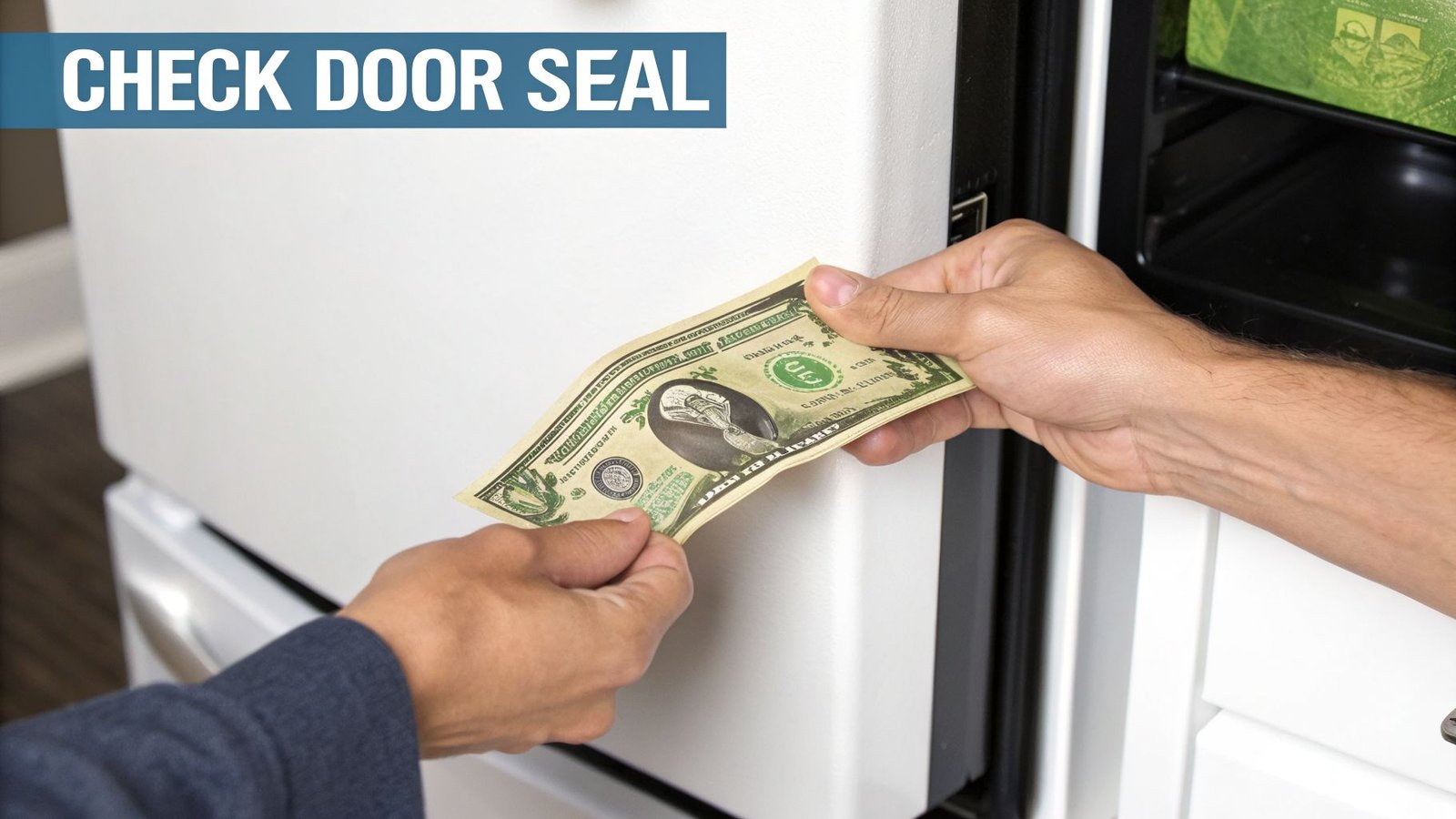
To determine whether your door seal is defective, apply the “dollar bill test.”
Place a dollar bill (or any paper note) between the gasket and the frame, leaving half of it outside, after opening the refrigerator door.
Try to extract the bill by closing the door.
The seal is probably working in that location if you experience resistance. You’ve discovered a breach where warm air is entering if the bill falls out with ease. To find any possible weak points, repeat this test on the sides, top, and bottom of the freezer and refrigerator doors.
Cleaning vs. Replacing Your Door Gaskets
Sometimes, a thorough cleaning is sufficient. Dirt and grime can prevent the gasket from sealing properly.
- For Cleaning: Use a soft cloth with warm, soapy water to gently wipe down the entire gasket. Pay close attention to the folds where debris can accumulate.
- When to Replace: Cleaning won’t be sufficient if you see obvious tears, fissures, or brittle places, or if the gasket feels rigid and hard. To guarantee a good seal and halt the leak, the gasket needs to be changed.
A bad seal doesn’t just cause messy leaks; it also forces your fridge to run constantly, which drives up your energy bill. Taking a few minutes to check and clean your gaskets is simple maintenance that can save you a lot of money and hassle down the road.
If you’re noticing this problem specifically on your freezer, our guide can offer more detailed advice on why your freezer door is not sealing properly.
Inspecting the Water Line and Inlet Valve for Drips
A water supply line connects your refrigerator to your home’s plumbing if it contains an ice maker or water dispenser. This line, which is usually made of copper or plastic, connects to the appliance’s rear water inlet valve. A puddle in the back corner is frequently caused by a leak from this connection.
Over time, refrigerator vibrations can loosen fittings, and the plastic line can become brittle and crack. A tiny pinhole leak can release a surprising amount of water.
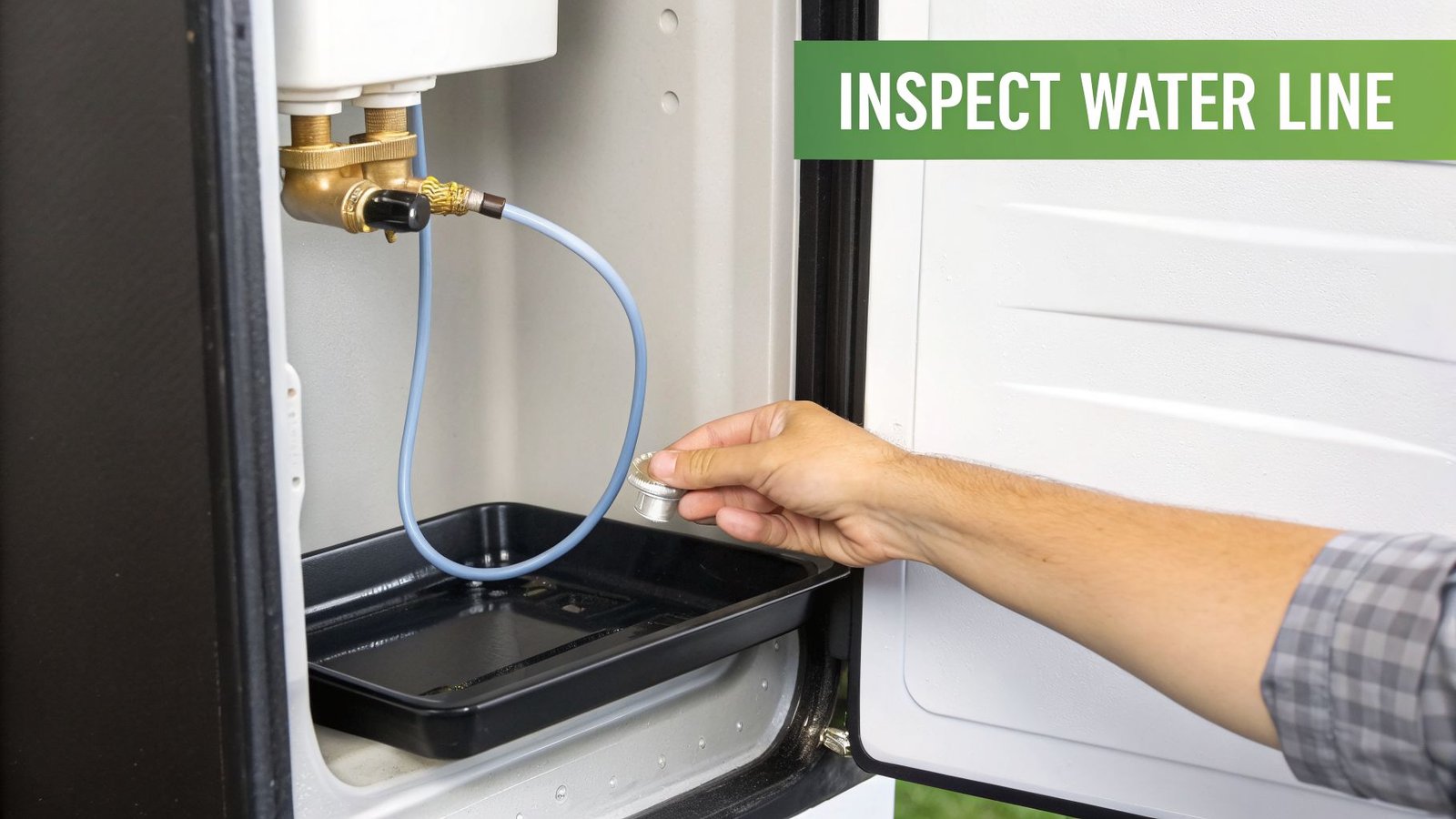
Another common point of failure is the water input valve. This part regulates the water supply to the dispenser and ice maker. Hard water mineral accumulation might keep the valve from shutting all the way, causing a steady, sluggish trickle.
How to Safely Check for Leaks
Safety is paramount when working with water and electricity. Follow these steps carefully.
- Shut Off the Water: Locate the shut-off valve for the refrigerator’s water line, usually found under the kitchen sink or in the basement below the kitchen. Turn the handle clockwise to close it.
- Unplug the Refrigerator: Pull the plug directly from the wall socket to eliminate the risk of electrical shock.
- Gently Move the Fridge: Carefully pull the refrigerator away from the wall to create enough space to work. Be careful not to kink or damage the water line.
With the back of the refrigerator exposed, use a flashlight to inspect the water line and its connections.
Spotting a Damaged Line or Valve
Now, investigate for any signs of moisture.
- Trace the Water Line: Run a dry paper towel or your fingers along the entire length of the water line, from the wall to the refrigerator. Check for dampness, cracks, kinks, or brittle sections.
- Check the Connections: Pay close attention to the threaded fittings where the line connects to your home’s plumbing and to the water inlet valve. Leaks often occur at these points due to vibration.
- Look for Mineral Deposits: Examine the water inlet valve for white or greenish crusty buildup. This is a tell-tale sign of a slow, long-term leak caused by hard water minerals, an issue that contributes to larger infrastructure challenges.
Hard water can cause inlet valves to fail more quickly. A faulty valve can leak a significant amount of water if not addressed.
Call a Professional Immediately If: You discover a clearly leaky inlet valve or a damaged water line. Never try a band-aid solution. A minor leak might become a significant flood if it is repaired incorrectly. A skilled technician can safely repair the component using the right parts and equipment.
Regularly changing your water filter can also reduce stress on the water system. For general guidance, see our article on how to change a Maytag refrigerator water filter, which provides tips applicable to most brands.
When You Should Stop and Call an Appliance Technician
While many refrigerator leaks are DIY-fixable, it’s important to know when to call a professional. Attempting complex repairs without the proper knowledge can lead to more significant damage or create safety hazards.
Persistent Leaks After Basic Fixes
If the leak persists after flushing the defrost drain, inspecting the water line, and checking the door seals, the issue is probably more complicated. A malfunctioning defrost timer, a malfunctioning defrost heater, or an internal obstruction requiring specialized equipment could be the cause. If troubleshooting doesn’t work, more harm could result.
Visible Damage to Key Components
Some components are not safe or practical for a homeowner to replace.
Call a technician if you see any of the following:
- A Cracked or Corroded Water Inlet Valve: If the valve body has a crack or is covered in corrosion, it needs professional replacement. This task involves both water and electrical connections.
- A Damaged Water Supply Line: If the plastic or copper line is cracked, kinked, or brittle, it must be replaced. A technician will ensure the new line is installed correctly to prevent future leaks.
- Water Near Electrical Parts: This is a critical safety issue. If you see water dripping onto or pooling near any wiring, the compressor, or the power cord, unplug the refrigerator immediately. An expert must resolve this electrical hazard.
High-end, built-in refrigerators like Sub-Zero, Miele, or JennAir have complex, integrated systems. Their parts are often unique and their repair procedures require factory-specific knowledge. Attempting a DIY fix on these models can void your warranty and lead to extremely costly damage. Always call a factory-trained technician for premium brands.
A professional’s diagnostic process is designed to find the true source of the leak, ensuring the correct part is replaced the first time. If you feel unsure, learning when to call an appliance repair technician can provide clarity and peace of mind.
Common Questions About Refrigerator Leaks
Finding water near your refrigerator can be stressful. Here are answers to some of the most common questions homeowners have.
How Much Does It Cost to Fix a Leaking Refrigerator?
The cost to fix a leaking refrigerator depends on the cause. A simple repair, like clearing a clogged defrost drain, is relatively inexpensive as it requires minimal time and no parts.
However, if a major component like the water inlet valve, ice maker, or water line has failed, the cost will be higher due to the price of the part and the labor involved. The model of your refrigerator also affects the cost, as parts for high-end brands are typically more expensive. For an accurate estimate, it is best to have a professional technician diagnose the problem.
Is a Small Refrigerator Leak a Big Deal?
Yes. Even a small puddle should be addressed immediately. Ignoring a seemingly minor drip can lead to significant and costly damage over time.
Constant moisture can seep into your flooring and subfloor, causing wood to warp, laminate to bubble, and vinyl to peel. It also creates a damp environment perfect for mold and mildew growth, which can lead to structural damage and health concerns. Furthermore, a leak is often a warning sign of a larger issue with the appliance that could worsen.
Can I Still Use My Refrigerator If It Is Leaking?
In many cases, yes. If the leak is small and you can manage the water with a towel or pan, you can typically continue using the refrigerator while you diagnose the problem or wait for a technician.
For your own safety, you must take immediate action if you notice any water around the compressor area, the wall outlet, or the power cord of the refrigerator. Immediately unplug the refrigerator from the wall and cut off the water supply. There is a serious risk of electrical shock or fire when water and electricity are combined.
Why Does My Fridge Only Leak Sometimes?
One of the most common signs of a defrost system problem is an intermittent leak. To remove frost from the evaporator coils, your refrigerator performs a defrost cycle multiple times a day. The defrost drain may only overflow if there is more meltwater than usual if it is partially clogged.
For this reason, a puddle may appear one day but not the next. This discrepancy shows that the drainage system needs to be fixed before the partial obstruction turns into a full blockage, which would result in a messier and more persistent leak.
If you’re dealing with a stubborn leak or would rather have an expert handle the diagnosis, Advance Appliance Ltd is here to help. Our certified technicians serve Edmonton, Calgary, Red Deer, and the surrounding areas, delivering fast, reliable repairs. Book your service online today and let us fix the problem for good.