Deciding between an electric and gas dryer can feel complicated, but the choice often comes down to a simple trade-off: gas dryers cost more upfront but are cheaper to run, while electric dryers are less expensive to buy but cost more on your monthly utility bills. For homeowners in Edmonton, Calgary, and Red Deer, understanding this key difference is the first step. At Advance Appliance Ltd, we help homeowners make this choice every day, ensuring their new appliance is a perfect fit for their home and budget.
What the Electric vs. Gas Dryer Decision Means for You
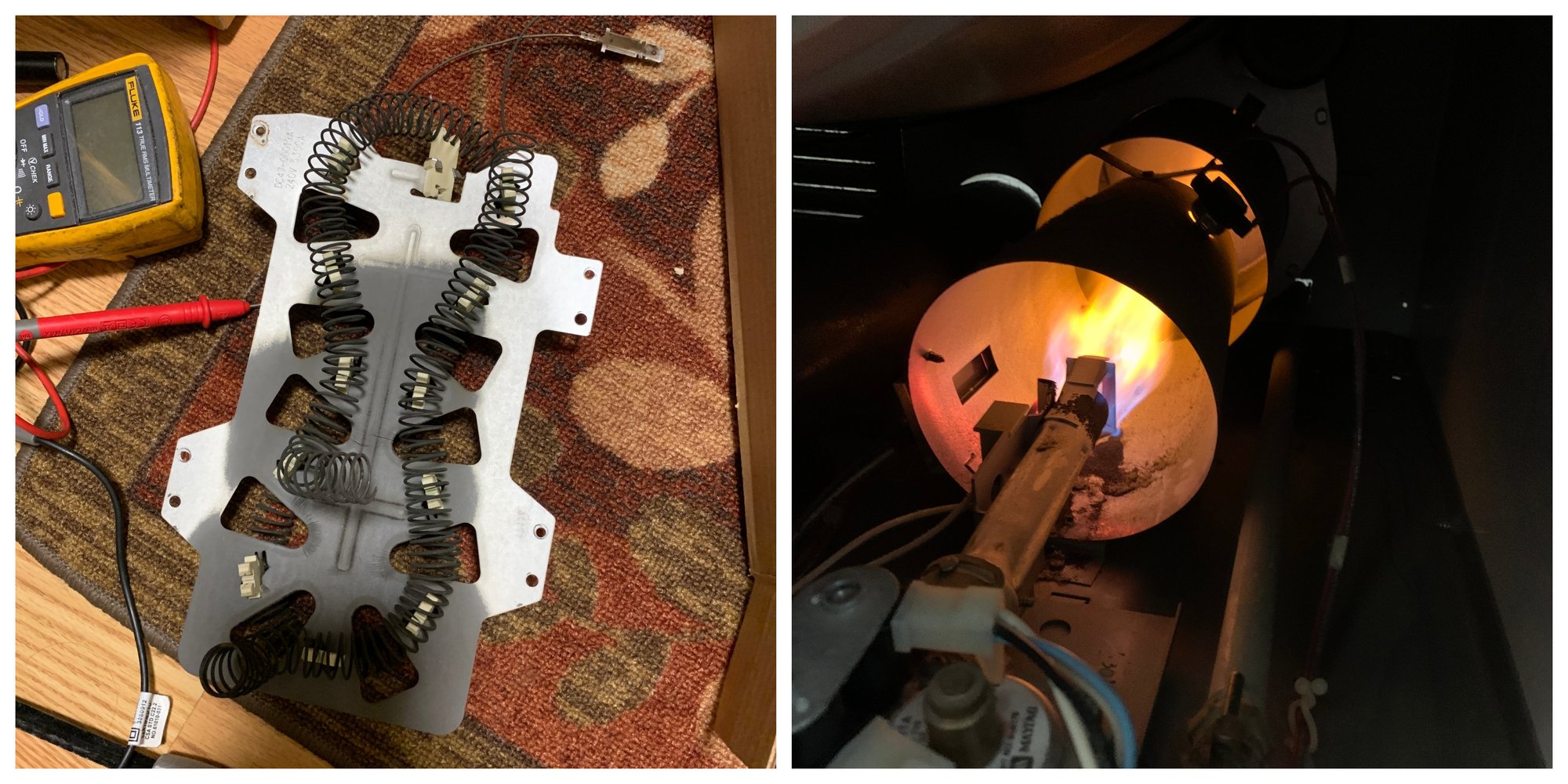
Choosing between an electric and a gas dryer is more than just picking a machine; it's a decision that impacts your wallet, your home's infrastructure, and your laundry routine for the next decade. The primary difference lies in how each appliance generates heat, which directly influences everything from installation requirements to long-term operating costs.
Homeowners typically face this decision when:
-
Purchasing a new home: The existing hookups in the laundry room often dictate the choice.
-
Replacing an old dryer: Deciding whether to stick with the current fuel type or switch.
-
Experiencing poor drying performance: Realizing their current dryer isn't efficient for their family's needs.
For Albertans, the relatively low cost of natural gas makes this a particularly important financial consideration. The "better" dryer is the one that aligns with your home's existing connections and your family's laundry volume.
Quick Comparison: Electric vs. Gas Dryer at a Glance
This table breaks down the core differences between the two dryer types to help you quickly identify which might be a better fit for your household in Edmonton, Calgary, or Red Deer.
| Factor | Electric Dryer | Gas Dryer | Winner for Most Alberta Homes |
|---|---|---|---|
| Upfront Cost | Lower ($600–$1,500) | Higher ($700–$1,800) | Electric |
| Operating Cost | Higher (uses more expensive electricity) | Lower (uses cheaper natural gas) | Gas |
| Installation | Simple plug-in to a 240V outlet. | Requires a gas line and a 120V outlet. | Electric (if 240V outlet exists) |
| Drying Speed | Slower; heating element takes time. | Faster; gas burner provides instant heat. | Gas |
| Maintenance | Simpler; fewer specialized parts. | More complex; gas components require pros. | Electric |
| Safety | Lower risk; no combustion. | High safety with pro installation/maintenance. | Tie (when installed correctly) |
If you're interested in a wider view, you can learn more about the differences between electric and gas appliances in our detailed guide.
Troubleshooting Common Dryer Problems
Before you decide to replace your dryer, some issues can be resolved with simple troubleshooting. If your current dryer isn't performing well, try these steps first.
Safety Warning: Always unplug your dryer from the wall outlet before performing any checks or maintenance. For gas dryers, shut off the gas supply valve before inspecting any components.
-
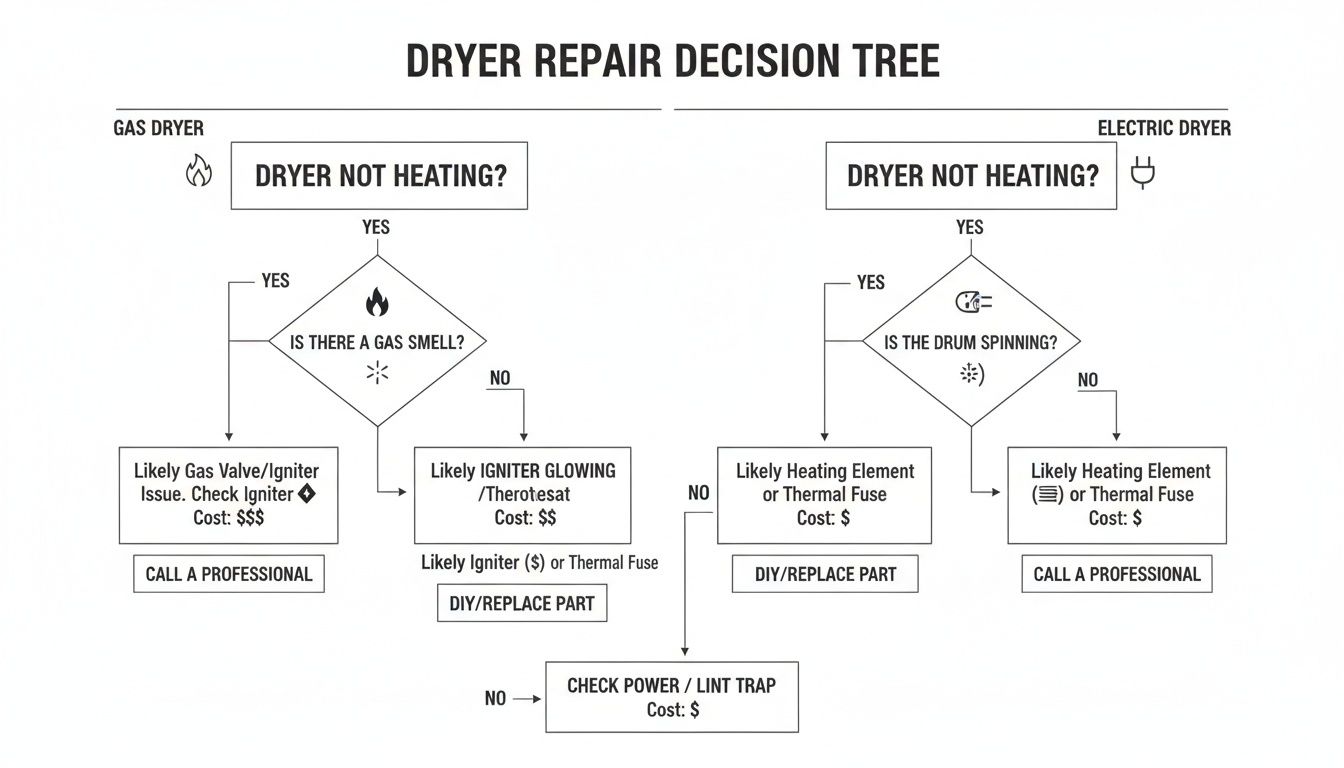
Check the Power Source: For an electric dryer, ensure it's fully plugged into the 240V outlet and that the circuit breaker hasn't tripped. For a gas dryer, confirm it's plugged into its 120V outlet.
-
Clean the Lint Filter: This is the #1 cause of poor drying. Remove the lint screen and clean it thoroughly before every single load.
-
Inspect the Vent Hose: Look behind the dryer. Is the vent hose crushed, kinked, or disconnected? Straighten it out to ensure proper airflow.
-
Check the Exterior Vent Cap: Go outside and find where your dryer vents. Make sure the vent cap isn't clogged with lint, snow, or debris.
-
Listen for Unusual Noises: A thumping or squeaking sound could indicate worn-out drum rollers or a frayed belt, which are signs you need a repair.
-
Run a Timed Dry Cycle: If your automatic cycles aren't working, try a simple timed dry. If it heats on this setting, the issue may be a faulty moisture sensor.
If these steps don't solve the problem, or if you suspect an issue with a gas component, stop immediately. It's time to call a certified technician from Advance Appliance Ltd. for a professional diagnosis.
Dryer Repair Cost Breakdown in Alberta
When your dryer breaks down, understanding potential repair costs helps you make an informed decision. Here are typical prices for dryer repairs in the Edmonton, Calgary, and Red Deer areas.
| Repair Type | Typical Cost Range (incl. Labour) | Notes |
|---|---|---|
| Diagnostic Fee | $120–$150 | The service call fee covers the technician’s travel time and professional appliance diagnosis. This fee is charged separately and is not waived if you choose to proceed with the repair. |
| Heating Element (Electric) | $220–$350 | A common failure point in electric models. |
| Gas Igniter or Coils (Gas) | $250–$400 | Requires a certified gas technician. Pro-only repair. |
| Drive Belt Replacement | $160–$250 | Fixes a drum that won't tumble. |
| Thermal Fuse Replacement | $150–$220 | Often blows due to a clogged vent. |
| Drum Roller Replacement | $200–$300 | Solves loud squeaking or thumping noises. |
Note: Prices are estimates and do not include GST. Costs can vary depending on your specific brand, model, and location within our service areas (Edmonton, Calgary, Red Deer).
Understanding Dryer Failure Rates & Repair Costs
Chart Description: The following chart visualizes a comparison of failure rates and average repair costs for key dryer components between last year (gray bars) and the current year (light blue bars). The data shows that while drive belts fail most frequently, heating elements and gas igniters represent the most significant repair expenses. This year, we've seen a slight increase in the cost of gas-related components due to supply chain factors.
(AI will generate the visual bar chart here based on the description.)
This data highlights why professional diagnosis is critical. A technician can accurately identify the failed part, preventing you from spending money on unnecessary repairs.
Repair vs. Replace: Making the Smart Choice
Deciding whether to repair or replace your dryer involves a simple cost-benefit analysis. Here’s the expert guidance we provide homeowners in Alberta:
-
The 50% Rule: If the estimated repair cost is more than 50% of the price of a new, comparable dryer, replacement is usually the more economical choice.
-
Appliance Age: The average lifespan of a dryer is 10-13 years. If your dryer is approaching or has surpassed this age, investing in a major repair may not be wise, as other components are likely to fail soon.
-
Brand Considerations:
-
Samsung/LG: These brands are known for advanced features, but their specialized parts can be more expensive and sometimes have longer lead times.
-
Whirlpool/Maytag: Generally known for reliability and parts availability, making them good candidates for repair even when they're a bit older.
-
GE/Bosch: Solid performers, but certain electronic control board repairs can be costly enough to justify replacement.
-
Ultimately, if your dryer has served you well for over a decade and now needs a costly repair, putting that money toward a new, more efficient model is often the best long-term investment. For a deeper dive into specific models, check out our complete types of dryers comparison guide.
Preventive Maintenance Tips for a Longer Dryer Life
Proper maintenance is the key to maximizing your dryer's lifespan and efficiency, regardless of whether it's gas or electric.
-
Clean the Lint Screen After Every Load: This is the single most important task for safety and efficiency.
-
Clean the Dryer Vent Annually: Have the entire vent duct—from the dryer to the exterior wall—professionally cleaned once a year to prevent fire hazards and improve performance.
-
Don't Overload the Dryer: Cramming too many clothes in at once restricts airflow, strains the motor, and leads to damp laundry.
-
Use the Right Cycles: Use automatic/moisture-sensing cycles to prevent over-drying, which saves energy and is gentler on your clothes.
-
Wipe Down the Interior: Periodically clean the inside of the drum with a soft cloth and mild soap to remove residue from dryer sheets.
-
Check the Levelness: Ensure your dryer is perfectly level to prevent excessive vibration and noise, which can damage components over time.
-
Schedule a Professional Tune-Up: An annual inspection by a certified technician can catch small issues like worn belts or rollers before they become major breakdowns.
For a comprehensive guide, review our dryer maintenance checklist to fire-proof your home.
Brand-Specific Considerations
While most dryers operate on similar principles, some brands have known quirks. Here's what our technicians see in the field across Alberta.
Samsung
-
Known Issues: Prone to issues with idler pulleys causing noise, and moisture sensors can sometimes fail, leading to inaccurate drying times.
-
Parts Availability: Generally good, but some electronic components can have delays.
-
Difficulty: Moderate. Accessing internal components can be complex due to their compact design.
LG
-
Known Issues: Clogged vents can easily trigger the "Flow Sense" error code. Some models have had issues with drum welds failing over time.
-
Parts Availability: Very good for common parts like belts and rollers.
-
Difficulty: Moderate to High. Smart diagnostic features are helpful, but internal repairs require precision.
Whirlpool
-
Known Issues: Extremely reliable, but common repairs include replacing thermal fuses and heating elements after years of service.
-
Parts Availability: Excellent. Parts are widely available and affordable.
-
Difficulty: Low to Moderate. Their straightforward design makes them one of the easiest brands to repair.
GE
-
Known Issues: Some models can develop squeaks from worn drum slides or bearings. Control boards can be a costly failure point.
-
Parts Availability: Good. A massive inventory of parts is available across North America.
-
Difficulty: Moderate. Standard repairs are straightforward.
Bosch
-
Known Issues: Known for quiet and efficient operation, particularly their compact, ventless models. Lint filter systems require diligent cleaning to avoid issues.
-
Parts Availability: Good, but can be more expensive than domestic brands.
-
Difficulty: High. European engineering often means repairs are more complex and require specialized knowledge.
Maytag
-
Known Issues: Built for durability (often sharing platforms with Whirlpool). Common repairs after long-term use include motor or roller replacement.
-
Parts Availability: Excellent. Easy to source parts for almost any model.
-
Difficulty: Low to Moderate. A technician favourite for ease of repair.
Frequently Asked Questions (FAQ)
Here are the most common questions our technicians hear from homeowners across Edmonton, Calgary, and Red Deer about electric and gas dryers.
Is a gas dryer safe to have in my home?
Yes, absolutely. When installed by a licensed professional and properly maintained, modern gas dryers are extremely safe. They are equipped with multiple safety features, like flame sensors and automatic gas shut-off valves, to prevent any risk.
Can I convert an electric dryer to gas or vice versa?
No, this is not possible. The internal components, electrical systems, burners, and safety controls are fundamentally different. You must purchase an appliance that matches your home's available utility connection.
Do I need a special vent for a gas dryer?
Both types require a dedicated, 4-inch rigid or semi-rigid metal vent that leads to the outside. However, proper venting is especially critical for gas dryers, as the vent removes moisture and byproducts of combustion. Never use flimsy plastic or foil venting.
Which dryer is better for the environment?
It's a trade-off. Gas dryers use a fossil fuel but are more energy-efficient, running for shorter times and thus using less total energy per load. Electric dryers have no direct emissions, making them a greener choice if your home is powered by renewable electricity. For the typical Alberta energy grid, a gas dryer's efficiency often gives it a slight edge.
How much can I really save with a gas dryer?
For a typical family in Alberta, a gas dryer can save between $50 and $100 per year on utility bills compared to an electric model. Over its 10-13 year lifespan, these savings will easily pay for the higher initial purchase price.
When should I call a technician for my dryer?
You should call a professional if:
-
The dryer doesn't heat at all.
-
You smell gas (shut off the gas supply and call immediately).
-
The drum won't turn.
-
It's making loud grinding, squealing, or thumping noises.
-
You receive an error code you can't clear.
Final Summary: Making the Right Choice
The "electric versus gas dryer" debate is ultimately decided by your home's infrastructure and your family's needs.
-
A gas dryer is the long-term winner for cost-savings and performance, provided you already have a gas line in your laundry room.
-
An electric dryer is the practical, affordable choice for homes without a gas hookup or for households with lower laundry volumes.
The most critical factor for either type is professional installation and regular maintenance. An improperly installed or clogged dryer is inefficient at best and a serious safety hazard at worst. For a definitive diagnosis of your current dryer's issues or expert advice on a new purchase, a professional assessment is always the safest and most effective solution.
Need Expert Dryer Repair or Installation?
If your dryer is acting up or you need a new one installed correctly, the certified technicians at Advance Appliance Ltd. are here to help. We service Edmonton, Calgary, Red Deer, and surrounding communities with expertise you can trust.
For Service in Edmonton:
📅 Book Your Appointment Online
📞 Or Call Us: 587-882-3225
For Service in Calgary
📅 Book Your Appointment Online
📞 Or Call Us: 587-997-3019
Same-day or next-day appointments are often available. All our work is backed by a comprehensive warranty on parts and labour.