

A foreign object that got into a moving part of your dishwasher is nearly always the cause of the grinding sound. Things like a fruit pit, a glass shard, or a stray bit of bone can become stuck in unexpected places. This debris frequently obstructs the food chopper blade, the wash pump, or the drain pump, making a loud, distinct sound.
What That Grinding Sound in Your Dishwasher Means

Although a sudden, shocking noise from your dishwasher is concerning, it usually indicates an issue that can be fixed rather than a complete failure. Finding out what the sound is trying to tell you is the first step to creating a silent kitchen, and the kind of noise is a huge clue.
For example, sporadic, inconsistent grinding is typically indicative of a loose object being thrown around inside the pump housing. On the other hand, a persistent, heavy drone or metallic grinding that lasts the entire cycle can indicate a more significant problem with the drain pump or circulation motor.
.
Quick Guide to Dishwasher Grinding Noises
To help you get started, here’s a quick reference table. Use it to match the sound you’re hearing with its likely cause and the most common fix.
| Potential Cause | Typical Sound | Common Fix |
|---|---|---|
| Food Debris/Foreign Object | Intermittent, rough grinding | Clean the filter and chopper blade area |
| Worn Pump Bearing | Constant, heavy drone or whirring | Replace the circulation or drain pump |
| Failed Motor Bearing | Loud, metallic screeching or grinding | Replace the main motor assembly |
| Broken Impeller | Rattling with grinding; poor washing | Replace the specific pump impeller |
This table provides a good starting point. Now, let’s look at the specific parts you’ll want to check.
Key Components to Check
To pin down the problem, it helps to know the main parts inside your dishwasher. You don’t need to be a technician to understand their function.
- The Filter: This serves as your first line of defense, ensnaring larger food leftovers before they have a chance to cause problems. When you hear noises, the most typical place to start is with a clogged or malfunctioning filter.
- The Chopper Blade: Food is ground up by a tiny, high-speed blade found in many dishwashers, which resembles a mini garbage disposal. Glass and olive pits are examples of hard objects that might clog it and cause severe grinding.
- The Circulation and Drain Pumps: These are the heart of your dishwasher. The circulation pump pushes water through the spray arms, and the drain pump gets rid of it. Debris can easily get stuck in either pump’s impeller—the small spinning fan that moves the water.
Once you understand these parts, the problem becomes much less mysterious. Before assuming the worst, a little investigating often uncovers a simple fix. While some noises indicate a failing part, many other appliance noises can also point to repair needs.
Essential Safety Steps Before You Start
Before you reach for a screwdriver, the most important step is safety. Do not take shortcuts. You must completely disconnect the power to your dishwasher.
Unplugging it from the wall socket, which is typically located beneath the kitchen sink, is all that is required for the majority of types. You must go to your main electrical panel and turn off the dishwasher’s circuit breaker if it is hooked into your home’s electrical system.
Confirming the Power Is Off
Make sure the power is completely off after unplugging it or turning off the breaker. Go back to the dishwasher and attempt to initiate a cycle. You can move forward if the system remains entirely unresponsive and the control panel remains dark. This check is essential because it keeps the machine from starting without warning and shields you from dangerous electrical shock.
Safety Tip: Wear a good pair of cut-resistant gloves. You will be reaching into areas where sharp bits of broken glass, plastic, or metal fragments can hide. A decent pair of gloves is your best protection against a nasty cut.
Remember, working with any appliance involves some risk. If you are questioning whether a DIY repair is right for you, our article on whether it’s safe to repair your own appliances offers expert perspective. Taking these basic precautions isn’t just a suggestion; it’s the foundation of a successful and safe repair.
A Practical Troubleshooting Guide for Homeowners
Now that the electricity has been safely turned off, you may begin your investigation. The majority of the time, the reason behind that terrible grinding sound is surprisingly straightforward. You usually just need your hands and a little time to inspect the typical suspects, and this tutorial will help you through the process.
Start with the Filter Area
Nine times out of ten, the issue is concealed in the filter and sump area at the bottom of the tub. Food scraps, broken glass, and other foreign materials that end up in your dishwasher should be collected here.
To establish a clear area, first slide the bottom rack all the way out and set it aside. You’ll notice the filter assembly, which is often a cylindrical part that can be removed by twisting it counter-clockwise; many have arrows pointing in that way.
Once the main filter is out, you might find a flat mesh screen underneath it. Lift that out as well. Now, give both the filter and the screen a thorough look. Are there coffee grounds, fruit pits, or small bits of plastic stuck in them?
With both filters removed, grab a flashlight and peer down into the sump—the recessed spot where water pools. This is the number one hiding place for whatever is causing the grinding.
Check the Spray Arms for Obstructions
The spray arms should be checked next if the filter area is clean. A spray arm may produce a gentle grinding sound or a rhythmic pounding sound while attempting to spin if it is blocked or continuously strikes something.
You typically have two spray arms to check: one at the very bottom and another just under the top rack.
- Lower Spray Arm: With the bottom rack still out, give the arm a spin. It should move freely without wobbling or catching on anything. If it feels stiff or hits the side of the tub, see if anything has fallen underneath it.
- Upper Spray Arm: Now look under the top dish rack. That smaller arm should also spin without any trouble. It’s common for tall items in the bottom rack—like a cookie sheet or a large platter—to get in its way.
While you’re at it, quickly check the tiny holes on the spray arms. Small seeds can get clogged in them. This won’t cause grinding, but it will affect how well your dishes get cleaned.
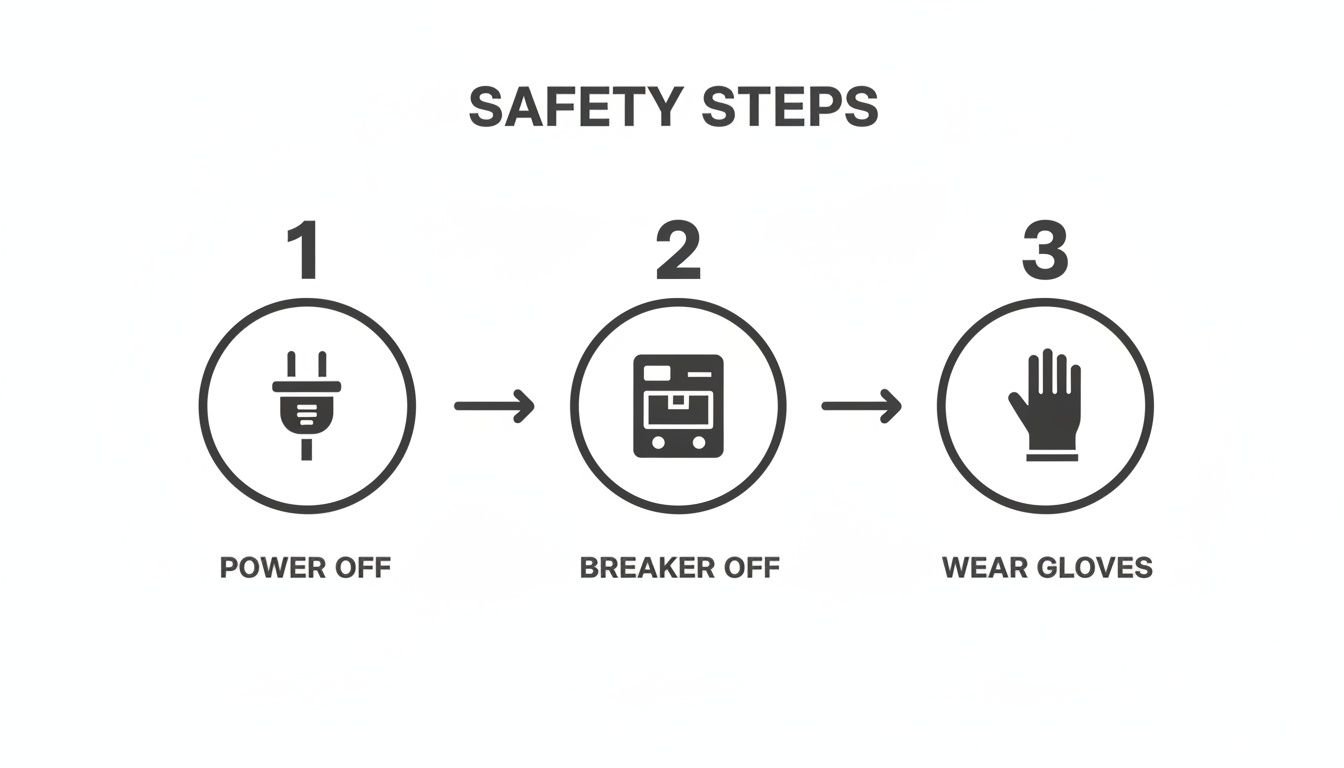
The image above is your go-to safety checklist. Following these three steps—disconnecting power at the source and protecting your hands—is non-negotiable for any DIY appliance check.
Inspect the Food Chopper and Drain Pump Impeller
If you’ve checked the easy spots and found nothing, the culprit might be deeper inside the pump assembly. Depending on your model, you might have a food chopper blade, and every dishwasher has a drain pump with an impeller. Both can be easily jammed by hard debris.
Warning: This part of the job means reaching into an area where sharp objects could be hiding. Always proceed with caution and wear a good pair of protective gloves.
After removing the filters, you can usually access the top of the chopper or pump impeller from inside the tub. You may need to remove a plastic cover, often held by a screw or two, to get a clear view.
Once the cover is off, carefully feel around with your fingers. You’re searching for anything hard—a piece of glass, a chicken bone, or a lost utensil. The impeller looks like a small fan; if it can’t spin freely, it will grind. If your dishwasher has stopped working on top of making noise, the problem might be related. Our guide on troubleshooting a dishwasher that’s not working can help with next steps.
Recognizing Signs of a Deeper Mechanical Failure
Sometimes, the problem isn’t a stray cherry pit you can easily fish out. If you’ve cleaned the filter and sump area but the grinding noise is still there, it’s time to consider a mechanical failure.
The moment the noise occurs is your greatest hint. Does it only happen at the beginning or conclusion of a cycle for a minute or two? A failed drain pump is typically indicated by that timing. This part’s function is to force unclean water out of the bathtub; when internal parts deteriorate, it may make a strained, mechanical groan.
Differentiating Pump and Motor Failure
However, you’re probably dealing with a worn-out main circulation motor if you hear a loud, continuous grinding during the main wash and rinse cycles. Water is blasted through the spray arms by this workhorse, which propels the impeller. No amount of cleaning can stop the loud, metallic sound its bearings make when they fail.
Here’s how you can usually tell the two apart:
- Drain Pump Noise: A shorter groan or growl that you only hear during the drain cycles at the beginning and end of the program.
- Circulation Motor Noise: A much louder, more constant metallic grinding that happens throughout the main washing and rinsing portions of the cycle.
The crucial dividing line is this: if cleaning accessible parts doesn’t solve the problem, you’re likely dealing with component failure. This moves the job from a simple DIY fix to one that requires a professional, as replacing these parts involves disassembling the unit and safely handling electrical connections.
When Disassembly Is Required
Replacing a drain pump or a main circulation motor is not a simple task. The job involves pulling the entire dishwasher out from under the counter, carefully disconnecting the water supply and drain lines, and working with electrical wiring. This is the point where we strongly advise most homeowners to stop and call for professional service.
A mistake here can lead to major water leaks, serious electrical hazards, or even more damage to the dishwasher. For more details on what goes wrong inside these components, our guide on why Whirlpool dishwasher motors fail so often has some great insights.
When You Need to Call a Professional Technician
Knowing when to stop is a crucial component of every successful do-it-yourself repair. Many grinding noises may be fixed on your own, but there are some indicators that you should set down your tools and contact a professional. If a repair seems beyond your capabilities, it most often is.
A serious warning sign is a continuous, noisy, or metallic grinding that persists after the filter and sump have been cleaned. A deeper mechanical breakdown, such as a worn motor bearing or a damaged pump impeller, is typically indicated by that type of noise. These are not easily accessible or replaceable parts.
When the Repair Requires Disassembly
Any job that requires you to physically pull the dishwasher out from under the counter is entering professional territory. This is necessary to access core components like the circulation motor and the drain pump.
Trying these advanced repairs on your own comes with serious risks:
- Water Damage: If you don’t disconnect or reconnect the water lines perfectly, you could end up with a slow leak or a full-on flood, causing expensive damage to your cabinets and floors.
- Electrical Hazards: Dishwashers are connected to high-voltage electricity. Working on those connections without proper training can lead to a serious electrical shock.
- Further Appliance Damage: One small mistake during a complex repair can easily break other parts, turning a single problem into a much more complicated and costly issue.
Bottom line: If the job involves more than removing racks and filters inside the tub, it’s time to call for professional help. Your safety should always come first.
The Value of Professional Expertise
In addition to their skills, a qualified technician has sophisticated diagnostic equipment that most homeowners do not. To determine precisely what has broken, for example, they can safely test electrical components like the water inlet valve or motor windings using a multimeter.
This accurate diagnosis is crucial. It ensures the right part is ordered and replaced, saving you the time, money, and guesswork. An expert can swap out a pump or motor efficiently while following safety protocols to protect your home and appliance. For more on this, our article explaining when to call an appliance repair technician offers extra guidance.
Ultimately, hiring a professional for a complex dishwasher making grinding noise issue is an investment in your safety and peace of mind.
Simple Habits to Prevent Future Grinding Noises
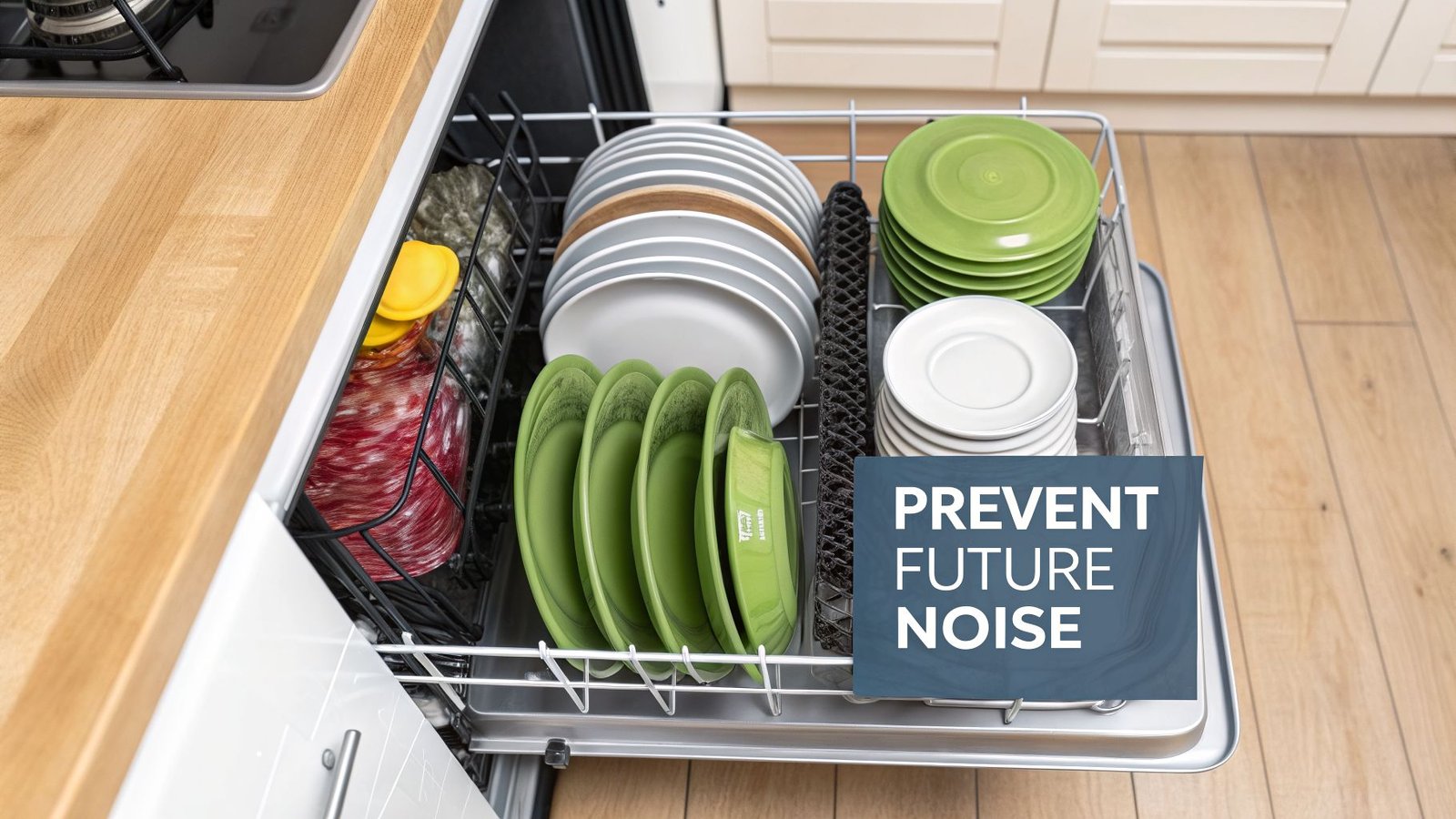
Now that your dishwasher is operating silently once more, let’s maintain that state. You can stop that terrible grinding sound from coming back by adopting a few easy behaviors. A little preventive is your greatest line of protection because the majority of these problems begin with tiny particles.
It starts before a single dish is loaded. Scrape your plates with diligence. Pre-rinse them is not necessary, but it is imperative to remove large food scraps, bones, fruit pits, and twist ties. These are the primary offenders who can get past the filter and obstruct the chopper blade or drain pump.
Monthly Maintenance Reminders
A little proactive care goes a long way. I recommend setting a recurring reminder on your phone for these quick monthly tasks to keep your machine in top shape.
- Clean the Filter: This is the single most important habit. Once a month, take five minutes to remove the filter assembly and rinse it under warm water. This stops gunk from building up and becoming a problem.
- Check the Spray Arms: Give the spray arms a quick spin by hand. They should move freely without resistance. While you’re at it, make sure no tall items like spatulas or cookie sheets are blocking their path—that’s a common cause of knocking and poor cleaning.
- Inspect the Sump: With the filter out, use a flashlight to peek into the sump area at the bottom of the tub. It’s your best chance to spot any stray debris, like a piece of glass or a popcorn kernel, that might have slipped through.
For homeowners in areas with hard water, mineral buildup can be just as problematic as food debris. Using a high-quality rinse aid or a dedicated dishwasher cleaner monthly can make a huge difference by reducing limescale deposits that can coat the motor and pump.
These simple, consistent actions protect your dishwasher’s sensitive mechanical parts, helping extend its lifespan and ensuring it runs as smoothly and quietly as possible.
Frequently Asked Questions
Still have questions? Here are a few common ones we hear from homeowners dealing with a noisy dishwasher, along with straight answers from our technicians.
Is It Safe to Run My Dishwasher If It Is Grinding?
No. If you hear a grinding sound, stop the dishwasher immediately. Think of it as your appliance’s check engine light—something is wrong.
That noise means a foreign object or a failing part is interfering with a moving component, like the chopper blade or pump impeller. Continuing to run the machine can turn a simple fix, like removing a stray cherry pit, into a major repair. You risk destroying the pump or burning out the main motor, which is a far more expensive problem.
How Much Does It Cost to Fix a Grinding Dishwasher?
The cost to fix a grinding dishwasher depends on the cause. If the issue is just a piece of glass or bone stuck in the pump that a technician needs to clear out, you might only pay for the diagnostic and service call.
However, if that grinding has already damaged a part, the price will be higher. A new circulation pump or main motor is a significant expense. The only way to know for sure is to get an accurate quote from a professional who can diagnose the problem on-site.
Our Takeaway: Since the final cost hinges on the specific cause, your dishwasher model, and your location, a diagnostic visit is the most reliable first step. A technician can tell you if it’s a 15-minute fix or if you’re looking at a major part replacement.
What Should I Do If My Brand New Dishwasher Is Grinding?
A grinding noise in a brand-new appliance is not normal, but it can happen. The cause is often a stray piece of shipping material left over from the factory or an installation-related issue.
Do not try to fix this yourself. Your new dishwasher is under warranty, and opening it up will almost certainly void that coverage. Your best move is to immediately contact the retailer or the manufacturer and schedule a warranty service call. Let their certified technician handle it.
If you’ve tried the simple fixes and that awful grinding sound won’t quit, it’s time to call in the professionals. The team at Advance Appliance Ltd. offers same-day and next-day service across Edmonton, Calgary, and Red Deer to accurately diagnose and repair your dishwasher. Book your service online and let our licensed technicians restore peace and quiet to your kitchen.