
When your LG refrigerator stops cooling or starts making strange noises, it's more than an inconvenience, it's a race to save your food and restore order to your kitchen. This guide is designed to help you understand what's happening, identify simple DIY checks, and know when it’s time for a professional refrigerator repair LG service.
Your First Steps for LG Refrigerator Repair
We’ll walk you through the most common LG refrigerator problems our technicians see every day in Edmonton, Calgary, and Red Deer, from simple leaks to complete cooling failure. Our goal is to provide clear, experience-based advice so you can make an informed decision.
Here’s what this guide will help you accomplish:
-
Connect common symptoms to their likely causes.
-
Perform safe, basic troubleshooting steps yourself.
-
Recognize the clear signs that it’s time to call a certified technician.
-
Understand realistic repair costs and the repair vs. replace dilemma.
Before you dive in, reviewing these things you should do before getting your appliance repaired can make the repair process smoother and save you time.
Diagnosing Common LG Refrigerator Problems
When your LG refrigerator acts up, it sends clear signals. As technicians, we know that most issues fall into a few common categories. Understanding these clues can help you identify the root cause and determine the right next step.
This section is your field guide to troubleshooting. We'll cover frequent symptoms, from a warm fridge to a malfunctioning ice maker, and provide safe checks you can perform. We will also be very clear about when to stop and call a professional for a safe and effective Refrigerator Repair LG service.
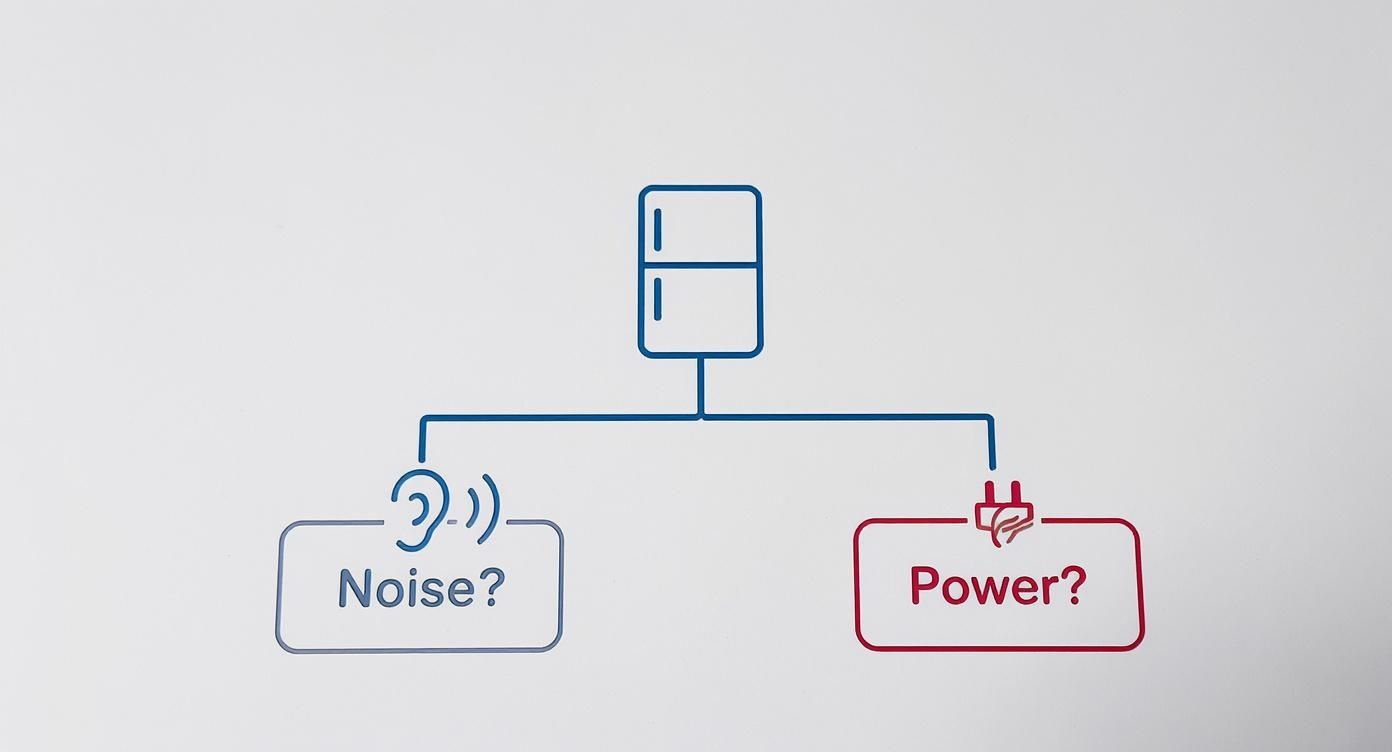
This simple diagnostic tree is the same starting point a technician uses: is the unit getting power, and is it making unusual noises? Answering these questions helps narrow down the possibilities.
To make it even simpler, here's a quick-reference table breaking down common symptoms, their likely causes, and what to do.
Quick Guide to LG Refrigerator Symptoms
| Symptom | Common Cause | Safe DIY First Step | When to Call a Professional |
|---|---|---|---|
| Not cooling enough | Airflow blockage, dirty coils, or a fan issue. | Check if vents are blocked by food. Listen for the fan. | If basic checks fail or you suspect a compressor issue. |
| Ice maker not working | Water line is off, kinked, or frozen. | Check the water valve and look for obvious kinks. | If you suspect a faulty water inlet valve or control board. |
| Leaking water | Clogged defrost drain or loose water line. | Inspect the water line connection at the back of the fridge. | If the leak is internal or requires accessing the defrost drain. |
| Loud or unusual noises | Failing fan motor or overworked compressor. | Try to pinpoint the noise source (freezer, back). | If you hear loud buzzing, squealing, or persistent clicking. |
| Error code on display | A specific component has failed (e.g., fan, sensor). | Unplug the fridge for 60 seconds to reset it. | If the code returns after a reset or indicates a serious fault. |
This table is a starting point. Let’s explore each of these common issues in more detail.
Your Refrigerator Is Not Cooling
A warm refrigerator is the most urgent problem we encounter. In our field experience, the first thing we check is airflow. Modern LG refrigerators circulate cold air from the freezer to the fridge section using fans and vents. If this path is blocked, the cooling system fails.
Before calling for service, perform these simple checks:
-
Check the Vents: Ensure food containers or bags are not pushed directly against the air vents inside the fridge and freezer.
-
Listen for the Fan: Open the freezer door. You should hear a fan running. If it's silent, the evaporator fan motor may have failed.
-
Feel the Flow: With the doors closed, you should feel a gentle flow of cold air from the vents. If the flow is weak or absent, it signals a problem.
If these steps don't resolve the issue, the cause could be more serious, such as dirty condenser coils or a failing compressor.
The Ice Maker Is Not Working
A non-functional ice maker is a very common service call. Fortunately, the solution is often simple. LG ice makers can be temperamental, but a few basic checks solve most problems.
Start with these steps:
-
Check the Water Line: Ensure the water supply valve behind the fridge is open. Look for kinks in the line. In our cold Alberta winters, we often see these lines freeze.
-
Inspect the Fill Tube: The tube that supplies water to the ice mold can get blocked with ice. A hairdryer on a low setting can usually clear it.
-
Reset the Ice Maker: Locate the reset button on the ice maker unit. Press and hold it for a few seconds to force a cycle, which can often restart it.
If these steps fail, the problem likely lies with a faulty water inlet valve or the main control board, which requires professional diagnosis.
Water Is Leaking on the Floor
A puddle under your refrigerator demands immediate attention. The source of the leak provides important clues about the severity of the problem.
Follow this checklist:
-
The Water Line: The plastic or copper line connecting to your home's water supply is the most common culprit. Check for loose fittings or cracks.
-
The Drain Pan: A pan underneath the fridge catches condensation. If it's cracked or has overflowed, it will cause a leak.
-
A Clogged Defrost Drain: This is a very frequent issue. A tube allows water to drain during the defrost cycle. If it gets clogged with debris or ice, water backs up and leaks onto the floor.
While tightening a water line is simple, clearing a clogged defrost drain typically requires disassembly and is best left to a technician.
Your LG Refrigerator Is Making Loud Noises
All refrigerators make noise, including the hum of the compressor and the click of relays. Pay attention to new or unusually loud noises, as they often indicate a problem.
Here’s what different sounds might mean:
-
Loud Buzzing or Humming: This often indicates the compressor is overworking, possibly due to dirty coils or a failing component.
-
Squealing or Chirping: This is a classic sign of a failing fan motor. The bearings in the evaporator or condenser fan are wearing out.
-
Loud Clicking: While some clicking is normal, repetitive, loud clicking can point to a bad defrost timer or a failing compressor relay.
Error Codes on the Display Panel
Modern LG refrigerators often self-diagnose problems through error codes. For instance, an "Er IF" code indicates an issue with the ice maker fan. A simple reset by unplugging the refrigerator for 60 seconds can sometimes clear a temporary glitch.
However, if the code reappears, it signifies a hardware failure that needs a professional diagnosis. For a detailed list, our guide to LG refrigerator error codes can help you understand what your appliance is trying to tell you.
Understanding LG Refrigerator Repair Costs in Alberta
When your refrigerator fails, one of the first questions homeowners in Edmonton, Calgary, and Red Deer ask is, "How much will this cost?" While the answer varies, understanding the components of a repair bill can reduce uncertainty.
A professional refrigerator repair LG invoice typically includes a service call fee (for travel and diagnosis), labor costs (for the time spent on the repair), and the cost of parts.
Key Factors That Influence Your Repair Bill
The final cost of an LG refrigerator repair depends on the complexity of the job, the age of the appliance, and the specific part that has failed.
Based on our field experience, these factors have the biggest impact on price:
-
The Specific Problem: Replacing a door switch is a straightforward, affordable repair. In contrast, a sealed system repair involving the compressor or refrigerant is complex and costs significantly more.
-
The Age and Model: Parts for older or high-end LG models can be more expensive or harder to source than those for common, newer models.
-
Warranty Coverage: Always check your warranty. If your refrigerator is still covered, some or all of the repair costs may be included.
In our experience, the vast majority of repairs are far more economical than buying a new refrigerator. A well-maintained LG appliance can offer many more years of reliable service after a professional repair, making it a sound financial decision.
A Look at Average Repair Costs
Minor repairs, like replacing a cracked drawer or fixing a leaky water line, are at the lower end of the cost spectrum. Mid-range repairs often involve replacing an evaporator fan motor or a faulty ice maker. The most significant repairs involve sealed system components like the compressor, condenser, or evaporator. These jobs require specialized tools and expertise, resulting in a higher cost. For more details, see our guide on the average appliance repair cost breakdown.
Repairing Versus Replacing Your LG Refrigerator
Deciding whether to repair or replace is a common dilemma. LG refrigerators typically last 9 to 13 years. As a helpful guideline, we use the 50% rule: if a repair costs more than half the price of a comparable new refrigerator, replacement is often the better choice. However, if your appliance is under a decade old and the repair cost is reasonable, fixing it is almost always the more economical option.
Why Certified Technicians and Genuine Parts Matter
When your high-end LG refrigerator fails, hiring a certified professional is crucial for the long-term health and safety of your appliance. Uncertified work can void your warranty, create new problems, and even pose safety hazards like fire risks from mishandled electrical components.
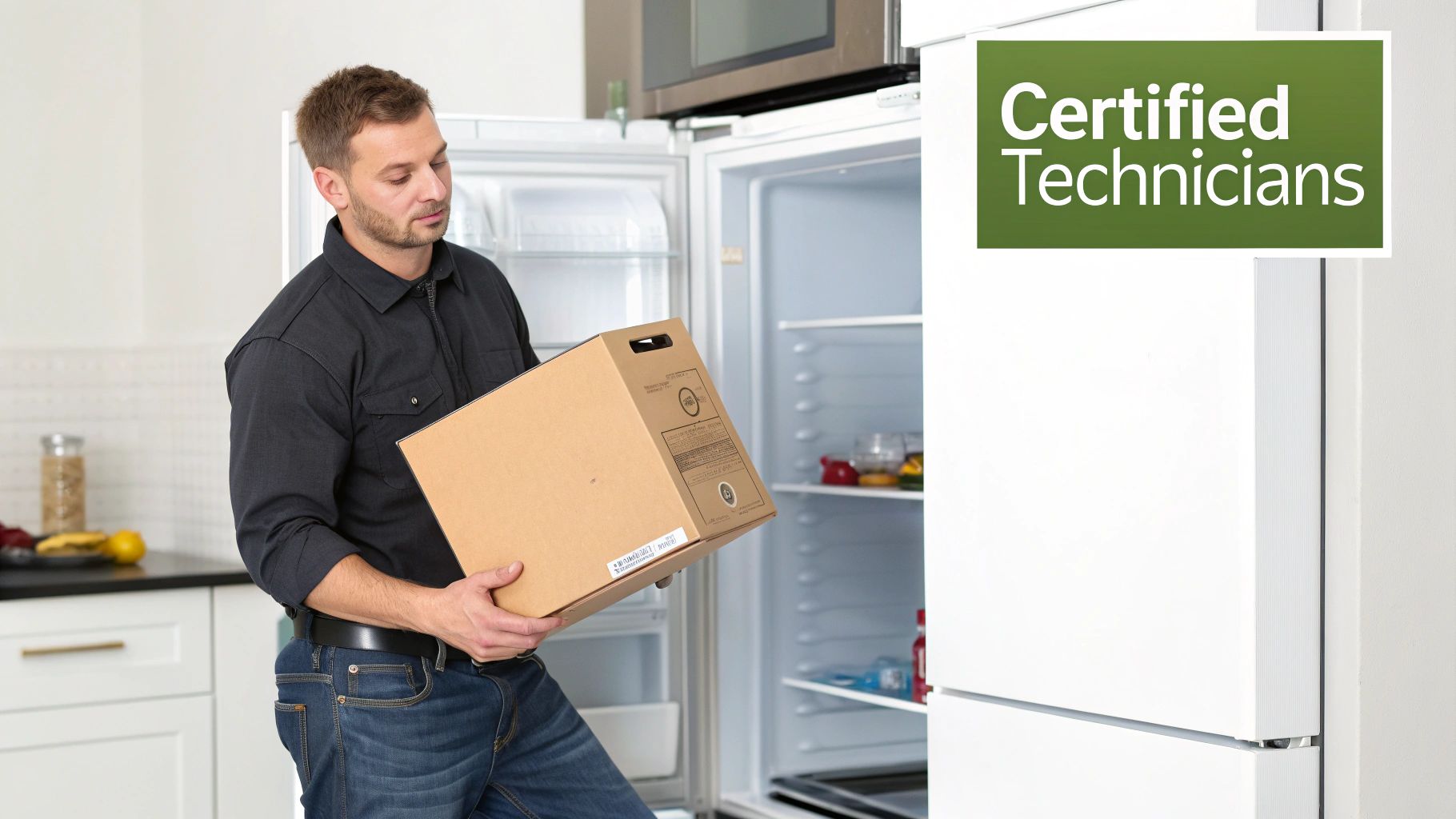
This is precisely why you should hire a professional repair service; it’s about protecting your home and ensuring a lasting solution.
The Critical Role of Genuine LG Parts
Using generic parts in an LG refrigerator is like using the wrong oil in a high-performance engine—it may work temporarily but will lead to premature failure.
Genuine LG parts are essential because they guarantee:
-
Perfect Fit and Function: They are manufactured for your specific model, ensuring seamless integration and optimal performance.
-
Durability and Longevity: Authentic parts meet LG's strict quality standards, preventing the breakdowns common with aftermarket alternatives.
-
Warranty Protection: Using non-genuine parts will void any existing manufacturer's warranty.
A professional repair using authentic parts ensures the job is done right the first time. It's about protecting your investment and bringing your refrigerator back to its original factory specifications—the only real way to guarantee its reliability.
The Technician's Expertise Makes all the Difference
A certified technician brings specialized training and a deep understanding of LG's complex systems. They can run advanced diagnostics and precisely calibrate sensitive electronic controls. This level of expertise is what makes a lasting refrigerator repair LG service possible and aligns with LG's own service model, which relies on authorized technicians using genuine parts.
Choosing a certified professional is an investment in a safe, effective, and durable solution, giving you peace of mind that your appliance is in expert hands.
Proactive Maintenance to Extend Your LG Refrigerator Life
The best repair is one that never happens. While our team is always ready to provide refrigerator repair LG service in the Edmonton area, we believe in empowering homeowners with simple maintenance tips to prevent common breakdowns and extend their appliance's lifespan.
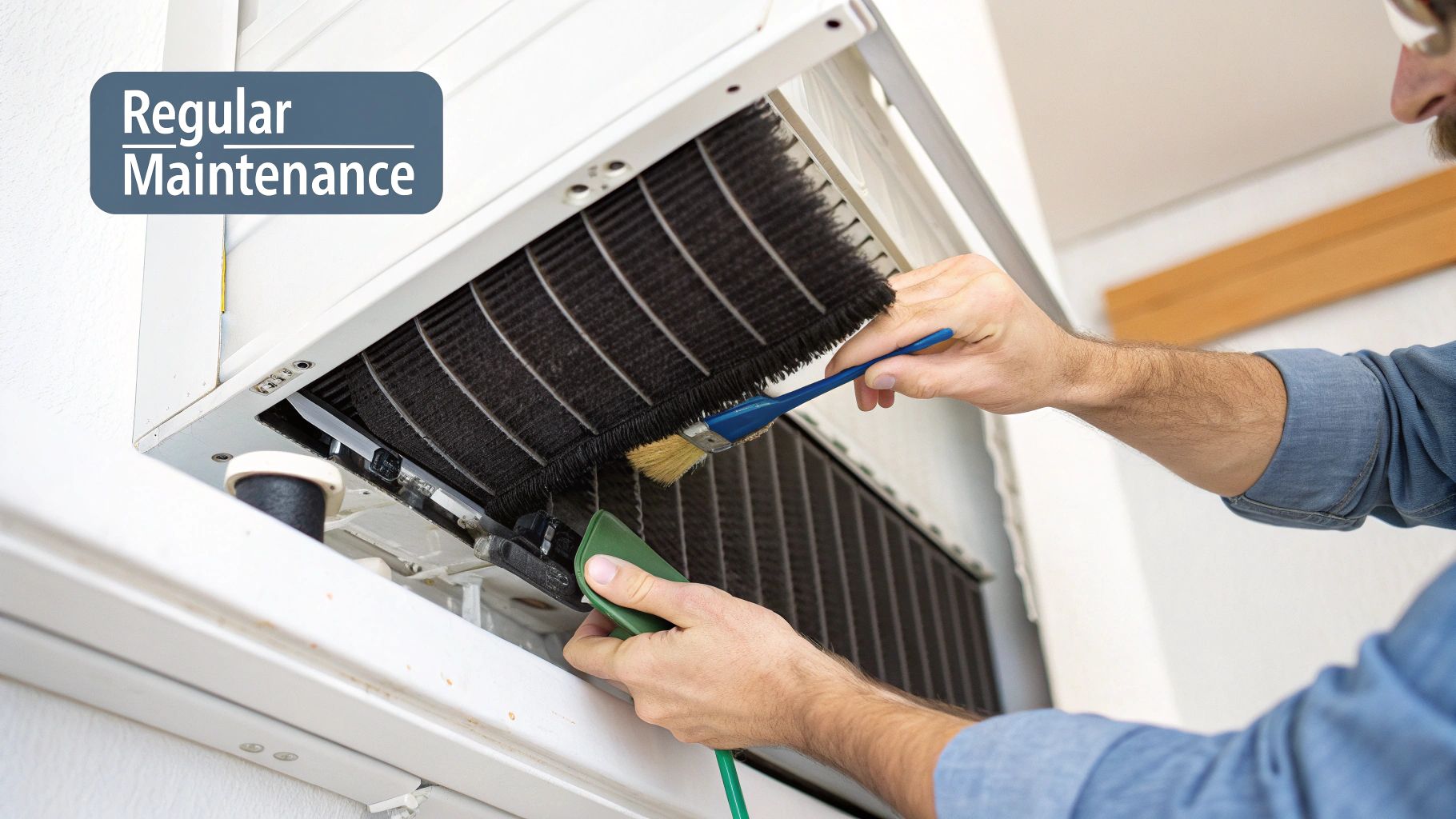
These easy, safe tasks can save you from future headaches and unexpected repair bills.
Keep Your Condenser Coils Clean
The condenser coils, located at the back or bottom of your fridge, dissipate heat. When clogged with dust and pet hair, they force the compressor to work harder, increasing energy bills and leading to premature failure. Cleaning them twice a year is the single most important maintenance task you can perform.
-
Safety First: Always unplug the refrigerator before cleaning.
-
Access the Coils: Pull the unit away from the wall to access coils on the back, or remove the front grille for bottom coils.
-
Clean Gently: Use a soft-bristled brush or a vacuum cleaner's brush attachment to remove all built-up dust and debris.
This simple task can prevent one of the most common causes of cooling failure we see in the field.
Inspect the Door Seals Regularly
The rubber gaskets around your refrigerator doors keep cold air in. If they become cracked, dirty, or brittle, warm air seeps inside, forcing the unit to run constantly.
A quick way to test your seals is the "dollar bill test." Close the door on a bill; if you can pull it out with no resistance, the seal is weak and needs cleaning or replacement. A tight seal is critical for efficiency.
Wipe the seals monthly with a damp cloth and mild soap to remove residue that prevents a tight closure.
A Simple Maintenance Checklist
Staying on top of maintenance is easy with this checklist. For more tips, read our guide on how to make your refrigerator last longer.
-
Clean Coils (Twice a Year): Vacuum the condenser coils every six months.
-
Check Door Seals (Monthly): Wipe down the gaskets and perform the dollar bill test.
-
Level the Unit (Annually): Ensure the refrigerator is level so the doors seal properly.
-
Empty and Clean the Interior (Quarterly): This prevents odours and helps you spot minor issues early.
By incorporating these habits, you can significantly reduce the likelihood of needing an emergency repair and ensure your LG appliance serves you well for its full lifespan.
Summary and Next Steps for Your LG Fridge Repair
You now have a clear understanding of how to diagnose common LG refrigerator issues, from simple fixes to problems requiring professional attention. While basic maintenance like cleaning coils is a great DIY task, complex electrical and sealed system repairs should always be left to a trained professional to avoid safety risks and further damage.
The expertise of a certified technician is invaluable. As noted on LG's official support page, their technicians undergo extensive training to master the brand's technology. This ensures your appliance is repaired correctly and safely.
Key Takeaways
-
Symptoms: A warm fridge, leaks, or strange noises often point to a specific failed component like a fan, drain line, or sensor.
-
Causes: Most issues stem from common problems like dirty coils, blocked vents, or a clogged defrost drain.
-
When to Call a Pro: Simple cleaning is safe for homeowners. Any work involving wiring, refrigerant, or the compressor is a job for a certified technician.
-
Repair vs. Replace: If the repair cost is less than 50% of a new model's price, repairing your existing unit is usually the most cost-effective choice.
Your Trusted Local Repair Service
For fast, reliable refrigerator repair LG service from certified technicians, Advance Appliance Ltd is here to help. We proudly serve homeowners in Edmonton, Calgary, Red Deer, and the surrounding communities. Don't let a faulty refrigerator disrupt your life—let our experts get your kitchen back to normal quickly and safely.
You can hire expert appliance technicians from Advance Appliance Ltd. for fast, reliable, and professional repair services in Edmonton, Calgary, Red Deer, and surrounding areas.