
It’s an annoyingly frequent situation where you expect clean clothes but discover a washer full of soapy, drenched laundry that has stopped in the middle of the cycle. Recognize that this is rarely an indication of complete failure before thinking the worst. Your washer is often halting for a specific purpose, frequently as a safety precaution.
A simple unbalanced load is the most common reason. In order to prevent damage, modern machines use sensors to detect severe shaking during the spin cycle and stop the machine.
This tutorial will explain the most frequent causes of your top-load washer halting and offer safe, do-it-yourself solutions. Before addressing problems that might call for a specialist, we’ll start with the simple fixes.
Common Causes for a Mid-Cycle Stop
When your washer stops, it’s a symptom, not the root problem. The machine is communicating an issue. Here are the most common messages it’s trying to send:
- Unbalanced Load: During the spin cycle, a single heavy object, such as a large towel or a blanket that has been balled up, can cause the drum to tilt. In order to protect itself, the washer shuts off.
- Faulty Lid Switch: A washer won’t spin if the lid is open for safety. The washer will not operate if the small plastic tab (striker) on your lid is broken or if there is a problem with the switch itself.
- Power Interruption: The cycle of your washer may be stopped by a momentary power flicker or a tripped circuit breaker. Many of the more recent models do not instantly pick up where they left off, in contrast to older models.
- Drainage Issues: Before the machine can start the spin cycle, all of the water must be pumped out. Common obstructions that will halt the procedure include a kinked drain line or a clogged drain pump filter.
A mid-cycle stop is a self-preservation feature. More often than not, simply redistributing the clothes or clearing a drain hose will resolve the issue and get your machine running again.
This flowchart provides a visual guide for your first troubleshooting steps, starting with the most likely cause.
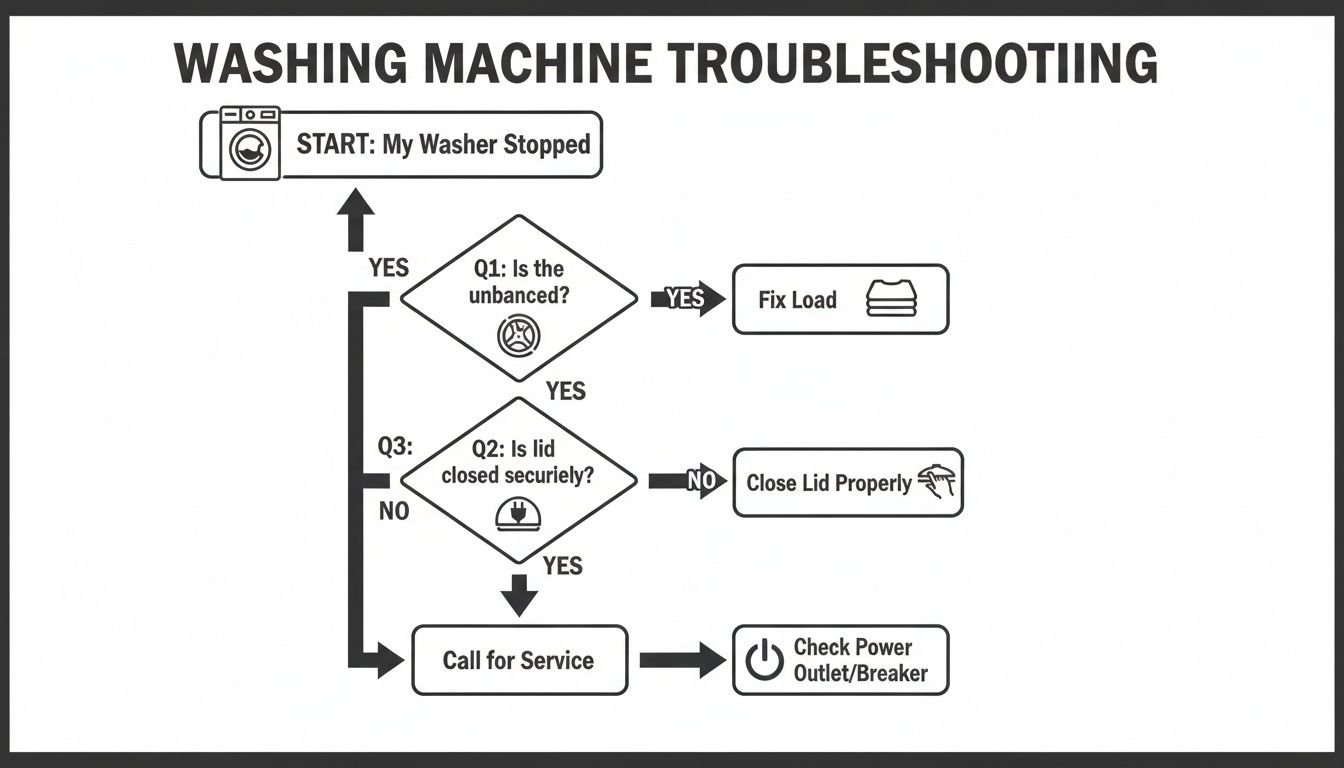
As the chart suggests, checking the load balance is always the best place to start. It’s simple, fast, and solves the problem in many cases. If you’re encountering other problems, our general guide on what to do when your washing machine malfunctions may also be helpful.
Unbalanced Loads and Power Issues: The Two Most Common Culprits
One of two straightforward problems—an uneven load or an irregular power supply—often causes a top-load washer to stop abruptly. The good news is that you can typically resolve these two problems on your own in a matter of minutes without the need for any instruments, which accounts for a significant portion of service calls.
Check Your Power Supply First
To finish its cycle, your washer need a constant supply of electricity. The majority of contemporary devices won’t resume on their own, and even a brief disruption can cause it to shut down.
Check the plug first. The plug may occasionally come away from the wall outlet due to the vibrations of a spin cycle. To make sure it’s secure, firmly insert it into the socket.
Next, examine the electrical panel in your house. Check to discover if your laundry room’s breaker has tripped to the “off” or middle position. If so, turn it completely to “off,” then firmly turn it back to “on.” Don’t reset it if it trips again right away. A greater electrical problem that calls for a qualified electrician is indicated by a breaker that continues tripping.
Finally, confirm the outlet is working. Unplug the washer and plug in a small device you know works, like a lamp or phone charger. If it doesn’t power on, the problem lies with the outlet or your home’s wiring, not the washer itself.
The Art of a Well-Balanced Load
An unbalanced load is by far the most frequent cause of a top-loader stopping, particularly prior to the spin cycle. Sensors in your washer can identify excessive drum wobbling. In order to avoid the severe shaking that could harm its motor, suspension, and other important parts, it will shut down. This is not a failure; rather, it is a safety feature.
The good news is that learning how to load your washer correctly can prevent this.
- Spread items out: Don’t dump laundry in a heap. Arrange clothes loosely around the center agitator or wash plate.
- Mix item sizes: A load of only large, heavy items (like bath towels) is prone to imbalance. Always mix in smaller items like hand towels or t-shirts to fill gaps and help the load settle evenly.
- Be careful with single bulky items: A water-logged sleeping bag, heavy jacket, or bath mat is notorious for causing this problem. If you must wash one, add a couple of medium-sized towels to act as counterweights.
Think of it like balancing a tire. A small weight difference on one side becomes a major problem at high speeds. A balanced load in your washer ensures a smooth, quiet, and complete cycle.
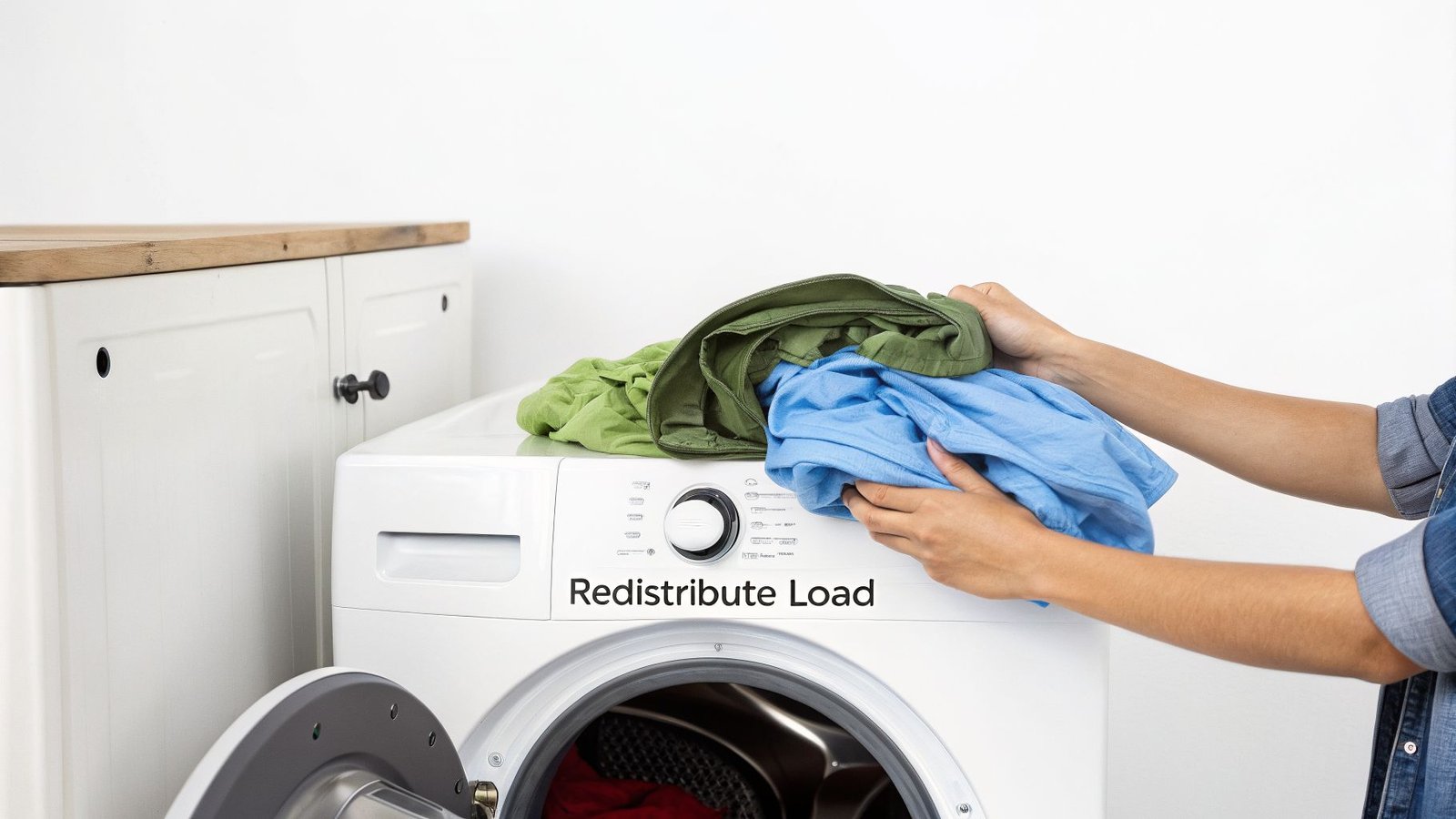
If the machine stops, open the lid and rearrange the wet clothes. On one side, there will probably be a large clump of fabric. Spread the things as evenly as you can by moving it around. Usually, all you need to do is close the lid and restart the cycle.
If the washer still won’t spin even with a balanced load, you might be facing a different problem. We cover other possibilities in our guide to troubleshooting a washer that won’t spin.
How to Diagnose a Faulty Lid Switch
If you’ve checked the power and balanced the load, but the washer still stops, the next likely culprit is a faulty lid switch. This is especially true if the machine stops just before the spin cycle.
The lid switch is a small but critical safety device. It signals to the washer’s control board that the lid is securely closed, making it safe to begin spinning at high speeds.
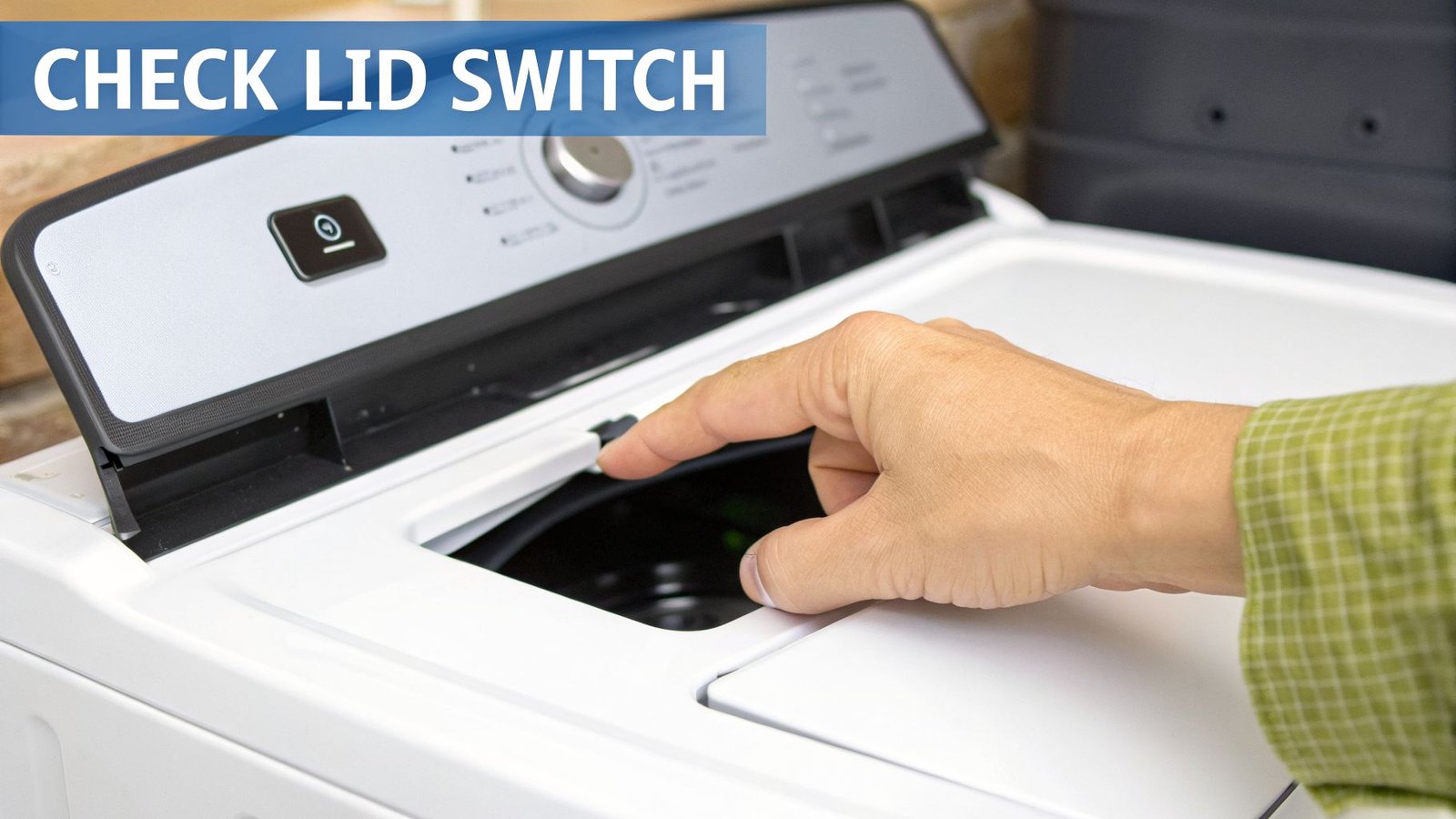
If the switch fails, the washer thinks the lid is always open and will refuse to spin or agitate. Here’s how you can safely determine if a bad lid switch is your problem.
Locating and Testing the Lid Switch
Locate the switch first. It is situated beneath the top panel, close to the edge of the lid, on the majority of top-load washers. The lid has a tiny plastic “striker” that is intended to press this switch.
Listen for the ‘Click’
This is the simplest first test. With the cycle paused at the point where it should be spinning, slowly close the lid. Listen for a distinct “click” as the striker engages the switch.
- If you hear the click and the washer starts spinning, your switch is likely working correctly.
- If you hear a click but the drum doesn’t move, the switch may be making mechanical contact but has failed electrically.
- If you hear no click at all, the switch may be broken, clogged with debris, or the striker on the lid is bent and missing its target.
Inspecting for Physical Damage or Debris
Time for a closer look. Before proceeding, unplug the washer from the wall. This is a critical safety step to eliminate any risk of electric shock.
With the machine unplugged, examine both the switch and the striker on the lid.
- Debris Buildup: Lint, detergent residue, and other grime can jam the switch. Use a cloth or a small brush to gently clean any buildup around it.
- Physical Damage: Check the plastic striker on the lid. If it’s cracked or broken, it can’t activate the switch. The switch itself may also show visible damage.
- Misalignment: Over time, lid hinges can loosen. If the lid is wobbly, the striker may be misaligned and not making proper contact with the switch.
One common issue is a malfunctioning lid switch. 52% of these breakdowns occur after 7-8 years of use, according to data from a 2026 report on household repairs, which is consistent with what we observe in the field.
Safety Warning: You can safely inspect and clean the lid switch area, but do not attempt to bypass it or test it with a multimeter unless you are trained in electrical diagnostics. A mistake could damage the washer’s main control board, turning a simple fix into a very expensive repair.
If your machine has a door lock issue and it’s a Samsung, our guide on how to unlock a Samsung washer might offer some extra insight.
The component needs to be changed if you discover a broken striker or a switch that is obviously damaged. We strongly advise hiring a qualified technician to do this repair safely because it contains electrical components.
Checking for Water Supply and Drainage Problems
It’s time to look into the water flow if the power is strong and the lid switch is operational. A washer that stops in the middle of a cycle might be having trouble getting water in or out.
Your washer adheres to a checklist: it must empty entirely before spinning and fill to the proper level before agitating. To avoid damage or a water spill, the machine pauses the cycle if it becomes stuck on either of these steps.
Is Your Washer Getting Enough Water?
Your machine may not be filling with water fast enough if it pauses at the start of a cycle, frequently before any agitation. The washer has a timer; if it doesn’t detect that the tub is full within a predetermined amount of time, it will shut off, assuming there is an issue.
Here’s how to check the water supply:
- Check the Taps: Make sure the hot and cold water taps behind the washer are turned on completely.
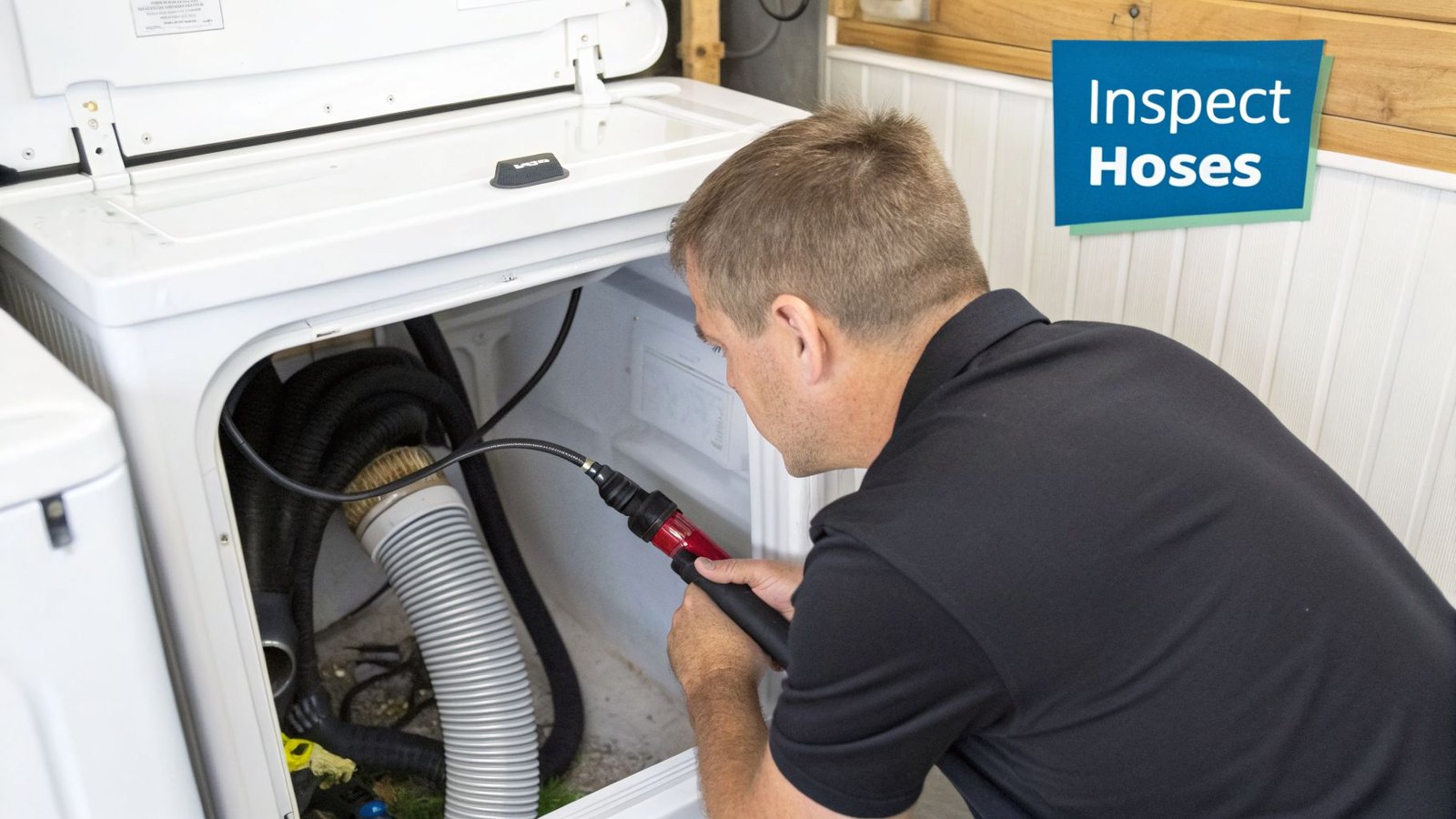
- Inspect the Inlet Hoses: Look behind the washer to ensure the water inlet hoses are not kinked or crushed. A sharp bend can restrict water flow.
- Clean the Inlet Screens: Over time, the small filter screens where the hoses connect to the washer can become clogged with sediment and mineral deposits.
To clean them, unplug the washer and turn off the water supply at the wall. Unscrew the hoses from the back of the machine (keep a towel handy for drips). You’ll see small mesh screens inside the water inlet ports. Carefully pull them out with needle-nose pliers and scrub them clean with an old toothbrush under running water.
Investigating Drainage Blockages
A drainage problem is most likely the cause if the washer stops later in the cycle, leaving a tub full of water. Until all of the water is gone, the washer’s sensors won’t let the high-speed spin cycle start.
First, look for kinks or obstructions in the drain hose. Additionally, be careful not to push it too far down into the standpipe, as this could cause a siphoning effect that interferes with the draining process.
A single sock, a few coins, or a button that gets past the drum and into the drain pump is a classic cause of blockage. The pump motor will try to run, fail, and the machine will shut down to prevent it from burning out.
If the hose is clear, the blockage may be in the drain pump filter. For a detailed walkthrough, refer to our guide on how to clean your washing machine filter. Addressing these water supply and drainage issues often gets a washer back to completing its cycles properly.
When to Call a Professional for Washer Repair
Even while fixing a problem on your own is satisfying, there are some washer issues that are best left to an expert. The secret to keeping a minor problem from turning into an expensive catastrophe is knowing when to stop troubleshooting.
It’s time to call for assistance if you’ve done the fundamental inspections and your washer is still not operating properly. If complicated mechanical or electrical repairs are attempted without the necessary training, the appliance may sustain more damage or become dangerous.
Major Mechanical and Electrical Warning Signs
Certain symptoms are clear indicators of a serious internal problem that a homeowner cannot safely fix.
- Loud Grinding or Squealing Noises: Harsh, metallic grinding or a high-pitched squeal during any part of the cycle likely points to failed drum bearings or a transmission problem. These are core components that require extensive disassembly to access and replace.
- A Distinct Burning Smell: The smell of burning rubber or hot electrical components is a critical warning. This could be a failing drive motor, a seized pump, or an overheating belt. Turn off the washer immediately and unplug it, as this is a fire hazard.
- The Washer is Completely Dead: If you have confirmed the outlet has power and the circuit breaker is on, but the machine shows no signs of life, the main control board may have failed. This “brain” of the washer is a complex electronic component that can be damaged by a power surge or a short circuit from another failing part.
A professional technician uses diagnostic tools to pinpoint the exact failure, saving you from guessing and buying the wrong, expensive part. More about this decision can be found in our guide on when to call an appliance repair technician.
When Disassembly Is Required
As a general rule, if a fix requires removing more than the back service panel or the water hoses, it’s a job for a professional. Stop if the repair involves:
- Removing the main cabinet or top panel to access the motor, transmission, or suspension system.
- Replacing internal parts like the suspension rods that support the drum.
- Working with any of the washer’s internal wiring harnesses.
These jobs carry a real risk of injury from sharp metal edges or electric shock from capacitors, even when the machine is unplugged.
Electrical System Red Flags
Sometimes the electrical system in your house is the issue rather than the washer. A circuit breaker that keeps tripping or flickering lights as the washer starts are indicators of a more serious problem.
Common Questions About Washers Stopping Mid Cycle
Even after troubleshooting, you may still have questions. Here are answers to some of the most common ones we hear from homeowners.
Can I Just Reset My Washer if it stops mid-cycle?
Yes, a “hard reset” is a good first step. Your washer’s internal computer can sometimes get stuck on a minor error code, such as from a brief power flicker. A reset can clear its short-term memory.
Unplug the washer from the wall and give it a full five minutes to accomplish this. This enables the internal electronic parts to reset and completely discharge. To assist drain any remaining power, press and hold the “Start/Pause” button for approximately ten seconds while it is unplugged.
After plugging it back in, run a ‘Drain & Spin’ or ‘Rinse & Spin’ cycle. If it completes successfully, the issue was likely a one-time glitch. If it stops again, it points to a persistent hardware problem.
Why Does My Washer Stop Specifically During the Spin Cycle?
When a washer stops just before or during the spin cycle, the most common reason is an unbalanced load. The spin cycle is the most mechanically stressful part of the wash, with the drum rotating at high speeds to extract water.
A significant imbalance is produced when bulky objects, such as pants or towels, gather on one side. As a safety measure, the machine’s sensors identify the strong shaking and turn off the motor. This keeps the motor, bearings, and suspension from getting damaged. Opening the cover, evenly redistributing the wet laundry, and restarting the cycle is typically the solution.
What Does It Mean if the Washer Fills but Won’t Agitate?
If your washer fills with water and then stops, the problem is different from one that halts the spin cycle. This indicates an issue between the fill and wash stages.
Common culprits include:
- Lid Switch Failure: The washer’s computer must confirm the lid is closed before it will start agitating. A faulty switch prevents this signal from being sent.
- Drive Belt or Motor Coupler: In many models, a belt or plastic coupler connects the motor to the transmission that moves the agitator. These parts can break or wear out over time. You might hear the motor humming, but the agitator doesn’t move.
- Shift Actuator: Newer high-efficiency washers often use a device called a shift actuator to switch between agitating and spinning. If this part fails, it may not engage the agitation mechanism.
Because these components are part of the drive system, diagnosing and replacing them is best left to a professional.
How Can I Prevent My Washer from Stopping in the Future?
A little preventative maintenance can help you avoid most mid-cycle stops. First, always practice proper loading technique. Spread clothes evenly and mix large and small items. Avoid washing single, heavy items alone.
Second, check your water inlet hoses every six months. Turn off the water, unscrew the hoses, and clean the small mesh filter screens inside the inlet ports to prevent slow filling due to sediment buildup.
If you’ve tried these fixes and your washer is still on strike, it’s time to bring in the pros. For fast, reliable washer repair in Edmonton, Calgary, Red Deer, and the surrounding areas, put your trust in the licensed technicians at Advance Appliance Ltd. Book your same-day or next-day service online today!