
Ever opened your dishwasher expecting sparkling clean dishes, only to find a greasy film on your plates or cloudy residue on your glasses? It’s a common frustration, but the problem often isn’t the dishwasher or the detergent—it's the water temperature. For homeowners in Edmonton, Calgary, and Red Deer, understanding the crucial role of hot water is the first step to getting a perfect clean, every time. At Advance Appliance Ltd, we know that getting that spotless shine depends on a two-stage heating process, and if either step fails, your dishes pay the price.
What It Means When Your Dishwasher Fails to Heat Water
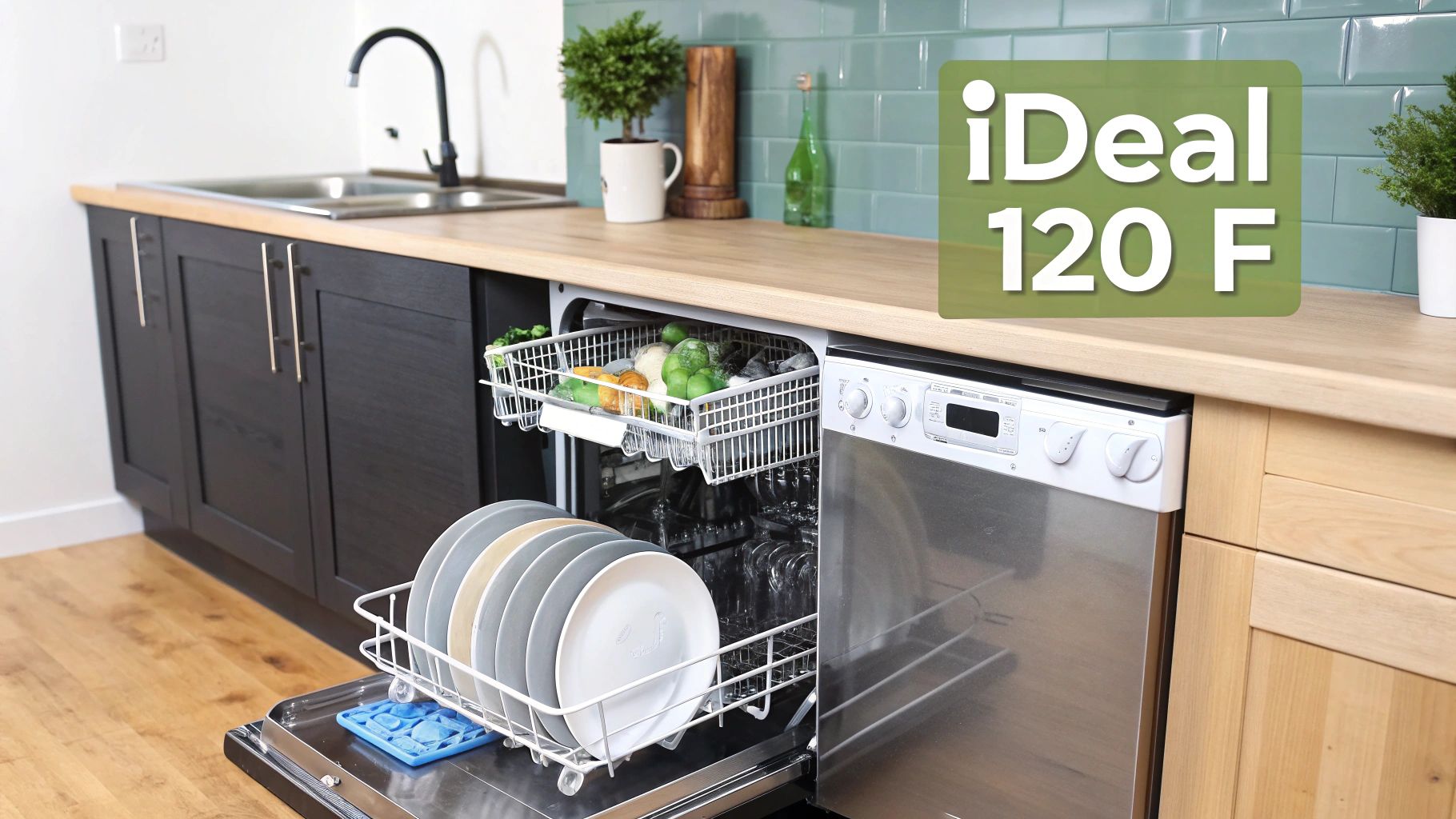
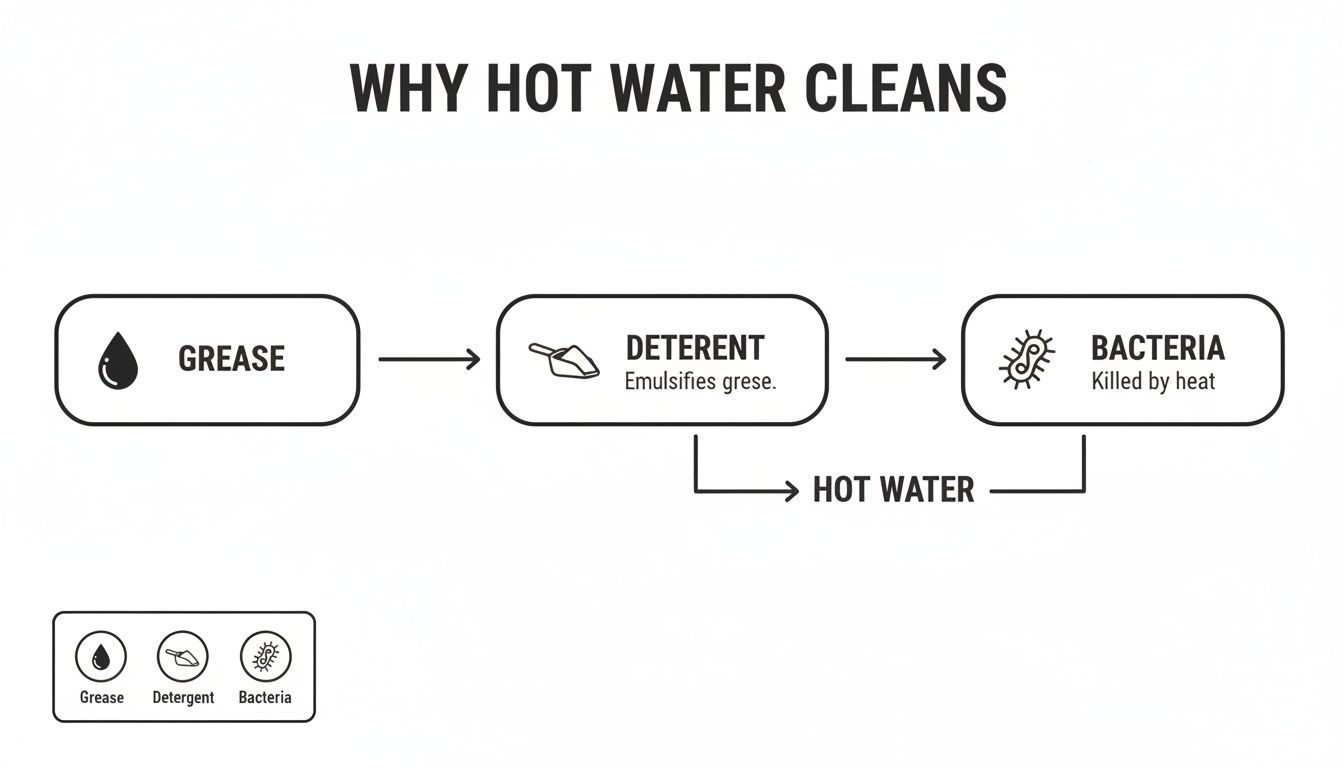
When your dishwasher isn't getting hot enough, it means the appliance cannot perform its core functions: dissolving grease, activating detergent, and sanitizing your kitchenware. The ideal temperature is a two-part equation. First, the water entering the dishwasher from your home's hot water tank must be at least 120°F (49°C). Second, the dishwasher's internal booster heater must raise that temperature to between 140°F and 160°F (60°C to 71°C) during the main wash and final rinse cycles. A failure at either stage will lead to poor cleaning results.
Homeowners typically notice several key symptoms when water temperature is the issue:
- Greasy or Oily Film: This is the clearest sign that water isn't hot enough to melt and wash away fats and oils.
- White Residue on Glassware: Cool water fails to dissolve detergent powder completely, leaving behind a cloudy, gritty film.
- Food Particles Remain: The enzymes in modern detergents require heat to activate and break down stuck-on food. Without it, they remain dormant.
- Cycles Run Excessively Long: If the incoming water is too cold, the dishwasher will pause the cycle, sometimes for an extended period, while its internal heater struggles to reach the target temperature.
- Musty Odours: Water that isn't hot enough fails to kill bacteria, leading to unpleasant smells inside the dishwasher tub.
If you suspect your dishwasher isn't hitting these critical temperatures, it likely points to an issue with your water heater settings, a clogged inlet valve, or a faulty component within the appliance itself.
Common Causes of Dishwasher Water Temperature Problems
Several factors can prevent your dishwasher from reaching the optimal temperature. While some are simple adjustments, others involve complex electrical components that carry significant risk if handled improperly. This table outlines the most frequent causes.
| Cause | Description | DIY Difficulty | Risk |
|---|---|---|---|
| Hot Water Heater Set Too Low | Your home's main water heater is not supplying water at the required 120°F (49°C), giving the dishwasher a poor start. | Low | Low |
| Faulty Heating Element | The primary internal component responsible for boosting water temperature during the wash/rinse cycles has burned out or failed. | High | High (Electrical Shock) |
| Malfunctioning High-Limit Thermostat | The thermostat that regulates the heating element is broken, either preventing it from turning on or causing it to shut off prematurely. | High | High (Electrical Shock, Fire Hazard) |
| Clogged Inlet Valve Screen | Mineral deposits or debris are blocking the screen on the water inlet valve, restricting the flow of hot water into the dishwasher. | Medium | Moderate (Water Leak) |
| Failed Main Control Board | The electronic "brain" of the dishwasher is not sending the correct signals to the heating element or thermostat. | High | High (Electrical Shock, Component Damage) |
| Incorrect Cycle Selection | Using a "light" or "eco" cycle may not engage the high-temperature booster heater, leading to subpar cleaning for heavily soiled loads. | Low | Low |
| Not Priming the Hot Water Line | Cold water sitting in the pipes enters the dishwasher at the start, forcing the internal heater to work much harder and longer. | Low | Low |
DIY Troubleshooting Steps for Water Temperature Issues
Before calling a technician, there are a few safe steps you can take to diagnose the problem. These steps can help you identify if the issue is with your home's water supply or the appliance itself.
⚠️ Safety First: Always disconnect the dishwasher from its power source at the circuit breaker before attempting any inspection beyond checking water from the tap. Working with electrical components and water is extremely dangerous.
- Check Your Kitchen Sink Tap Temperature: Turn on the hot water at your kitchen sink and let it run for a full minute. Use a meat or candy thermometer to measure the temperature in a glass of water. It should be at least 120°F (49°C). If it's lower, the problem is your main water heater, not the dishwasher.
- Adjust Your Water Heater: If the water is too cool, locate the temperature dial on your hot water tank (usually near the bottom) and adjust it slightly upwards. Never set it above 120°F (49°C) to avoid a serious scalding risk. Wait several hours for the tank to heat up, then test the tap temperature again.
- Prime the Line Before Each Cycle: Before starting the dishwasher, run the hot water at your kitchen sink until it is steaming hot. This ensures the dishwasher fills with hot water from the very beginning, improving efficiency and cleaning performance.
- Select the Right Wash Cycle: For heavily soiled dishes, make sure you are using a "Normal" or "Heavy Duty" cycle. Use the "Sani-Rinse" or high-temp wash option to ensure the internal booster heater is engaged for maximum cleaning power.
- Clean the Dishwasher Filter: A clogged filter at the bottom of the dishwasher tub can impede water circulation, which affects how well the water is heated and distributed. Remove and clean it according to your owner's manual.
- Inspect the Heating Element Visually: With the power off, look at the heating element at the bottom of the tub. Check for any obvious signs of damage, such as breaks, blisters, or severe corrosion. Do not touch it.
If you have completed these steps and your dishes are still not clean, the problem is likely an internal component like the heating element or thermostat. At this point, stop and call a professional technician.
Dishwasher Heating Repair Cost Breakdown
When a professional repair is necessary, it’s helpful to understand the potential costs. Prices for dishwasher repair in Alberta can vary based on the brand, the specific part needed, and the complexity of the job. Here’s a typical breakdown for service in the Edmonton, Calgary, and Red Deer areas.
| Repair Type | Typical Cost (Excluding GST) | Notes |
|---|---|---|
| Diagnostic Fee | $120 – $150 | This fee covers the technician's time and expertise to identify the exact problem. It is typically waived if you proceed with the repair. |
| Common Parts Replacement | $150 – $650 | This range covers parts like heating elements, thermostats, control boards, or water inlet valves. Costs vary significantly by brand (e.g., Bosch vs. Samsung). |
| Labour Charges | $150 – $260 per hour | Labour is billed based on the complexity and time required for the repair. A simple thermostat swap is quicker than replacing a control board. |
Note: Prices are estimates and do not include GST. Final costs can vary between Edmonton, Calgary, and Red Deer based on local factors.
Dishwasher Failure Rate & Repair Cost Chart
This chart illustrates the failure rates and average repair costs for common dishwasher components, comparing data from last year to this year. This can help you understand the likelihood and financial impact of a potential repair.
Chart Description: A bar chart comparing dishwasher component failures. Gray bars represent last year's data, and light blue bars represent the current year's data. The chart shows two metrics for each component: the failure rate as a percentage and the average repair cost in dollars. Components listed are Heating Element, Thermostat, Control Board, and Water Inlet Valve. The data indicates a slight increase in heating element failures this year, with a corresponding rise in average repair cost.
Repair vs. Replace: Making the Right Decision
Deciding whether to repair or replace your dishwasher depends on three key factors: the age of the appliance, the cost of the repair, and the brand.
The 50% Rule: A good guideline is to replace your dishwasher if the estimated repair cost (parts + labour) is more than 50% of the price of a new, comparable model.
Appliance Age: The average dishwasher has a lifespan of 9-12 years. If your appliance is approaching or has surpassed this age, investing in a significant repair may not be cost-effective, as other components are likely to fail soon.
Brand Considerations:
- Samsung/LG: These brands often feature advanced electronics. While innovative, their control boards can be expensive to replace, sometimes tilting the decision toward replacement.
- Whirlpool/Maytag: Generally known for reliability and parts availability, making them good candidates for repair, especially if they are under 8 years old.
- Sub-Zero (Cove)/Bosch: As premium brands, their initial cost is high, making repairs a more financially sound option even for older units. A $600 repair on a $2,000 dishwasher is often worth it.
Preventive Maintenance Tips
Proper care can extend the life of your dishwasher and prevent many common heating issues.
- Run Hot Water First: Always run the kitchen sink tap until the water is hot before starting a cycle.
- Clean the Filter Weekly: Remove and rinse the filter at the bottom of the dishwasher to ensure proper water flow.
- Use a Dishwasher Cleaner Monthly: Use a commercial dishwasher cleaner to remove mineral buildup (limescale) from the heating element and interior components.
- Don't Overload: Overcrowding dishes blocks water jets and prevents hot water from circulating effectively.
- Scrape, Don't Rinse: Scrape off large food particles but avoid pre-rinsing. Detergent enzymes need some food soil to work on.
- Use a Rinse Aid: Rinse aid helps water sheet off dishes, improving drying and reducing spots.
- Check Spray Arms: Regularly check that the spray arm holes are not clogged with food debris.
- Schedule Annual Professional Inspection: A technician can spot early signs of wear on components like the heating element and ensure all connections are secure.
Brand-Specific Notes on Heating Issues
Different dishwasher brands have unique quirks and common failure points related to their heating systems.
Samsung
- Known Issues: Samsung dishwashers are known for heater assembly failures and occasional control board glitches that can result in heating error codes.
- Parts Availability: Generally good, but specific electronic components can sometimes have a lead time.
- Difficulty: High. Repairs often involve complex diagnostics and disassembly.
LG
- Known Issues: LG models can suffer from flow meter or thermistor errors, which can incorrectly signal a heating problem. The hybrid drying systems can also be a point of failure.
- Parts Availability: Very good for common parts.
- Difficulty: High. Accessing the heater and associated sensors requires significant disassembly.
Whirlpool
- Known Issues: Known for durable heating elements, but the high-limit thermostat can sometimes fail. A common and relatively straightforward repair.
- Parts Availability: Excellent. Whirlpool parts are widely available across North America.
- Difficulty: Medium. Components are generally accessible for a trained technician.
GE
- Known Issues: Older GE models may experience wiring issues near the heating element. Their internal flood protection system can sometimes be mistakenly triggered, cutting power to the heater.
- Parts Availability: Good.
- Difficulty: Medium to High, depending on the specific issue.
Bosch
- Known Issues: Bosch dishwashers use a highly efficient flow-through heater instead of an exposed element. While reliable, if this unit fails, it is a more complex and costly replacement.
- Parts Availability: Good, though some specialized parts may need to be ordered.
- Difficulty: High. The flow-through heater is integrated and requires specialized knowledge to replace.
Maytag
- Known Issues: Similar to their parent company, Whirlpool, Maytag dishwashers are robust. The most common heating-related issue is a failed heating element, which is a standard repair.
- Parts Availability: Excellent.
- Difficulty: Medium. A very common repair for experienced technicians.
Frequently Asked Questions (FAQs)
How can I tell if my dishwasher's heater is broken?
The clearest signs are dishes that come out consistently greasy, wet, and cool to the touch immediately after a cycle finishes. You may also notice no steam when you open the door or see a specific heating-related error code on the display.
Is it safe to repair a dishwasher heating element myself?
No. This repair involves disconnecting electrical wiring and handling components that carry high voltage. There is a significant risk of electrical shock, creating a fire hazard, or causing further damage to the appliance. It should only be performed by a qualified technician.
Can a dishwasher heat cold water by itself?
While it can try, a dishwasher is not designed to heat cold water from scratch. It relies on an incoming supply of at least 120°F (49°C). Forcing it to heat cold water will dramatically increase cycle times, strain the heating element, and lead to premature failure and higher energy bills.
Why are my plastic items always wet?
Plastic does not retain heat as well as glass or ceramic. During the heated dry cycle, dishes get hot enough for water to evaporate, but plastics cool down too quickly, leaving water droplets behind. This is normal, though using a rinse aid can help.
How much does it cost to replace a dishwasher heating element?
In the Edmonton, Calgary, and Red Deer area, the cost to replace a heating element typically ranges from $220 to $450, including the part and labour. The price varies depending on your dishwasher's brand and model.
Is a "Sani-Rinse" cycle safe for all my dishes?
No. While great for sanitizing durable items like ceramic plates and cutlery, the high temperatures (often over 150°F / 65°C) can warp or damage delicate plastics, antique glassware, and items with painted-on designs. Always check manufacturer care labels.
Final Summary
Achieving a perfect clean from your dishwasher hinges on maintaining the correct water temperature. Your home's water heater must supply water at a minimum of 120°F (49°C), and the dishwasher's internal booster must then raise it to 140°F-160°F to effectively activate detergent, cut through grease, and sanitize your dishes. While simple steps like priming the hot water line and cleaning the filter can resolve minor issues, persistent problems point to a failed internal component. For your safety and to ensure a correct diagnosis, repairs involving the heating element, thermostat, or control board should always be left to a certified professional.
Need Your Dishwasher Fixed? Contact Advance Appliance Ltd
If your dishwasher is leaving you with dirty dishes, don't wait for the problem to get worse. Our certified technicians are ready to help homeowners across Edmonton, Calgary, and Red Deer.
For Service in Edmonton:
📅 Book Your Appointment Online
📞 Call Us: 587-882-3225
For Service in Calgary & Red Deer:
📅 Schedule Your Repair Now
Same-day or next-day appointments available. Certified technicians. Warranty on parts and labour.