
Your commercial freezer is the unsung hero of your kitchen, working around the clock to keep things running. But when it fails, the silence is deafening—and expensive. A single breakdown can mean thousands of dollars in lost product, chaos during service, and a hit to your hard-earned reputation. The best defense? Learning to spot the subtle signs of trouble before they escalate into a full-blown crisis.
Recognizing Early Freezer Warning Signs
A commercial freezer rarely just gives up out of the blue. Think of it like a car engine that starts making weird noises long before it leaves you stranded on the side of the road. Your freezer will give you clues that it’s struggling. Ignoring them is a high-stakes gamble most businesses simply can’t afford to take.
Learning to “listen” to your equipment is one of the most valuable skills you can have. Catching a problem early not only saves you from the headache and cost of emergency repairs but also protects the very continuity of your business. A well-maintained freezer is an asset; a neglected one is a liability waiting to strike.
Unusual Noises and Vibrations
You know the normal, day-to-day hum of your freezer. Any new or louder sound should grab your attention immediately.
- Rattling or Banging: These noises often mean a component has come loose, or there’s an issue with the compressor or condenser fan motor.
- Buzzing or Humming: A loud, insistent buzz could signal an electrical fault or a compressor that’s fighting to start up.
- Clicking: If you hear frequent clicking from the back of the unit, it might be a problem with the start relay—a small but critical part that gets the compressor going.
These sounds are your freezer’s way of telling you something is wrong on the inside. Dealing with them quickly can stop a minor fix from snowballing into a complete system failure.
Frost Buildup and Door Seal Issues
A bit of frost is normal, but thick sheets of ice are a major red flag. Excessive frost is more than just a pain to clear out; it’s a clear symptom of a bigger problem. It often points to a faulty defrost cycle or, more commonly, a bad door seal.
A weak or damaged door gasket is like leaving a window open in the winter. It allows warm, humid air to sneak into the freezer. Your system then has to work overtime to cool that air, causing condensation that freezes into thick frost. This absolutely crushes efficiency and puts a massive strain on all the components.
There’s a simple trick to check the seal: close the door on a piece of paper or a banknote. If you can pull it out with zero resistance, the seal is probably shot and needs replacing. You can learn more about this in our detailed guide on why your freezer door is not sealing properly.
Temperature Fluctuations and Energy Spikes
This is probably the most urgent warning sign. If you notice your products aren’t frozen solid or your thermometer readings are all over the place, you need to act fast. That kind of instability puts your entire inventory at risk of spoiling.
At the same time, keep an eye on your power bills. A freezer that’s struggling due to a fault will suck down a lot more electricity just to keep up. That spike in your operational costs is a direct signal of a mechanical problem. A failing freezer isn’t just a risk to your inventory—it’s actively draining money from your business every single day.
Your Emergency Action Plan for a Failed Freezer
The moment you spot a problem with your commercial freezer, the clock starts ticking. It’s easy to feel a surge of panic—we get it—but a cool head and a clear plan can be the difference between a minor hiccup and losing thousands of dollars in inventory.
Every minute counts. Your immediate response should focus on two things: making the area safe and saving your stock. This is your guide for those critical first moments before a professional technician arrives, helping you make the right calls under pressure.
Prioritize Safety First
Before you even think about the inventory, you need to deal with any potential safety hazards. A broken freezer isn’t just a threat to your products; it can be a serious electrical risk.
- Cut the Power Safely: If you can reach the plug easily and safely, unplug the unit. If the plug is hard to get to, or if you see any sparks, notice water near the outlet, or smell something burning, head straight for your electrical panel.
- Flip the Breaker: Find the circuit breaker that controls the freezer and switch it to the “OFF” position. This kills the power instantly, preventing more damage or the risk of an electric shock.
- Clear the Area: Make sure the floor around the freezer is completely dry, especially if the unit was leaking. Put up “wet floor” signs to keep everyone safe from slips and falls.
Understanding your building’s electrical system is a huge plus in these situations. A tripped breaker is often the first sign something’s wrong, and knowing a little bit about it can help. This guide to miniature circuit breaker technology is a great resource for understanding these simple but crucial devices.
Protect Your Valuable Inventory
Once the area is secure, it’s time to shift your focus to protecting your products. The name of the game is keeping everything frozen for as long as you possibly can.
- Keep the Door Shut: This is the golden rule. A well-stocked commercial freezer can hold its temperature for up to 24-48 hours as long as it stays closed. Every time that door opens, you lose precious cold air and speed up the thawing process.
- Consolidate and Condense: If you have another working freezer, start moving items from the failed unit into it. Pack everything in tightly—a full freezer stays colder much longer than a half-empty one.
- Find Backup Storage: No extra freezer space on-site? Start calling neighbouring businesses or a local cold storage facility to see if you can rent some space temporarily. Don’t wait on this; the faster you act, the better.
Basic Troubleshooting Steps
With your inventory secured, there are a few quick checks you can do yourself. Sometimes, the problem is surprisingly simple and you might not even need a service call.
Before you pick up the phone to call for a repair, take a minute to check the simple stuff. A tripped breaker or a thermostat that got knocked to ‘off’ can look just like a major breakdown. These quick checks can save you a lot of time, money, and stress.
This infographic highlights the common warning signs that pop up before a total freezer failure.
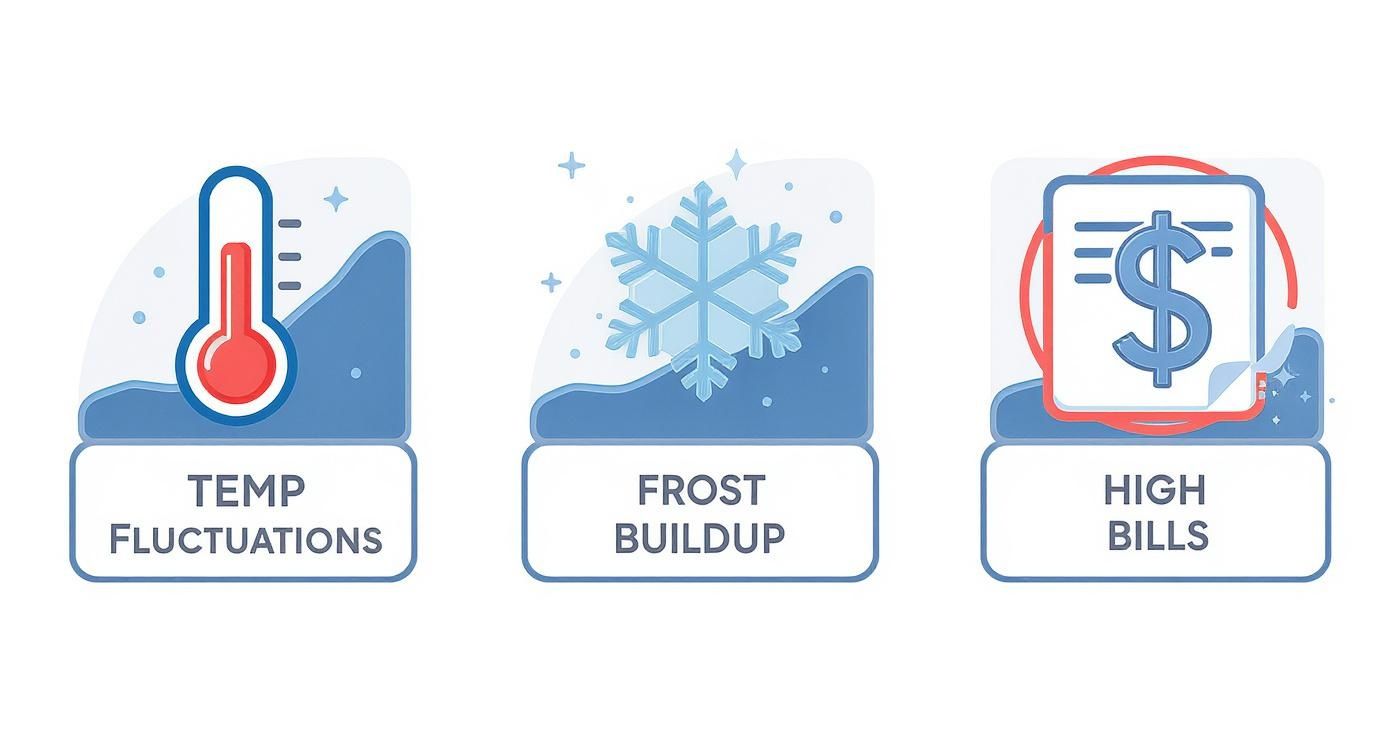
Catching these issues early—from weird temperature swings to a sudden jump in your utility bill—lets you get ahead of a full-blown emergency. If you’ve run through these checks and the freezer still won’t cooperate, it’s time to call in the pros. For those times when you absolutely can’t wait, check out our emergency appliance repair services for immediate help.
What to Expect From a Professional Repair Service
When your commercial freezer gives up the ghost, calling in a professional can feel like a shot in the dark. Your inventory is at risk, your business is disrupted, and the last thing you need is more uncertainty. Let’s pull back the curtain on the professional repair process so you know exactly what to expect from the moment you pick up the phone.
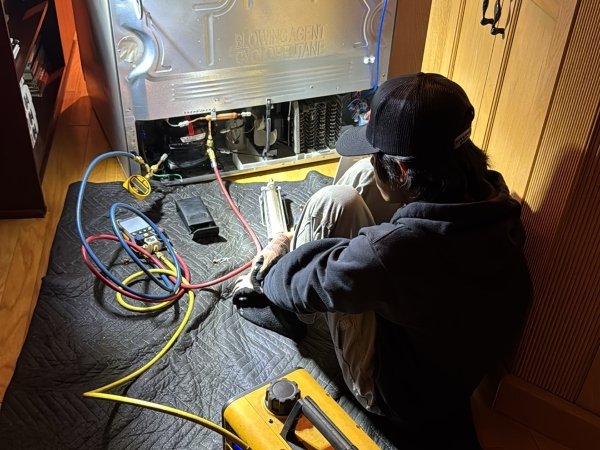
A genuine professional service isn’t just about a quick fix. It’s a methodical approach designed to give you a reliable, long-term solution. It all starts with your call, where our dispatch team will ask for key details about your freezer’s model and the symptoms you’re seeing. This simple step helps the technician show up prepared, often with the right tools and parts already in hand.
The Diagnostic Process
Once a certified technician is on-site, their first job is to play detective. They don’t just patch up the obvious symptom; they dig deep to find the root cause using specialized tools and years of experience.
This diagnostic phase is pretty thorough and usually includes:
- System Analysis: Hooking up gauges and multimeters to check critical vitals like refrigerant pressures, electrical continuity, and how well each component is performing.
- Component Testing: Methodically isolating and testing the big players—the compressor, evaporator fan motor, and defrost system—to pinpoint the exact point of failure.
- Leak Detection: Using sensitive electronic leak detectors or dye tests to uncover those tiny, invisible refrigerant leaks that can slowly but surely cripple your freezer’s performance.
After the investigation, the technician will walk you through exactly what’s wrong. They’ll explain what failed, why it failed, and give you a clear, itemized quote for the repair covering both parts and labour. There should be no hidden fees and no surprises.
Parts and Timelines
The quality of the parts used in your repair directly impacts how long it will last. You’ll generally hear about two types: Original Equipment Manufacturer (OEM) parts and aftermarket parts. While aftermarket options can seem cheaper upfront, OEM parts are made by the original manufacturer for your specific freezer. That means a perfect fit and performance every single time.
Think of OEM parts like getting a replacement part for your car straight from the dealership. You know it’s designed to work perfectly, preserving your equipment’s efficiency and reliability. At Advance Appliance Ltd., we stick to high-quality OEM parts because we stand by our work.
The timeline for your repair really comes down to parts availability. Most common components are stocked right on our service vehicles, allowing for a same-day fix. If a more specialized part needs to be ordered, we’ll give you a firm timeline for its arrival and get the follow-up visit booked right away. We believe communication is everything, so you’ll be kept in the loop every step of the way. You can learn more in our guide on why you should hire a professional repair service.
Understanding the Broader Industry
The demand for skilled refrigeration technicians is on the rise. In 2024, the global market for commercial refrigeration repair was valued at around $545 million, with North America leading the charge. This growth is fuelled by the massive foodservice and retail industries that simply can’t function without reliable cold storage. To keep up, the technician workforce is expected to grow right alongside the commercial construction market. You can read more about these market report insights on OpenPR.com.
Once the repair is done, our technician will run a full battery of tests to make sure your freezer is holding the perfect temperature and running efficiently. You’ll get a detailed invoice and a clear explanation of the warranty covering both the parts we used and the work we did. A true professional is always happy to answer your questions, so don’t be shy.
Understanding Freezer Repair Costs and Warranties
When a vital piece of your business, like a commercial freezer, suddenly gives up, the first question that hits your mind is always, “How much is this going to set me back?” Knowing what goes into the final bill is the key to managing your budget and making a smart call for your operations. The final cost isn’t just one flat number; it’s a mix of a few important factors.
The single biggest driver of the price is how complex the problem is. A simple fix, like swapping out a tired, old door gasket, is going to be worlds apart from a major operation like replacing a dead compressor. The specific parts needed, how old your freezer is, its model, and the technician’s labour rate all have a hand in shaping the total cost.
Breaking Down the Repair Bill
To give you a clearer picture, a commercial freezer repair invoice usually has a few core parts. We believe in total transparency, so you’ll always get an itemized quote from a reputable company before any work begins.
- Service Call Fee: This is a flat rate that covers our technician’s travel to your location and the initial diagnostic work to pinpoint exactly what’s gone wrong.
- Labour Costs: This covers the technician’s hands-on time and expertise to actually perform the repair. It’s typically billed at an hourly rate, which can change based on their experience and certifications.
- Parts Costs: This is the cost of any new components we need to install, whether it’s a tiny relay or a whole new evaporator motor. The price here will depend on if it’s an OEM (Original Equipment Manufacturer) part or a high-quality aftermarket alternative.
For a deeper dive into what you can expect, feel free to check out our average appliance repair cost breakdown for more detailed insights.
The Critical Role of a Strong Warranty
A repair shouldn’t be a temporary patch-up; it’s an investment to keep your equipment running smoothly. This is where a rock-solid warranty becomes one of the most important things you should look for. A warranty is a company’s promise that they stand behind their work and the parts they use.
A warranty isn’t just a piece of paper—it’s your assurance of quality and your protection against the same problem popping up again. A company that offers a strong warranty on both parts and labour is showing confidence in their technicians’ skills and the quality of their repairs.
At Advance Appliance Ltd., we provide a comprehensive 90-day warranty on both parts and labour for every single repair we complete. If the same issue comes back within that time because of a faulty part or our workmanship, we’ll be back to make it right, no extra charge to you.
Beyond our service guarantee, it’s also smart to know the details of your freezer’s original manufacturer warranty. You can learn how to protect your equipment warranty to make sure you don’t accidentally void your coverage with improper maintenance or unauthorized repairs. A great warranty gives you peace of mind, protecting your investment long after our truck has pulled away.
Proactive Maintenance to Prevent Future Breakdowns
Let’s be honest: the cheapest repair is the one you never have to make. While it’s smart to have a plan for when things go wrong, a little proactive care can save your business thousands in spoiled inventory, emergency call-out fees, and crippling downtime. The best defence for your commercial freezer is a good offence—regular, simple maintenance.
Think of your freezer like a delivery van. You wouldn’t drive it for thousands of kilometres without checking the oil or tires, right? Your freezer works just as hard, running 24/7 to protect your products. It needs the same kind of routine attention to keep it from breaking down on the side of the road, so to speak. The good news is that most of these tasks are simple enough for your staff to handle, turning a few minutes of daily closing duties into a powerful asset protection plan.
Creating an In-House Maintenance Checklist
The first step is empowering your team with a clear, easy-to-follow checklist. These aren’t technical jobs, but they make a massive difference in your freezer’s long-term health and efficiency.
Here are a few essential habits to build into your daily or weekly schedule:
- Wipe Down Door Gaskets: Spills and food debris can make the rubber seals on your freezer door sticky and brittle, causing them to tear or not seal properly. A quick daily wipe with a damp cloth keeps the seal tight, locking the cold air in and keeping the warm, humid kitchen air out.
- Check for Proper Airflow: Make sure boxes and inventory aren’t pushed up against the interior vents. Blocked airflow makes the freezer work overtime to circulate cold air, which puts a ton of stress on the fan motors and can lead to dangerous temperature fluctuations.
- Keep It Clean: Regularly cleaning the interior does more than just look good. It prevents messes from causing corrosion and helps you spot early warning signs, like excessive frost building up where it shouldn’t be.
These small habits are the foundation of a long and healthy life for your equipment. You can find more great tips in our guide on 6 ways to keep your appliances working their best, as many of the same principles apply.
The “Why” Behind the Work
When your team understands why they’re doing something, it sticks. Cleaning the condenser coils, for example, is probably the single most important maintenance task you can perform.
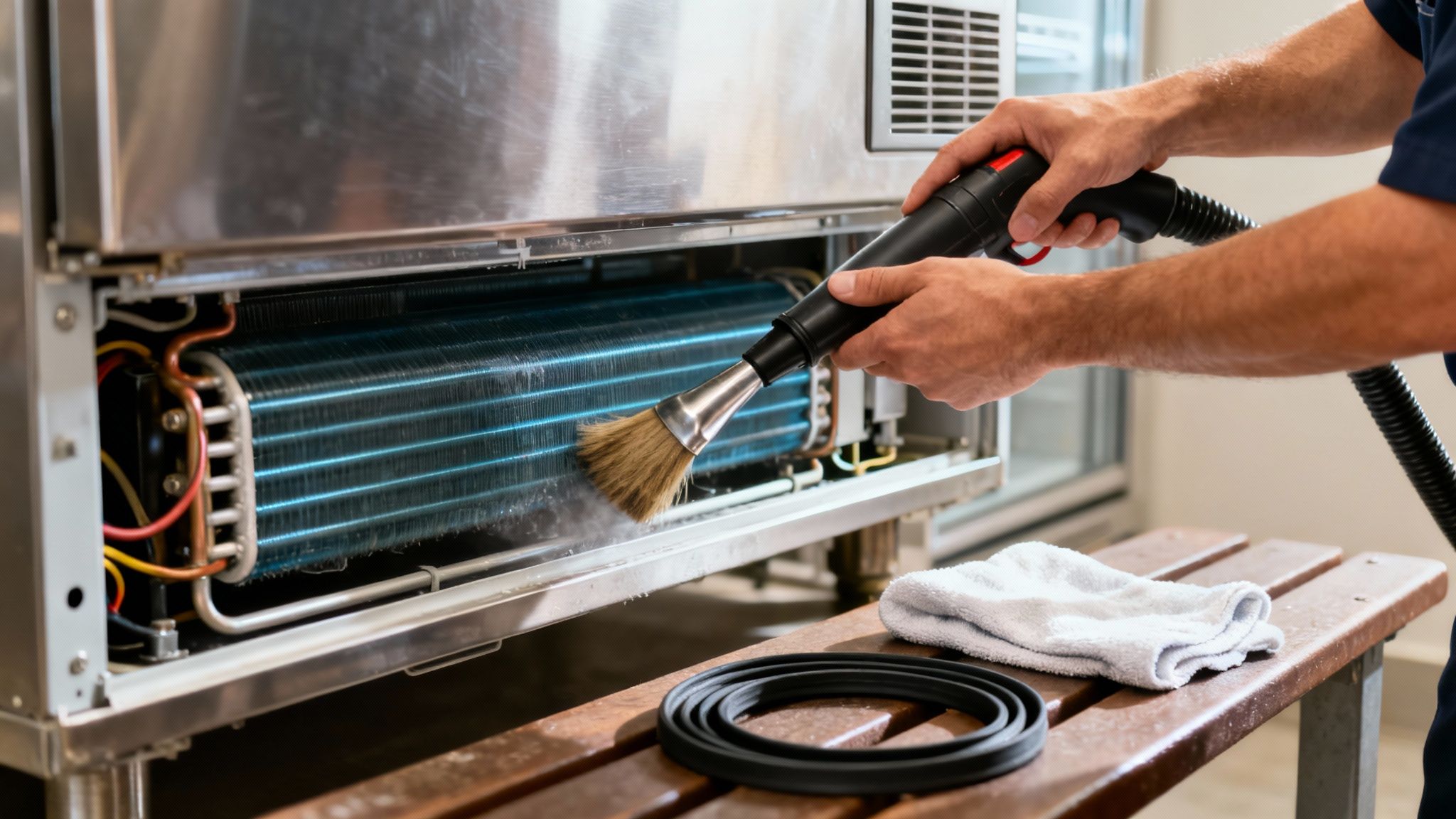
Think of the condenser coils as your freezer’s lungs. They’re responsible for “exhaling” all the heat that’s been pulled out from inside the unit. When they get clogged with dust, grease, and grime, the freezer can’t breathe out properly. That trapped heat forces the compressor to run hotter and longer, which sends your energy bills through the roof and is a fast track to a complete system failure.
A quick monthly brushing or vacuuming of these coils can slash your energy consumption by up to 30% and prevent one of the most common reasons people call us for a commercial freezer repair.
DIY vs Professional Maintenance Checklist
While your team can handle the daily essentials, some jobs are best left to a certified pro. Here’s a quick breakdown of who should be doing what.
| Maintenance Task | Frequency | Performed By (In-House Staff) | Performed By (Professional Technician) |
|---|---|---|---|
| Clean Door Gaskets & Seals | Daily |  | |
| Check & Clear Interior Vents | Daily | | |
| Monitor Temperature Display | Daily | | |
| Clean Condenser Coils | Monthly | | |
| Inspect Power Cords | Monthly | | |
| Calibrate Thermostat | Annually | | |
| Check Refrigerant Levels | Annually | | |
| Test Electrical Components | Annually | | |
| Inspect & Lubricate Motors | Annually | | |
| Deep Clean Evaporator Coil | Annually | |
This combination of daily in-house checks and annual professional servicing creates a powerful shield against unexpected breakdowns.
Professional Preventative Maintenance Plans
Your daily checks are crucial, but they can’t replace the trained eye of a professional technician. A scheduled preventative maintenance plan from Advance Appliance Ltd. is like an annual physical for your equipment—it catches small problems before they become catastrophic failures.
During a professional tune-up, our certified technicians go far beyond a simple cleaning. They will:
- Check refrigerant levels and pressures to ensure your system is cooling efficiently.
- Test all electrical connections and components to spot and fix potential fire hazards.
- Calibrate thermostats to guarantee accurate and consistent temperature control.
- Lubricate moving parts like fan motors to reduce friction and prevent premature wear.
Think of it as a small investment to protect a very large one. A regular maintenance plan helps you avoid the massive, unexpected cost of an emergency breakdown, protecting your bottom line and keeping your kitchen running smoothly.
How to Choose the Right Repair Service in Alberta
When your commercial freezer gives out, it feels like your business’s lifeline is cut. The repair company you call in that moment can either be the hero that saves your inventory or the reason for even more expensive delays. Picking the right service isn’t just about finding someone who can turn a wrench; it’s about finding a reliable partner who gets the urgency and has the know-how to get it right the first time.
In major hubs like Edmonton, Calgary, and Red Deer, you’ve got options. But let’s be honest, not all repair services are built the same. You need a team that’s not just fast, but qualified, transparent, and trustworthy. This guide will help you cut through the noise and make a smart decision that protects your business.
Verify the Essentials First
Before you even start describing the problem, there are a few non-negotiables to check off your list. These are the basics that separate the real pros from the rest.
- Licensing and Insurance: Is the company fully licensed to work in Alberta and do they carry proper liability insurance? This is your safety net, protecting your business from any accidental damage that might happen on your property during the repair.
- Technician Certifications: Ask if their technicians are Red Seal certified journeymen. In Canada, this is the gold standard. It means they’ve met tough national standards for their trade and really know their stuff.
- Local Reviews and References: Don’t just take their word for it on their website. Dig into recent, independent reviews on places like Google. Any company worth its salt should also be happy to provide references from other local businesses they’ve helped out.
Think of these checks as your first line of defence. They ensure you’re dealing with a legitimate, accountable business.
Evaluate Their Service Standards
Once you’ve confirmed the basics, it’s time to look at how they actually operate. A company’s service policies tell you everything about the experience you can expect, especially when you’re in a stressful spot.
Choosing a repair service is about more than just technical skill; it’s about trust and reliability. A company’s commitment to transparent pricing, prompt communication, and strong warranties shows they value your business and stand confidently behind their work.
Here’s what to look for:
- Emergency Response Times: How fast can they get a technician to your door? When a freezer fails, same-day service isn’t a luxury—it’s a must.
- Pricing Transparency: Do they give you a clear, itemized quote before they start working? You should never have to guess what labour rates or parts are going to cost you.
- Warranty Quality: A solid warranty is a sign of quality work. Look for a guarantee that covers both parts and labour for a decent amount of time, like a 90-day warranty. It gives you peace of mind.
Staying Ahead of Industry Changes
The world of commercial refrigeration is always changing, thanks to new technology and environmental rules. A company that’s on the ball stays current. For instance, some areas are getting really strict about the environmental standards for refrigerants. This directly impacts the skills needed for modern commercial freezer repair, as technicians need to be trained on the newer, eco-friendly systems. You can learn more about these industry trends and regulations at nextechna.com.
Choosing a provider who invests in ongoing training means your equipment gets serviced according to the latest standards. At Advance Appliance Ltd., we make a point of exceeding these criteria with certified technicians, upfront pricing, and a solid warranty. When your business needs a dependable partner in Edmonton, Calgary, or Red Deer, don’t hesitate to contact us.
Frequently Asked Questions
When your commercial freezer acts up, you’ve got questions, and you need answers fast. Running a business in Alberta means you can’t afford downtime. Here are some straightforward answers to the questions we hear most often from fellow business owners.
How Often Should I Get Professional Maintenance?
For most commercial freezers, a professional preventative maintenance check-up at least once a year is your best bet. Think of it as an annual physical for your most critical equipment.
However, if your freezer is in a high-stress environment—like a busy restaurant kitchen swimming in grease and dust—you’ll want to bump that up to twice a year. This small investment keeps it running efficiently and helps our techs spot tiny issues before they snowball into costly, business-halting emergencies.
Can I Repair a Commercial Freezer Myself?
While we absolutely encourage you to handle the simple stuff like cleaning coils or checking door seals, most commercial freezer repairs are a job for certified pros. These machines are not your home fridge; they’re complex systems running on high-voltage electricity and pressurized refrigerants.
Trying to fix it yourself without the right training and specialized tools isn’t just risky—it can be downright dangerous. You could cause even more damage or void your warranty.
It’s a bit like your vehicle. You can easily top up the windshield fluid, but you wouldn’t attempt to rebuild the transmission in your garage. A certified technician has the expertise to find the real problem and fix it safely the first time.
Is It Better to Repair or Replace My Freezer?
That’s the million-dollar question, isn’t it? The decision to repair or replace usually boils down to three things:
- Age: If your freezer is getting on in years, say 10-15 years old, a new model will likely be far more energy-efficient, saving you money in the long run.
- Repair Cost: Here’s a good rule of thumb: if the repair bill is more than 50% of the cost of a new, similar freezer, replacement is probably the smarter financial move.
- Breakdown Frequency: Are you on a first-name basis with your repair tech? If you’re constantly calling for service, the combined cost and headache of downtime probably mean it’s time to invest in a new, reliable unit.
A good technician will give you a clear diagnosis and an honest opinion, helping you weigh the numbers for your specific freezer and situation.
Don’t let a failing freezer put your business on ice. For quick, reliable, and professional commercial freezer repair in Edmonton, Calgary, or Red Deer, the certified experts at Advance Appliance Ltd. are ready to get you back up and running.