
That sinking feeling when you open the fridge and find a puddle of water at the bottom is something most of us have experienced. Good news: it’s almost always caused by one simple issue—a clogged or frozen defrost drain. This is the single most common reason for an interior fridge leak, and it’s usually a pretty straightforward fix.
Quickly Diagnosing Your Refrigerator Leak
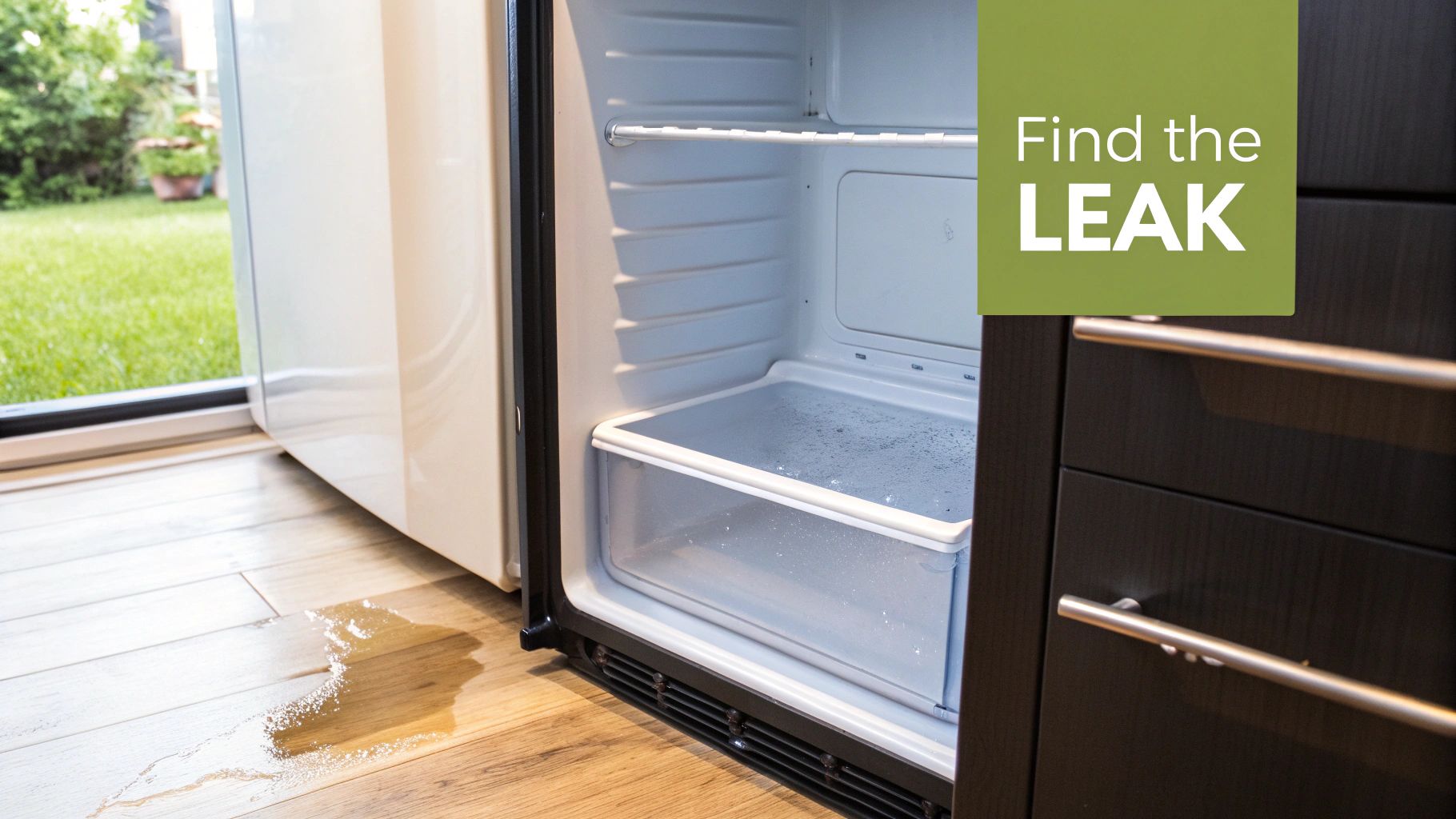
Finding water pooled under your crisper drawers can be alarming, but it rarely points to a catastrophic failure. Think of it as your fridge’s way of telling you its internal plumbing is blocked.
Here’s what’s happening behind the scenes: every modern refrigerator has an automatic defrost system that melts frost off the cooling coils. That meltwater is designed to flow down a small drain line to a pan underneath the fridge, where it safely evaporates. When that drain gets clogged with tiny food particles, ice, or other gunk, the water has nowhere to go. It backs up, overflows, and ends up on the bottom shelf of your fridge.
Why Is This Problem So Common?
Understanding what causes the clog can help you stop it from happening again. In my experience, it usually comes down to one of three things:
- Debris Buildup: Tiny crumbs and other small food bits are the usual suspects. They get washed into the drain hole and build up over time.
- Ice Dams: Sometimes the drain itself freezes over, creating an ice plug that forces water right back into the fridge.
- Infrequent Cleaning: Let’s be honest, the defrost drain is an out-of-sight component that’s easy to forget during a regular clean-out.
Before diving into a fix, it’s helpful to quickly understand what you’re up against. Here’s a table that breaks down the common culprits behind an interior fridge leak.
Common Causes of Interior Refrigerator Leaks
| Cause | Common Symptom | DIY Difficulty Level |
|---|---|---|
| Clogged Defrost Drain | Water pooling on the bottom shelf, especially under the crisper drawers. | Easy to Moderate |
| Frozen Defrost Drain | Ice buildup at the back of the freezer or fresh food compartment near the drain opening. | Moderate |
| Damaged Water Line | Dripping or spraying from the back of the fridge, often related to the ice maker or water dispenser. | Moderate to Hard |
| Cracked Drain Pan | Water leaking underneath the fridge, not just inside it. | Easy to Moderate |
This quick-reference table should help you narrow down the possibilities. For most interior leaks, you’ll be dealing with that top row: a simple clog.
If the leak is significant and has reached your floor, it’s crucial to act fast to prevent damage. You may need to look into emergency water cleanup at home to protect your flooring and cabinets.
Recognizing the signs of a blocked drain is the first step toward fixing it. For a bigger picture of similar issues, our guide on the 5 most common fridge problems and how to fix them offers some great context.
Now, let’s get hands-on and walk through exactly how to find and clear that blockage.
Finding the Source of the Leak
Alright, so you’ve got a puddle inside your fridge. Before you can even think about fixing it, you need to play detective. Pinpointing exactly where that water is coming from is the most important step—it’s the difference between a quick fix and a wasted afternoon. The good news? Your fridge usually leaves a trail of breadcrumbs.
Start by clearing everything out. Empty that bottom shelf and pull out the crisper drawers. This gives you a clean slate to work with and a clear view of where the water is collecting. Is it pooling right in the middle, maybe under a small drain opening? That’s the classic sign of a clogged defrost drain. Or is the puddle forming off to one side?
Following the Water Trail
With a clear view, you can start tracing the water back to its source. Take a look at the back wall inside the fridge compartment. You’re searching for streaks of water, condensation trails, or in some cases, a whole sheet of ice building up on that interior panel. Seeing that almost always confirms the problem: water is backing up from a blocked drain that sits right behind that panel.
If your fridge has a water dispenser or an icemaker, your investigation gets a little broader. You’ll need to carefully inspect the area around the water filter housing, which is usually tucked away inside the fresh food section.
- Filter Leaks: Check for drips coming directly from the filter cartridge itself or the housing it screws into. A filter that isn’t seated quite right or a tiny crack in the housing will create a slow but steady leak.
- Supply Line Issues: This is less common for leaks inside the fridge, but it can happen. A loose or damaged connection on the supply line where it enters the fridge could be the culprit.
My best advice is to take a systematic approach. Always start with the most likely suspect—the defrost drain. Only if the evidence doesn’t point there should you move on to other possibilities. This simple rule will save you from taking apart things you don’t need to.
Sometimes, tracking down a leak in one appliance can teach you a lot about detecting water leaks in your home in general. The same principles of tracing the source often apply elsewhere.
Essential Safety First
Before you even think about touching a panel or poking around inside, you have to put safety first. This is non-negotiable. Unplug the refrigerator from the wall. This completely removes the risk of electric shock when you’re working near water and electrical components.
Once it’s unplugged, you can safely get a closer look. If you suspect the defrost drain is the problem, you’ll be looking for a small hole, often at the very bottom of the freezer or low on the back wall of the fridge compartment. Sometimes it’s covered by a little plastic cap. That’s your target.
How to Fix a Clogged Defrost Drain Yourself
A clogged defrost drain is probably the #1 reason a fridge starts leaking water inside. The good news? You can usually fix this one yourself without calling a technician. With a couple of simple tools and a bit of patience, you can have this sorted out in under an hour. Think of it as some basic plumbing maintenance for your fridge.
Before you jump in, you’ll need to grab a few things. Nothing fancy, I promise.
- A turkey baster or a large syringe
- A cup of warm water (not boiling—you don’t want to warp the plastic)
- A small, flexible tube or a sturdy pipe cleaner
- A few old towels to catch any water
- A hairdryer (optional, but handy for stubborn ice)
The whole goal here is to safely find the drain, melt any ice blocking it, and flush out whatever gunk is causing the backup.
Locating and Accessing the Defrost Drain
First things first: unplug your refrigerator. Seriously, this is a critical safety step. Never skip it.
With the power off, you need to find the defrost drain hole. Its location can vary depending on your fridge model, but it’s almost always a small opening at the bottom of your freezer or on the back interior wall of the fridge, right above the crisper drawers.
You’ll likely need to remove a plastic cover panel to get to it. These are usually held on with a few screws or clips. Pop that off, and you should see the top of the drain tube. If a big chunk of ice is covering the area, your first job is to melt it. A hairdryer on a low, warm setting works perfectly. Just keep it moving and don’t hold it too close to the plastic liner.
This diagram shows how the defrost drain fits into your fridge’s water system. A clog here is what kicks off the whole leaking mess.
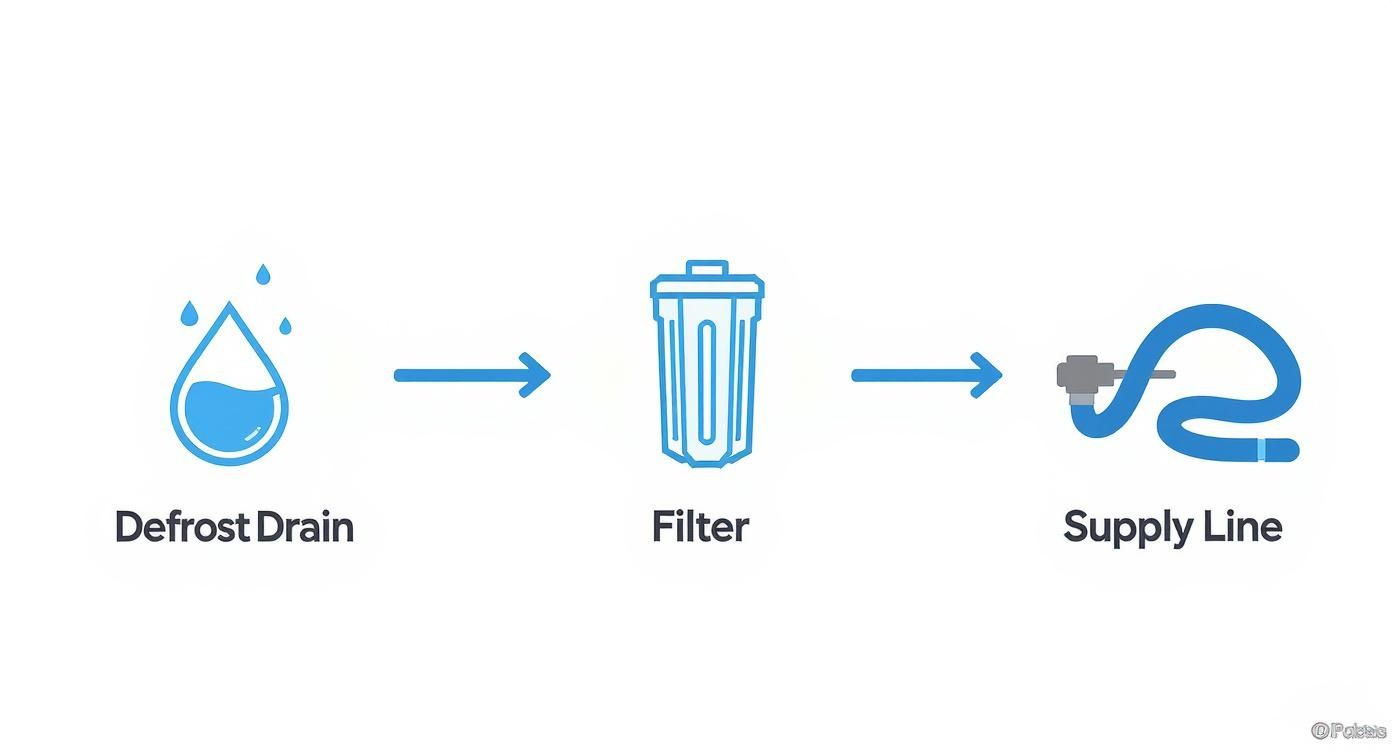
As you can see, a blockage completely disrupts the flow, forcing water to pool inside your fridge instead of draining away.
Clearing the Blockage Step by Step
Once the drain hole is clear, start by gently pushing your flexible pipe cleaner or thin tube into the opening. The idea is to break up any loose food bits or surface ice. Don’t force it—you’re just trying to loosen the clog.
Now it’s time to flush the line. Fill your turkey baster with warm water, stick its tip right into the drain hole, and give it a good, forceful squeeze. You’ll probably have to do this a few times. The combination of warm water and pressure should dissolve any ice and wash away the built-up grime.
Pro Tip: For the last flush, I like to add a teaspoon of baking soda to the warm water. It helps clean out the line and deodorizes it, which can help stop future clogs from forming so fast.
You’ll know it’s worked when you can hear the water running freely down into the drain pan under the fridge. If the water keeps backing up, the blockage is a bit more stubborn, and you’ll need to repeat the process.
Keep in mind, a frozen drain can sometimes be a symptom of a bigger defrost system problem. If you suspect that’s the case, our guide on why your fridge is not defrosting and common fixes has more detail.
Troubleshooting Other Common Leak Causes
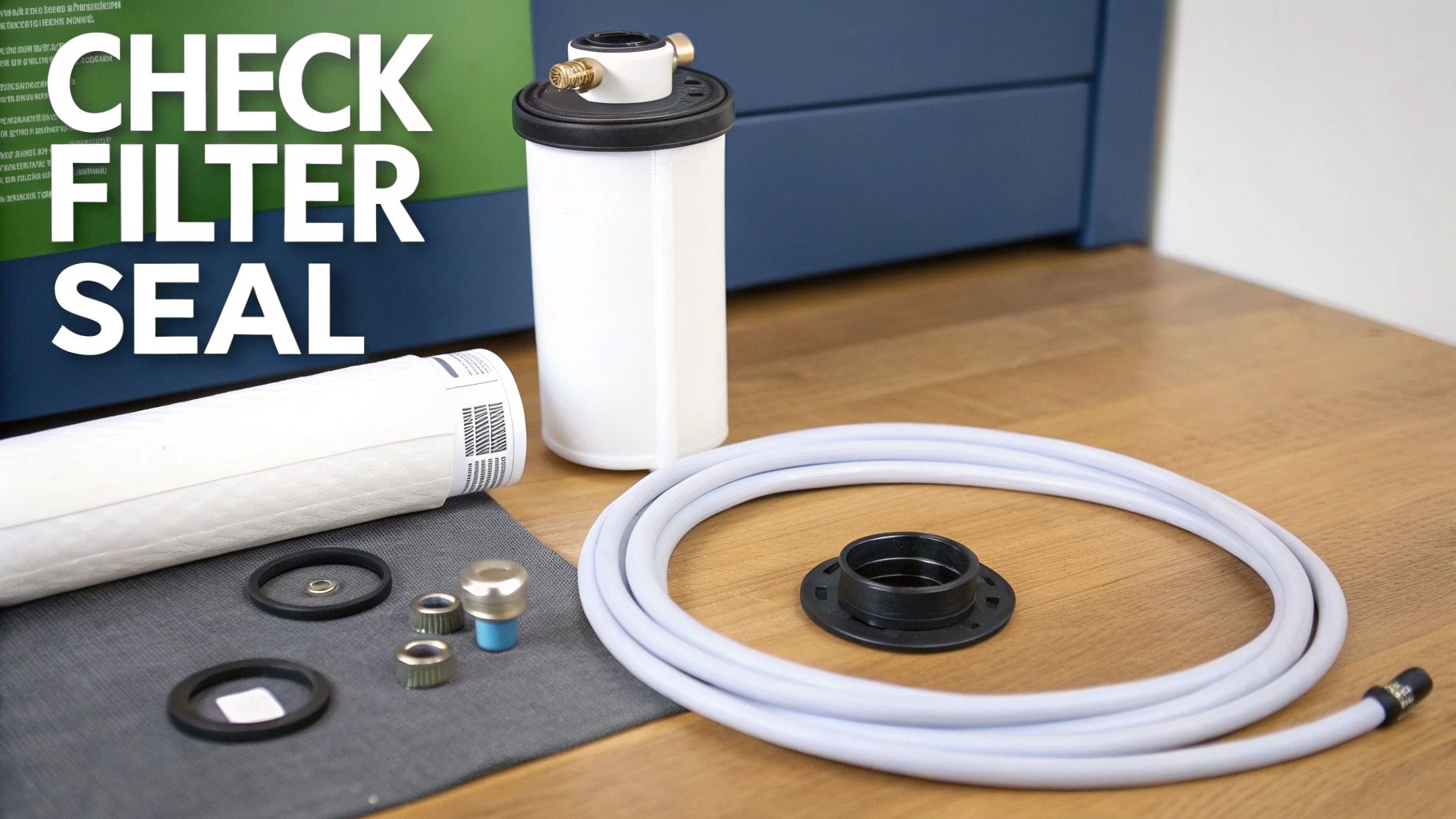
So, you’ve given the defrost drain a thorough cleaning, but there’s still a puddle forming inside your fridge. What now? It’s time to pivot from the drainage system and start investigating the water supply components, especially if your fridge has a water dispenser or an ice maker.
More often than you’d think, the real culprit is a poorly installed or faulty water filter. If you just swapped your filter out recently, this is the very first place you should look. A filter that’s even slightly misaligned won’t let the O-ring seals create a perfect, watertight connection, leading to a slow but steady drip.
Checking Your Water Filter and Housing
Your first move is to visually inspect the filter housing. Shine a light in there and look for any hairline cracks or obvious damage. Plastic can become brittle over time, and a small fracture is all it takes for a leak to start under pressure.
Next, take the filter out and give it a close look, paying special attention to the seals and where it connects. It’s amazing how a tiny piece of debris or a damaged rubber seal can compromise the entire connection.
- Check the Seals: Make sure the rubber O-rings on the filter are in good shape—not torn, twisted, or brittle.
- Install it Right: When you put it back in, listen for that satisfying click or feel it lock firmly into place. Be careful not to overtighten, as you can crack the housing or damage the seals.
- Stick to the Right Filter: Always use the filter recommended by the manufacturer. Generic or off-brand filters might look the same, but slight differences in their dimensions can cause a poor fit and a very frustrating leak.
A great way to confirm your suspicion is to remove the filter and pop in the bypass plug that came with your fridge. If the leak magically stops, you’ve found your problem. It’s either a defective filter or it wasn’t seated correctly.
A small leak from the water filter can go unnoticed for days, slowly seeping into the bottom of your fridge. It often gets mistaken for a defrost drain problem, so it’s a critical component to rule out.
Inspecting the Water Supply Line and Inlet Valve
The entire system feeding your dispenser and ice maker can also spring a leak. This includes the water line coming from your wall and the water inlet valve on the back of the fridge where that line connects.
Usually, a leak in the main supply line creates a puddle on the floor behind the fridge. However, a faulty inlet valve can sometimes cause water to drip inside. This valve is basically an electrical gate that opens and closes to allow water in. If it gets stuck or doesn’t close all the way, a slow trickle can overflow the ice maker’s tray or find its way down an internal channel.
This one is a more advanced repair, since you’re dealing with both plumbing and electrical parts. If you’re pretty sure the inlet valve is the issue, it’s usually best to call in a professional.
When Seals and Pans Are the Problem
Finally, let’s look at two less common—but still possible—causes: a bad door gasket or a cracked drain pan.
A warped or torn door gasket lets warm, moist air creep into the fridge. This makes the cooling system work harder, creating way more condensation than the defrost system can handle, which leads to puddles. An easy test is to just run your hand along the door seals. Can you feel any cold air escaping?
The drain pan, hidden away at the bottom of the fridge, is designed to catch water from the defrost cycle. If this pan gets cracked, water will obviously leak onto your floor. But a really bad crack could also cause water to splash around in a way that makes it seem like the leak is coming from inside.
Knowing When to Call an Appliance Technician
There’s a real sense of accomplishment that comes from fixing your own appliances, I get it. But there are times when it’s best to put the tools down and call in a licensed professional. Knowing the difference can save you from a much bigger headache, not to mention extra costs and even safety hazards. Let’s face it, not every refrigerator leaking water inside is a simple fix.
Trying an advanced repair without the right diagnostic experience can turn a small issue into a costly disaster. If you’ve already cleared the defrost drain and checked the water filter but the puddle keeps coming back, that’s a pretty clear signal that the problem runs deeper. This is the point where calling for expert help is your smartest move.
Signs You Need Professional Help
Some symptoms are dead giveaways that you’re dealing with something beyond a basic DIY job. You should definitely consider calling a technician if you run into any of these scenarios, as they often involve complex electrical components or sealed systems that are just plain risky for an amateur to tackle.
- Suspected Refrigerant Leak: If you see an oily residue mixed with the water or hear a faint but constant hissing sound, you might have a refrigerant leak. This isn’t just a simple patch job; it requires certified handling by a pro.
- Electrical Component Failure: A malfunctioning water inlet valve, a broken defrost timer, or a burnt-out heater aren’t simple parts to swap. These repairs involve live wiring and demand precise diagnostics to get right.
- The Leak Is Near Wiring: This is a big one. Any water pooling near electrical harnesses, the compressor, or other powered parts creates a serious safety risk. Unplug the fridge immediately and don’t even think about trying to fix it yourself.
- You Can’t Get to the Problem: Sometimes the broken part is buried deep inside the appliance, requiring a major teardown. A technician has the experience to take apart and correctly reassemble your fridge without leaving you with a handful of “extra” screws.
A slow, persistent leak might seem like a minor annoyance, but its cumulative effect can be devastating. Beyond the wasted water, the Federal Emergency Management Agency (FEMA) estimates that just one inch of indoor flooding can cause as much as $25,000 in damages. That number is a stark reminder of why getting on top of leaks immediately is so critical.
The Value of a Professional Guarantee
Calling a professional technician gives you more than just a quick fix—it offers peace of mind. When you hire a certified expert from a reputable company like Advance Appliance Ltd., you’re getting a proper diagnosis, a transparent estimate, and a warranty that covers both the new parts and the labour.
For a deeper look into making this decision, our article on when to call an appliance repair technician provides some extra guidance.
Ultimately, if a repair feels beyond your comfort zone or involves complicated systems, making that call is always the safest and most reliable choice.
Got Questions About Fridge Leaks? We’ve Got Answers.
Even after you’ve fixed the immediate problem, you probably have a few questions buzzing around. Why did my refrigerator start leaking water inside in the first place? And more importantly, how can I make sure it never happens again? We hear these all the time from homeowners, so let’s clear up a few common queries.
These aren’t just textbook answers; they come from years of seeing what actually causes leaks in homes just like yours.
How Often Should I Clean My Refrigerator’s Defrost Drain?
This is a great question. A little preventative maintenance goes a long way here. For most households, cleaning the defrost drain once a year is perfect. It only takes a few minutes and it’s the single best way to prevent the most common cause of interior fridge leaks.
Now, if you have pets that shed a lot or live in a home that gets dusty easily, you might want to bump that up to every six months. It’s surprising how quickly pet hair and dust can find their way into the drain line and create a stubborn clog.
All it takes is a turkey baster filled with warm water to flush it out. If you want to give it an extra cleaning boost, mixing in a little baking soda can help dissolve any grime that’s starting to build up.
Is It Safe to Use a Leaking Refrigerator?
That really depends on what you’re dealing with. If it’s just a small puddle inside from a clogged defrost drain, you can probably get away with using it for a little while. Just toss a towel in the bottom to soak up the water and get that drain cleared as soon as you can.
But when it comes to water and electricity, your safety has to come first.
- Big Puddles: If you’re seeing a significant amount of water, especially if it’s pooling on the floor, unplug the fridge right away.
- Near Electrical Parts: Water anywhere near the compressor, wiring, or other components at the back of the unit is a serious hazard. Don’t even think about using it until a technician has given it the all-clear.
- Strange Smells: Any kind of burning smell or odd chemical odour is a major red flag. Shut off the power and call for service immediately.
When in doubt, always play it safe. It’s never worth risking a shock or electrical fire just to keep your food cold. Unplug it and get it looked at.
Can My Fridge Leak Internally if It Isn’t Level?
Yes, absolutely! This is one of those things that most people never think about, but it’s a surprisingly common cause of leaks. Your fridge isn’t designed to sit perfectly flat. It should actually have a slight backward tilt—about a quarter-inch from front to back is all you need.
That tiny angle is there for a reason. It uses gravity to guide defrost water toward the drain hole and down into the evaporation pan where it belongs. It also helps the doors swing closed properly, which keeps warm, moist air out and prevents extra condensation from forming.
If your fridge is perfectly level or, even worse, tilting forward, that water has nowhere to go. It will pool up and eventually spill over into the main compartment. You can check this in seconds with a bubble level. Just adjust the front feet until you get that slight backward slant. Problem solved.
If you’ve worked through these fixes and you’re still mopping up puddles, it’s time to bring in the pros. The certified technicians at Advance Appliance Ltd provide same-day or next-day service across Edmonton, Calgary, and Red Deer to get your kitchen back to normal. Book your repair online for a clear estimate and service you can rely on.