
When your washer breaks down, it feels like the whole household grinds to a halt. We get it, and that's why we're here to help. At Advance Appliance Ltd., we provide expert diagnosis and reliable washer repair services across Calgary, Edmonton, and Red Deer, ensuring your laundry routine gets back on track without frustrating delays.
Your Calgary Washer Broke. Now What?
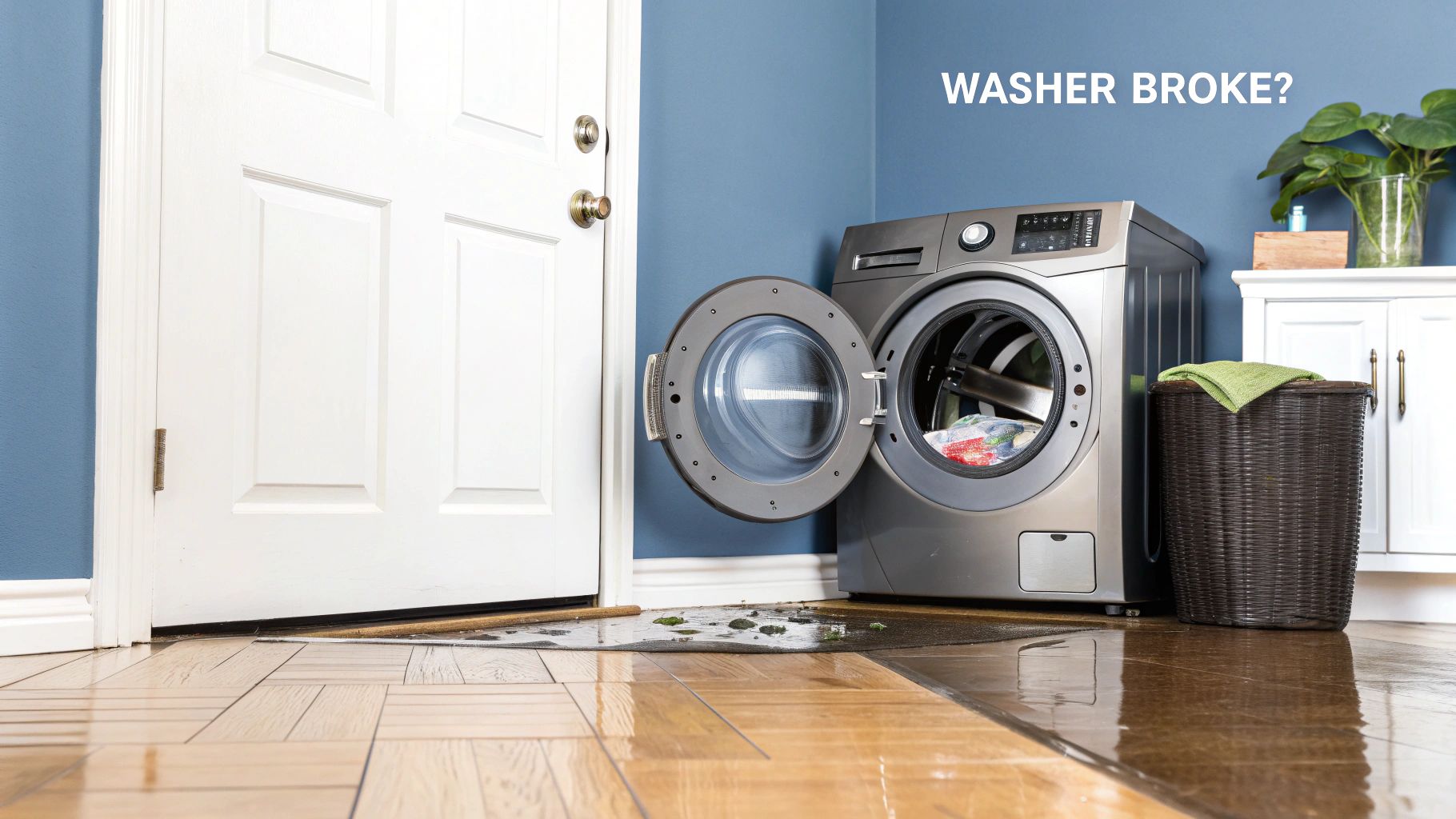
A broken washer is more than just an inconvenience; it’s a clear signal that a component has failed. From strange noises to a machine that won't start, these symptoms are your appliance’s way of telling you what’s wrong. Paying close attention to these clues is the first step toward a correct diagnosis and a lasting fix.
Here are the most common signs that indicate you need professional washer repair in Calgary:
- Strange Noises: Grinding, squealing, or loud banging often point to a failing drum bearing, a worn-out motor, or an object trapped between the drum and the tub.
- Water Leaks: Puddles on the floor are an urgent warning. This is typically caused by a cracked drain hose, a faulty water pump, or a deteriorated door seal on a front-load machine.
- Failure to Spin or Drain: If clothes are still soaking wet after a cycle, the issue is likely a clogged drain pump, a broken drive belt, or a malfunctioning lid switch that prevents the spin cycle from engaging.
- No Power: When the washer is completely unresponsive, it could be a simple tripped circuit breaker. However, it can also signal a more serious problem, such as a fried main control board.
Ignoring these symptoms can lead to more significant damage or even a flooded laundry room. For a deeper dive, learning what to do when your washing machine malfunctions can provide additional clarity.
Common Causes of Washer Failure
Understanding the root cause of a washer breakdown helps you determine the best course of action. The table below outlines the most common culprits, their description, and the difficulty and risk associated with a DIY repair. This information is designed to help Calgary homeowners make an informed decision before attempting a fix.
| Cause | Description | DIY Difficulty | Risk Level |
|---|---|---|---|
| Faulty Lid Switch | A safety device that prevents spinning when the lid is open. If it fails, the washer won't agitate or spin, even with the lid closed. | Low to Medium | Medium: Involves working with electrical wiring. Always unplug the appliance first. |
| Clogged Drain Pump | Small items like socks, coins, or lint can block the pump, preventing water from draining. This leaves the drum full of water after a cycle. | Low | Low: Usually accessible, but can be messy. Requires draining the machine manually. |
| Worn Drive Belt | This belt connects the motor to the drum. Over time, it can stretch, fray, or snap, causing the drum to stop spinning or agitating. | Medium | Medium: Requires accessing the internal components of the washer. |
| Defective Water Inlet Valve | This valve controls the flow of hot and cold water into the machine. If it fails, the washer may not fill with water or may overflow. | Medium | Medium: Involves both water and electrical connections, increasing the risk of shock or leaks. |
| Broken Motor Coupler | On direct-drive models, this plastic or rubber piece connects the motor to the transmission. It's designed to break to protect the motor if overloaded. | High | High: A complex repair that requires significant disassembly of the machine. |
| Failed Control Board | The "brain" of the washer. If it fails, the machine may not turn on, respond to commands, or may display error codes. | High | High: Involves sensitive electronics and is an expensive part to replace if misdiagnosed. |
For a more detailed look at spinning issues, check out our guide on the 4 reasons why your washer isn't spinning and what to do about it.
Safe Troubleshooting Steps You Can Try First
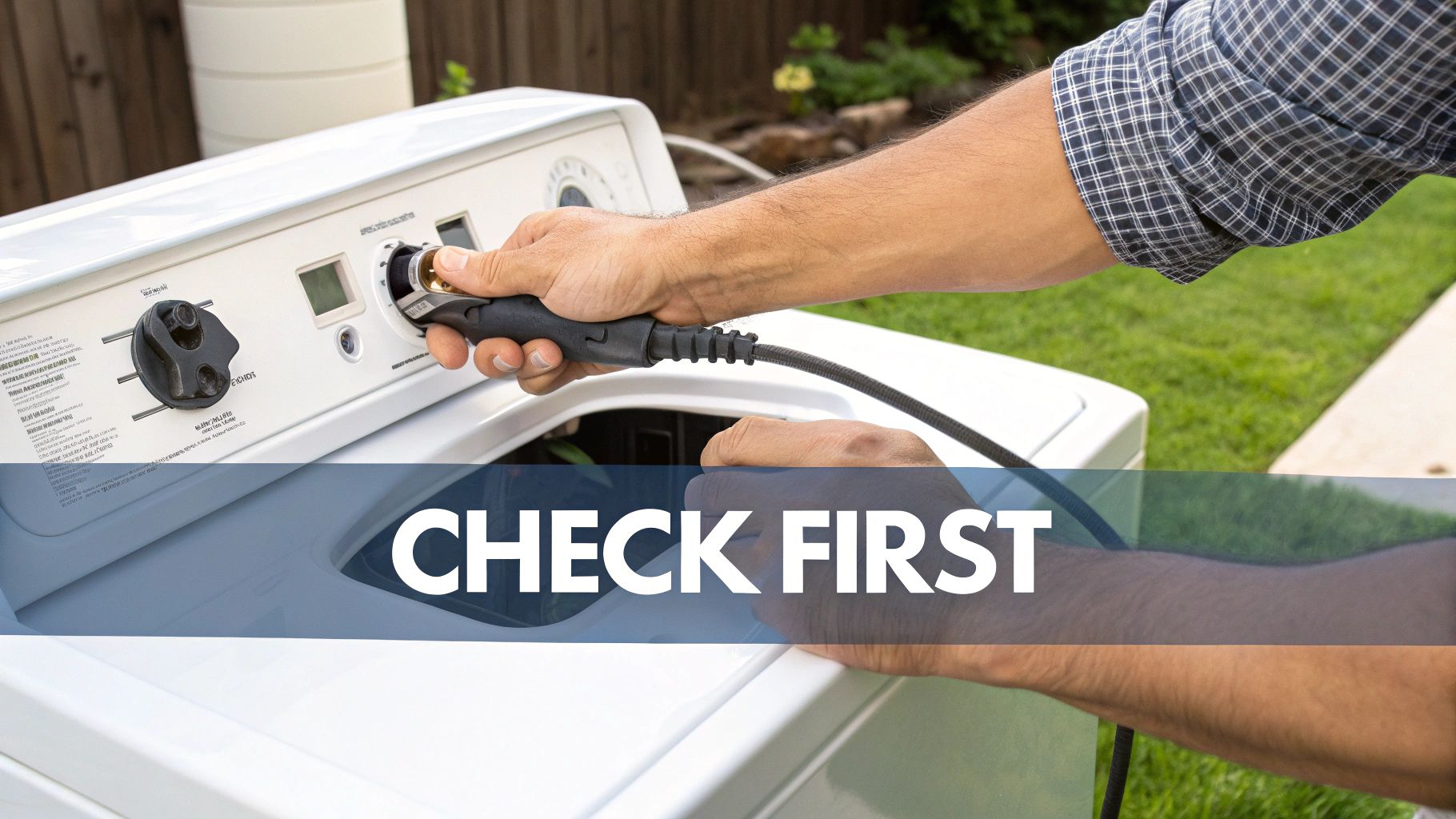
Before you book a washer repair in Calgary, there are a few simple checks you can perform that might solve the issue. These steps are safe for homeowners and can often save you the cost of a service call.
Safety Warning: Before attempting any troubleshooting, unplug your washing machine from the power outlet. This is a critical step to prevent the risk of electric shock.
- Check the Power Connection: Ensure the washer's power cord is securely plugged into the wall outlet. Next, check your home's electrical panel to see if the circuit breaker for the laundry room has tripped. If it has, reset it once. If it trips again, stop and call a professional.
- Inspect the Water Hoses: Look behind the machine to confirm the hot and cold water supply valves are fully open. Check that the hoses are not kinked, twisted, or crushed, as this can prevent the washer from filling.
- Clean the Drain Pump Filter: Many washer issues, especially draining problems, are caused by a clogged pump filter. It is typically located behind a small access panel on the bottom-front of the machine. Place a shallow pan and a towel underneath before unscrewing the filter cap to catch any residual water and debris.
- Ensure the Machine Is Level: An unbalanced washer can cause loud banging, violent shaking, or stop mid-cycle. Use a spirit level to check if the machine is level from front-to-back and side-to-side. Adjust the threaded feet at the bottom until it is stable.
- Examine the Lid Switch or Door Lock: On a top-loader, the lid switch must engage for the machine to run. On a front-loader, the door must be fully closed and latched. Check for lint or debris obstructing the lock mechanism, as this is a common reason for a washer that won’t spin. You can find more details in our guide on troubleshooting a washer that won't spin.
- Review Cycle Settings: It's easy to accidentally select a "Delay Start" or "Soak" setting. Double-check the control panel to ensure you have selected the correct cycle and settings before starting the machine.
If you've completed these steps and your washer still isn't working, it's time to call a certified technician. Further diagnostics involve complex electrical and mechanical components that are unsafe to handle without proper training.
What Does Washer Repair Cost In Calgary?
Understanding the potential cost of a washer repair in Calgary helps you budget accordingly and avoid surprises. The final price is typically determined by three factors: a diagnostic fee, the cost of replacement parts, and the labour required to complete the repair. At Advance Appliance Ltd., we provide transparent pricing and a detailed quote before any work begins.
Typical Washer Repair Costs In Alberta
This table provides a breakdown of standard repair costs in the Calgary, Edmonton, and Red Deer areas. Please note that prices can vary based on the appliance brand, the complexity of the repair, and specific part costs.
| Repair Type | Typical Cost | Notes |
|---|---|---|
| Diagnostic Fee | $120–$150 | This fee covers the technician's travel and time to accurately identify the problem. It is typically waived if you proceed with the recommended repair. |
| Common Parts | $150–$650 | The cost of parts like drain pumps, control boards, or belts varies significantly by brand (e.g., a common Whirlpool part vs. a specialized Bosch component). |
| Labour | $150–$260/hr | The hourly rate reflects the complexity of the job. A simple belt replacement will take less time than a major motor or transmission repair. |
Please note: The prices listed above are estimates and do not include GST. You can learn more about general appliance repair pricing by checking resources like invoicefly.com or our own guide on the average appliance repair cost breakdown.
Washer Failure Rate & Repair Cost Chart
This chart compares common washer component failure rates and their associated average repair costs from last year to the current year in Alberta. It highlights trends in both the frequency of certain repairs and their market costs.
Chart Description: A bar chart comparing washer component failures. Gray bars represent last year's data, and light blue bars represent the current year's data. The x-axis lists components (Lid Switch, Drain Pump, Drive Belt, Water Valve, Control Board), while the y-axis shows two metrics: failure rate (as a percentage) and average repair cost (in CAD).
This data shows a slight increase in control board failures, likely due to the growing complexity of modern machines, while the average repair cost for most mechanical parts like drive belts and drain pumps has remained relatively stable.
Should You Repair or Replace Your Washer?
It's the critical question every Calgary homeowner faces with a broken appliance: is it more cost-effective to repair it or buy a new one? Making the right decision involves weighing the repair cost against the appliance's age and value.
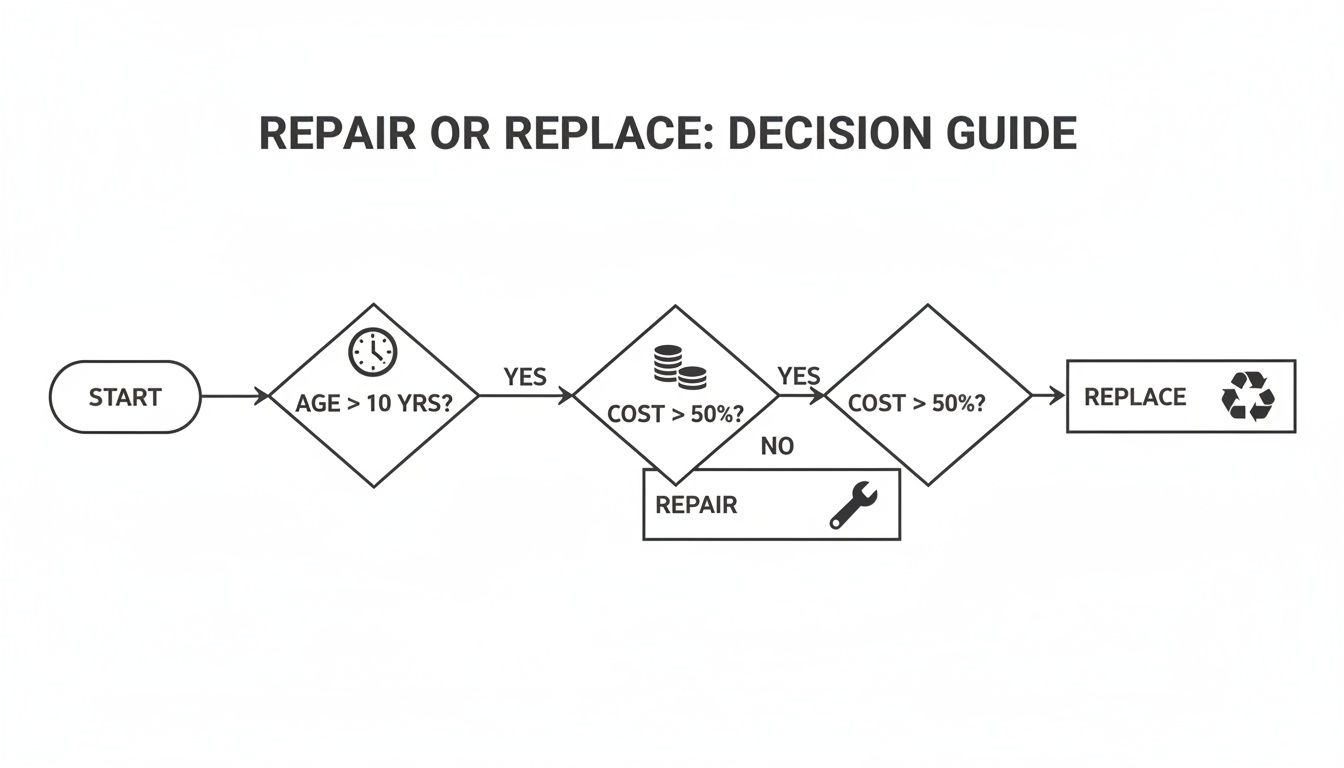
The 50% Rule is a simple guideline:
- If the repair cost is more than 50% of the price of a new, comparable washer, replacement is usually the better financial choice.
To apply this rule, get a professional repair quote and compare it to the cost of a new machine.
Beyond cost, consider the washer's age. The average lifespan of a washing machine is 10-14 years. If your appliance is approaching or has surpassed this age, investing in a significant repair may not be wise, as other components are likely to fail soon. Proper warranty and maintenance tracking can help you keep a record of past repairs.
Brand also plays a role. Parts for common brands like Whirlpool and Maytag are generally affordable and readily available. In contrast, parts for some Samsung or LG models can be more expensive or harder to source, which might tilt the decision towards replacement.
Preventive Maintenance Tips
Regular maintenance can extend the life of your washer and prevent many common problems. Follow these tips to keep your machine running smoothly:
- Clean the Tub: Run an empty hot water cycle with a washing machine cleaner or two cups of white vinegar once a month to remove soap scum and prevent odours.
- Check the Hoses: Every few months, inspect the water inlet and drain hoses for cracks, bulges, or leaks. Replace them every 3-5 years as a precaution.
- Clean the Pump Filter: Clean the drain pump filter every 1-2 months to prevent clogs that can cause draining issues.
- Don't Overload the Machine: Overloading puts excess strain on the motor, drum bearings, and suspension, leading to premature failure. Wash smaller loads instead.
- Use the Right Detergent: Use high-efficiency (HE) detergent for HE machines to prevent excessive suds, which can damage sensors and control boards.
- Leave the Door Ajar: After each use, leave the door or lid open to allow the interior to dry out, preventing mould and mildew growth.
- Keep it Level: Ensure the washer remains level to prevent excessive vibration and noise during the spin cycle.
- Schedule an Annual Inspection: A professional technician can spot early signs of wear and tear, tune up components, and ensure your appliance is operating safely and efficiently.
Brand-Specific Repair Notes
Different washer brands have unique quirks and common failure points. Here are some notes on the major brands we service in Calgary.
Samsung
- Known Issues: Prone to drain pump failures from small items getting caught. Some models have issues with spider arm brackets corroding and breaking.
- Parts Availability: Generally good, but specific electronic components can sometimes have a lead time.
- Difficulty: Moderate to high, as modern Samsung washers have complex electronics and diagnostics.
LG
- Known Issues: Direct-drive models can experience stator motor sensor failures. Water inlet valve issues are also common.
- Parts Availability: Excellent for common parts.
- Difficulty: Moderate. While direct-drive motors are reliable, they require specialized knowledge to service.
Whirlpool
- Known Issues: Very reliable, but common wear items include drive belts, lid switches, and motor couplers on direct-drive models.
- Parts Availability: Excellent. Parts are widely available and affordable.
- Difficulty: Low to moderate. Many repairs are straightforward for a trained technician.
GE
- Known Issues: Some models may experience issues with the transmission or mode shifter. Control board failures can also occur.
- Parts Availability: Good, with a strong supply chain in North America.
- Difficulty: Moderate. Diagnostics can sometimes be complex.
Bosch
- Known Issues: Known for their durability, but drain pumps can clog, and heating element failures can occur on models with a water heater.
- Parts Availability: Good, though parts can be more expensive than North American brands.
- Difficulty: Moderate to high, due to their compact, European design.
Maytag
- Known Issues: Similar to Whirlpool (its parent company), with common failures including drive belts and drain pumps. Older models are known for their longevity.
- Parts Availability: Excellent and generally interchangeable with Whirlpool parts.
- Difficulty: Low to moderate.
Frequently Asked Questions (FAQ)
Is it safe to attempt a DIY washer repair?
Simple tasks like cleaning a filter or levelling the machine are safe. However, repairs involving electrical wiring, motors, or major disassembly carry a risk of electric shock, water damage, or further damaging the appliance. For anything beyond basic troubleshooting, it is always safest to call a certified technician.
How much does a typical washer repair cost in Calgary?
In Calgary, most washer repairs cost between $150 and $500. This includes the diagnostic fee, parts, and labour. The final price depends on the brand and the specific part that needs replacing.
What is the average lifespan of a washing machine?
The average lifespan is 10-14 years. Regular maintenance can help you reach or exceed this range, while a lack of maintenance can shorten it.
How long does a washer repair usually take?
Most common repairs can be completed in a single visit, often within 1-2 hours. Our technicians carry a wide range of common parts in their service vehicles to maximize the chance of a same-day fix.
Is my washer repair covered by a warranty?
Yes. At Advance Appliance Ltd., we stand behind our work. We provide a comprehensive 90-day warranty on both parts and labour for every repair we complete.
When should I definitely call a technician for my washer?
You should call a technician immediately if you see sparks or smell burning, if the circuit breaker repeatedly trips, if there's a major water leak, or if you've completed the basic troubleshooting steps and the problem persists. Knowing the basics of finding and vetting local service providers ensures you find a qualified professional.
Final Summary
When your washer fails, a methodical approach is key. Start by identifying the symptoms and performing safe, basic troubleshooting steps like checking the power, hoses, and filters. For any issues beyond that, a professional diagnosis is the safest and most effective solution. Weighing the repair cost against the washer's age using the 50% rule will help you decide whether to repair or replace the unit. Ultimately, a professional repair from a certified technician is the fastest way to restore your appliance and your peace of mind.
Schedule Your Washer Repair Today
Don't let a broken washer disrupt your life. Our team of certified technicians is ready to provide fast, reliable repairs across Calgary, Red Deer, and Edmonton.
For Edmonton Customers:
📅 Book Online: https://advanceappliance.ca/scheduler/
📞 Call Us: 587-882-3225
For Calgary & Red Deer Customers:
📅 Book Online: https://advanceapplianceltd.ca/
Same-day or next-day appointments are available. We provide a full warranty on all parts and labour, so you can be confident in a job done right.