
A garage ready fridge is a refrigerator specifically built to handle the extreme temperature swings found in spaces like a garage. Unlike a standard kitchen fridge designed for a stable indoor climate, a garage ready model features robust insulation and specialized components to ensure consistent cooling, keeping your food safe through every season. This guide explains why it's a necessary investment for your garage.
Why a Standard Fridge Fails in a Garage
If you've ever put a regular refrigerator in your garage, you might have discovered during the first cold snap that everything in your freezer thawed. This common problem occurs because most fridges use a single thermostat in the fresh food section.
When the temperature in your Edmonton or Calgary garage drops below 4°C, that thermostat is tricked. It senses the cold air and shuts off the compressor, thinking its job is done. This is fine for the fridge section but disastrous for the freezer, which no longer receives cold air and begins to warm up, leading to spoiled food.
In the field, this is one of the most frequent issues we encounter each winter. Homeowners are often baffled that their fridge has "broken down," when it was simply operating in an environment it wasn't designed for.
The Problem with Extreme Heat and Cold
A standard refrigerator operates best within a narrow temperature range, typically between 15°C and 32°C. Your garage, of course, experiences far greater extremes.
- In Cold Weather (Below 4°C): The thermostat shuts down the entire system, causing the freezer to thaw. The compressor oil can also thicken in the cold, making it hard to restart and leading to premature wear.
- In Hot Weather (Above 32°C): The compressor is forced to run continuously to maintain its internal temperature. This leads to overheating, high energy bills, and eventual component failure, drastically shortening the appliance's lifespan.
Using a standard fridge in your garage is an inefficient gamble that often ends with a broken appliance and wasted groceries. For more insights into common fridge problems, our guide on what people commonly ask about refrigerators is a helpful resource.
To make the difference clear, here’s a simple comparison:
Standard Fridge vs Garage Ready Fridge in Canadian Climates
| Feature | Standard Refrigerator | Garage Ready Refrigerator |
|---|---|---|
| Operating Range | Unreliable below 4°C or above 32°C | Designed to work in temperatures from -17°C to 43°C |
| Thermostat System | Single thermostat in the fridge | Dual thermostats or built-in heater to keep compressor running |
| Winter Performance | Compressor shuts off; freezer thaws | Maintains consistent freezer temps even in freezing conditions |
| Summer Performance | Compressor overworks, overheats, and fails | Better insulation and robust compressor handle heat efficiently |
| Energy Efficiency | Extremely inefficient in variable temps | ENERGY STAR® certified models are built for efficiency in garages |
As you can see, a garage ready model is essential for the kind of temperature swings we experience here in Alberta.
The Financial and Practical Costs
The convenience of extra storage can become expensive with the wrong appliance. Many people move an old, inefficient kitchen fridge to the garage, unaware of the impact on their power bill. Across the country, about 23% of households have a second fridge, and these older units are often energy vampires.
An old fridge struggling in a garage can easily add $250 to $300 to your annual electricity costs. A purpose-built, ENERGY STAR® certified garage ready fridge, however, is designed for these conditions and can be 15-20% more efficient. Investing in the right appliance from the start provides reliability, efficiency, and peace of mind.
How Garage Ready Technology Works in Extreme Temperatures
To understand what makes a garage ready fridge so durable, we need to look at its internal technology. These refrigerators are engineered to handle the temperature extremes of an Edmonton garage, from freezing winters to hot summers. The key is not just better insulation but a smarter control system.
Your standard kitchen refrigerator uses a single thermostat in the fresh food section to control the compressor. When your garage temperature drops below 4°C, this sensor is fooled into thinking the entire unit is cold enough and shuts the compressor down. This is the classic reason why your freezer thaws even when the garage is freezing.
A garage ready model, however, is engineered with a more sophisticated system to overcome this problem.
Conquering the Cold with Smart Systems
The biggest challenge in a cold garage is ensuring the compressor runs long enough to keep the freezer properly chilled. Garage ready fridges solve this with one of two clever strategies: dual thermostats or internal heaters.
A dual-thermostat system uses separate sensors for the fridge and freezer. This allows the freezer to call for cold air independently, even if the fresh food section is already at the right temperature due to the cold garage air.
The other common solution is a small, built-in heating element near the thermostat. When the garage temperature drops, this heater gently warms the air around the sensor. This simple trick prevents the thermostat from being fooled by the ambient cold, ensuring the compressor cycles on as needed to keep the freezer solid.
Technician's Note: In our experience fixing fridges across Edmonton, the number one reason a standard model fails in a garage is because the cold tricks the thermostat. The compressor stops, and everything in the freezer is ruined. This one feature is the most critical difference.
This infographic breaks down how a garage ready fridge maintains the right temperature, stays efficient, and lasts longer in a demanding environment.
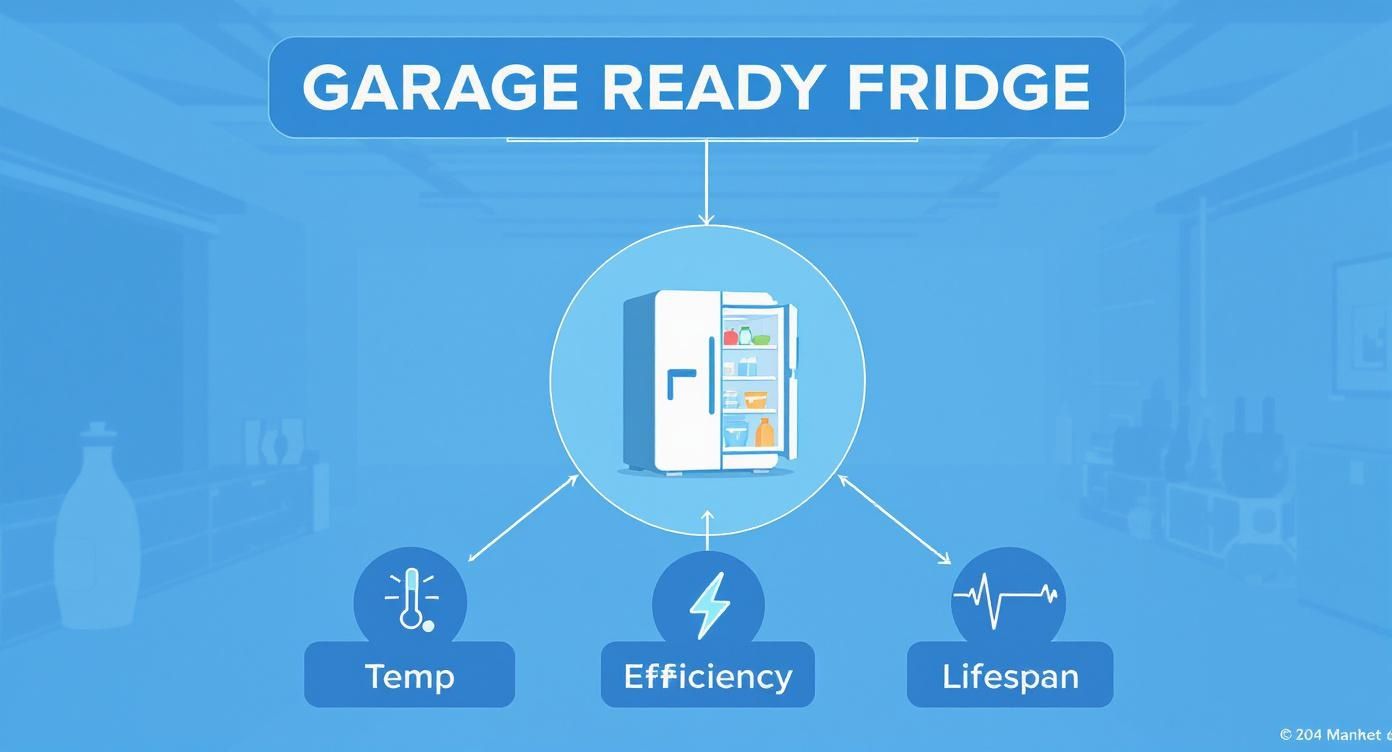
As you can see, its ability to adapt to those temperature swings is directly tied to its long-term efficiency and durability.
Handling the Heat with Robust Components
Extreme heat presents an equally serious challenge, forcing a regular fridge's compressor to run non-stop. This can lead to overheating, high energy bills, and a much shorter appliance lifespan.
Garage ready models are built to handle this with a few key upgrades:
- Heavy-Duty Compressors: These are designed for a higher workload and can run for long periods during a summer heatwave without burning out. Learn more about this tech in our guide to the inverter, relay, and compressor.
- Enhanced Insulation: Thicker, higher-quality insulation in the walls and doors helps keep the cool air in and the hot garage air out, reducing the compressor's workload.
- Improved Airflow and Ventilation: These units often have more powerful fans and better-designed condenser coils to dissipate heat more effectively, preventing overheating.
Of course, creating a more stable environment always helps. Understanding the basics of heating and cooling a garage can improve any appliance's efficiency. By combining these technologies, a garage ready fridge delivers reliable food storage year-round.
Key Features to Look for When Buying Your Garage Fridge
Choosing the right fridge for your garage involves more than just finding a good price. To ensure your investment can handle the temperature swings in a Calgary or Edmonton garage, you need to know what features truly matter.
A little research now can save you from future repair bills and spoiled food. As technicians, we've seen it all. This guide will walk you through the essential features to look for so you can choose a model built to last.
Certified Temperature Range
This is the single most important feature. The certified operating temperature range tells you the minimum and maximum ambient temperatures the fridge can handle while running correctly. A standard kitchen fridge is only designed for a stable indoor climate.
A true garage-ready model is engineered to operate flawlessly in temperatures from roughly -17°C to 43°C (0°F to 110°F). Given Alberta's climate, this wide range is a critical buffer that ensures your fridge works just as well on a frigid winter night as it does during a summer heatwave. You can find these specs on most reputable retail sites.
ENERGY STAR® Certification
A second fridge can be a major power consumer, especially when battling extreme garage temperatures. An ENERGY STAR® certification is your proof that the model meets strict government guidelines for energy efficiency.
Pro Tip: Don't underestimate the long-term cost of running an old, inefficient fridge in the garage. An ENERGY STAR® certified model uses significantly less electricity, which can save you hundreds of dollars on utility bills over its lifespan.
An efficient model also reduces strain on the compressor and other critical parts, helping the appliance last longer. To better understand appliance efficiency, check out our guide on what makes an appliance high-efficiency.
Practical Design and Build Quality
Beyond technical specs, the physical design and durability of the fridge are crucial for a garage environment. Garages are work zones, so you need features built for convenience and toughness.
Here's what to look for:
- Reversible Doors: This simple feature allows you to switch which way the door swings, making it easy to place the fridge in a tight corner without blocking access.
- Smart Storage: Look for strong, adjustable shelves that can handle the weight of bulk items and deep, sturdy door bins for large bottles.
- Heavy-Duty Build: A garage is a rough environment. A solid build, strong casters for easy movement, and durable door seals are essential to keep cold air in and dust out.
Final Checklist Before You Buy
Before making a purchase, run through this quick checklist to avoid common pitfalls. A few minutes of preparation can save you a major headache on delivery day.
- Measure Your Space Twice: Measure the height, width, and depth of your chosen spot. Also, measure every doorway and corner the delivery team will need to navigate.
- Confirm the Temperature Range: Double-check that the model's certified range is suitable for our climate. For Alberta winters, you need a unit tested to handle temperatures down to -17°C.
- Check Power Outlet Access: Ensure a dedicated, grounded outlet is within reach. Never use an extension cord to power a major appliance like a refrigerator.
- Inspect the Door Seals: If you're looking at a floor model, open and close the doors. A strong magnetic pull indicates a good seal, which is crucial for efficiency and performance.
Proper Installation and Placement in Your Garage
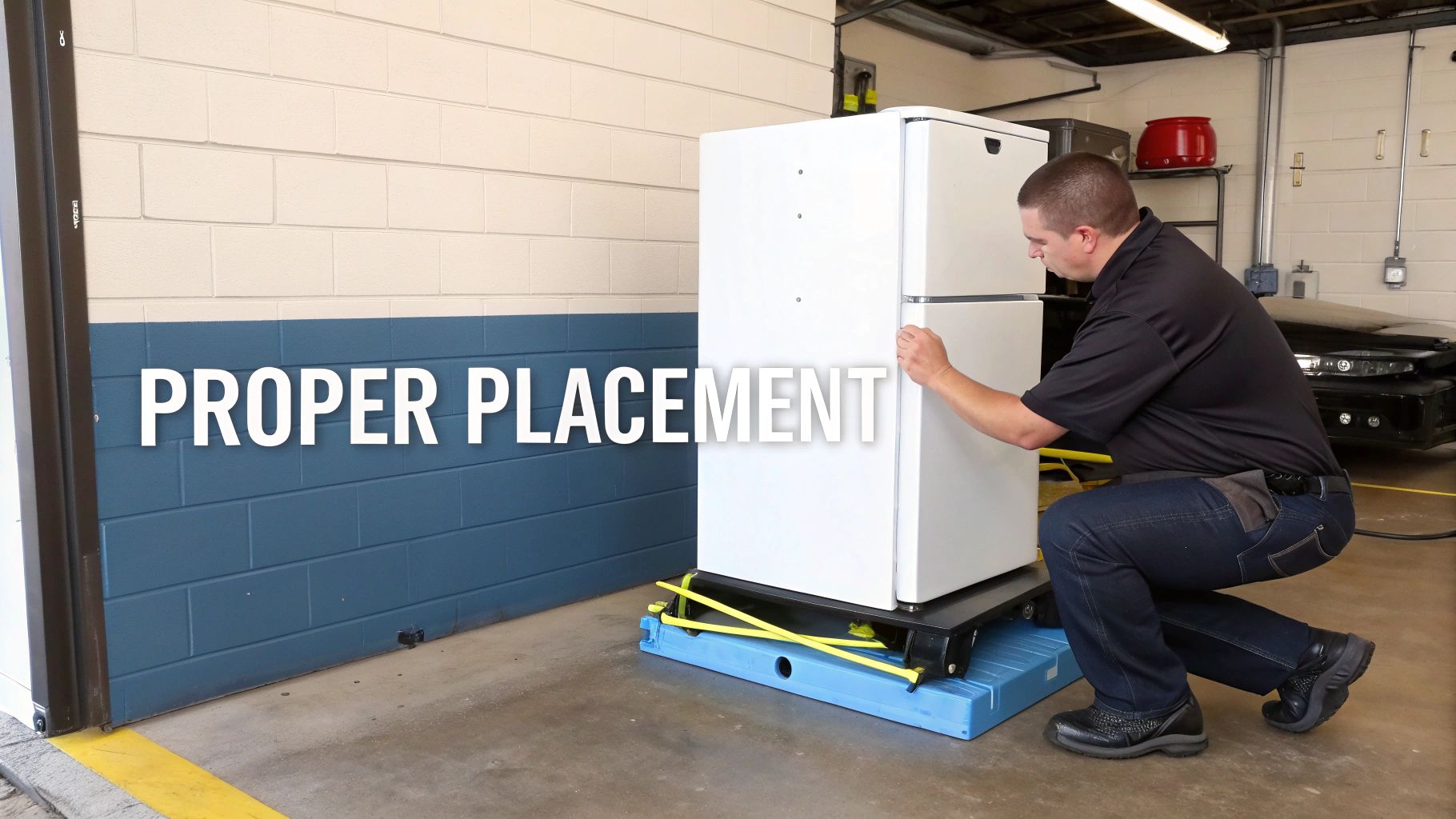
Setting up your garage-ready fridge correctly is critical for its efficiency and lifespan. As technicians, we’ve seen how simple placement mistakes can lead to major performance issues down the road.
Proper setup from day one helps prevent cooling problems, high energy bills, and premature component failure. This guide covers the essential steps that homeowners in Edmonton, Calgary, and Red Deer often overlook, helping you protect your investment from the start.
Choose the Right Spot
The first step is picking the perfect location. Your garage presents unique challenges that a climate-controlled kitchen does not.
Your top priority is finding a completely level surface. An unbalanced fridge forces the compressor to work harder, leading to more noise, higher energy bills, and a shorter lifespan. Use a level to check your spot and adjust the fridge’s feet until it's perfectly stable.
Next, ensure proper airflow. A refrigerator needs to dissipate heat to function correctly.
- Leave Adequate Clearance: We recommend leaving at least one inch of space on the top, back, and both sides of the unit.
- Avoid Overcrowding: Don’t wedge your fridge into a tight corner or surround it with boxes. Proper ventilation is essential for the compressor's health.
Power It Safely
How you power your garage fridge is a critical safety issue. The most common mistake we see is the use of an extension cord, which is a significant fire hazard and can damage the appliance.
Extension cords cannot deliver the steady power a fridge compressor needs, causing voltage drops that strain the motor. Always plug your garage-ready fridge directly into a dedicated, grounded (three-prong) outlet. If one isn't available, have an electrician install one.
Safety First: Never use an extension cord or power strip for a major appliance. The risk of an electrical fire and damage to your refrigerator is too high.
Avoid Heat Sources and Moisture
Don't make your fridge work harder than necessary. Placing it next to a heat source will force it to run constantly to stay cool, wasting energy and wearing out components.
Keep your fridge away from:
- Direct sunlight from a window
- Your home's water heater
- Any furnaces or space heaters
In Alberta, the spring thaw can introduce moisture on the garage floor, which can cause the base of your fridge to rust. We often advise clients to place the unit on a small, sturdy platform—like a couple of 2x4s or a pallet—to lift it off the concrete. This simple step protects it from water damage and can extend its life.
For an even better setup, consider insulating your garage door. This helps stabilize the garage's temperature, reducing the load on your appliance during extreme weather.
Maintenance Tips to Maximize Your Fridge's Lifespan
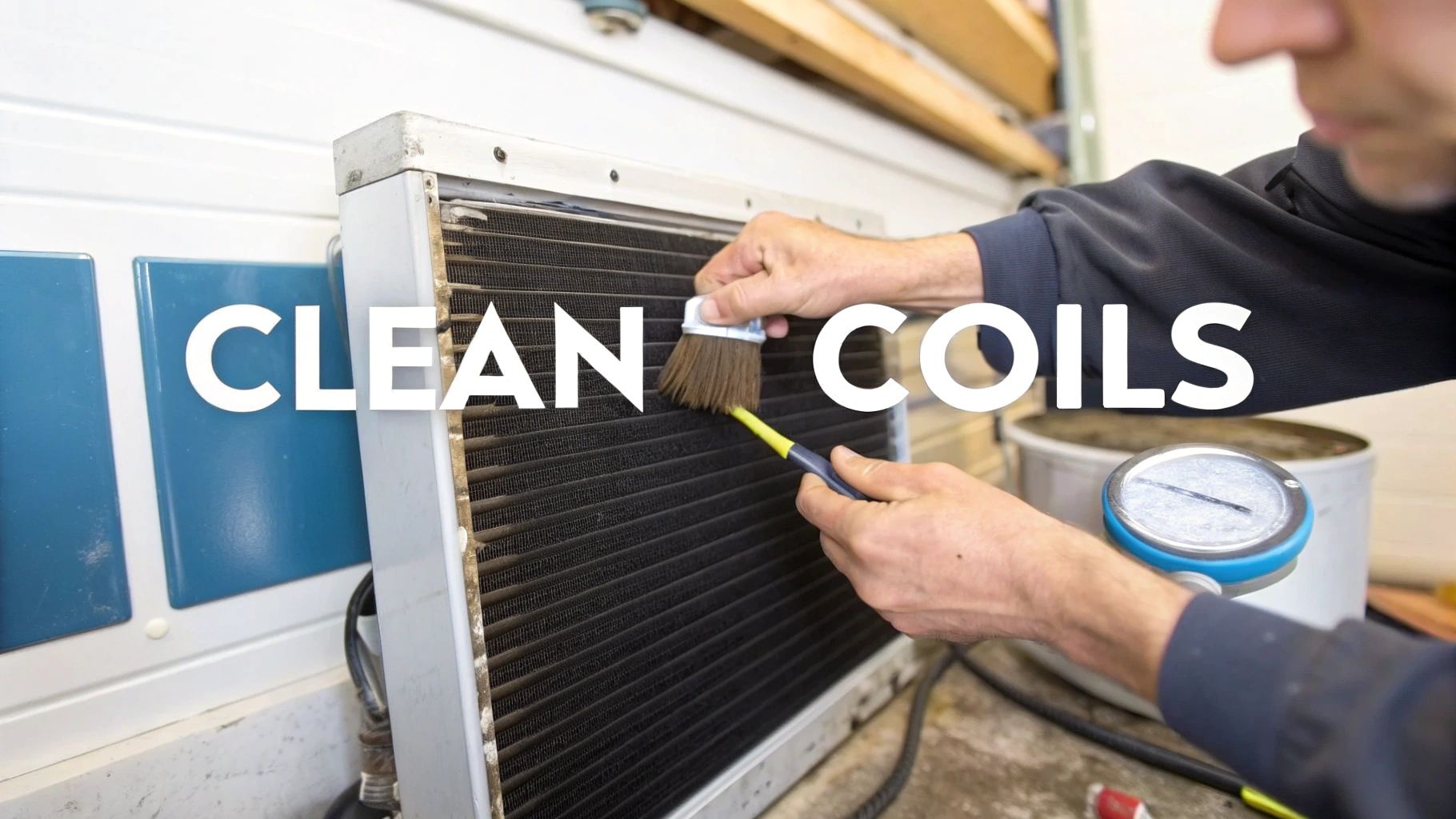
A garage is a tougher environment for an appliance than a kitchen due to dust, debris, and extreme temperature swings. A little proactive care for your garage ready fridge can prevent expensive repairs and ensure it runs reliably for years.
As technicians serving homeowners across Edmonton and Calgary, we’ve seen how simple maintenance can be the difference between a fridge that lasts five years and one that lasts fifteen. These are the steps we recommend to protect your investment.
Clean the Condenser Coils Twice a Year
The condenser coils, usually on the back or bottom of the fridge, act as its radiator by dissipating heat. In a garage, these coils attract dust and cobwebs.
When clogged, the fridge can't release heat efficiently, forcing the compressor to work overtime. This increases your energy bill and can lead to premature failure. The best thing you can do is unplug the fridge and vacuum the coils with a brush attachment every six months.
Check the Door Seals Regularly
A weak door seal lets cold air escape and warm air seep in, forcing the fridge to run constantly. The "dollar bill test" is a simple way to check your seals:
- Open the refrigerator door.
- Place a bill halfway across the rubber gasket.
- Close the door on it.
- Gently try to pull the bill out.
If you feel resistance, the seal is tight. If it slides out easily, the gasket may need replacing. Test a few spots around both the fridge and freezer doors.
Monitor the Temperature
Verify your fridge's temperature with an inexpensive appliance thermometer in both the fresh food and freezer sections. This can provide an early warning before food spoils.
Technician's Insight: We often find that a fridge has been struggling for weeks before the owner notices. A simple thermometer can alert you to cooling issues when they are often minor and cheaper to fix.
Check the thermometers weekly. The refrigerator should be at or below 4°C (40°F), and the freezer should be at -18°C (0°F).
Keep the Interior Clean
Spills and forgotten food can lead to odours and mold. A quick wipe-down once a month will keep your food storage environment clean and hygienic.
For more tips on extending your appliance's life, read our guide on how to make your refrigerator last longer. A simple maintenance schedule is the secret to getting the most out of your garage ready fridge.
Seasonal Maintenance Checklist for Your Garage Fridge
| Task | Frequency | Why It's Important |
|---|---|---|
| Clean Condenser Coils | Twice a year (Spring/Fall) | Improves efficiency and prevents compressor strain. |
| Perform Dollar Bill Test | Every 3-4 months | Ensures door seals are tight, saving energy. |
| Check Internal Temperatures | Weekly | Catches cooling problems before food spoils. |
| Wipe Down Interior | Monthly | Prevents odours, mold, and bacteria growth. |
Following these steps will keep your unit running efficiently, saving you from headaches and unexpected costs.
Troubleshooting Common Garage Fridge Problems
Even the toughest garage ready fridge can experience issues, especially in a challenging environment. Before assuming a major breakdown, a few quick checks can often identify the problem. Let's walk through the most common problems we see in the field.
Based on our service call experience, most issues fall into a few categories. Here are the symptoms, likely causes, and what you can safely check yourself.
Problem: The Fridge Is Not Cold Enough
A fridge that isn't cooling properly is a frequent call we receive in the Edmonton area. Before panicking, investigate a couple of simple things.
First, check for blocked air vents inside. Cold air needs to circulate freely between the freezer and fridge, and if vents are covered, you’ll get warm spots.
Another common culprit is dirty condenser coils. When caked in dust, these coils can't dissipate heat efficiently. Unplug the unit and gently vacuum the coils. If it’s still not cooling, you can find more advice in our guide on how to fix a refrigerator that's not cooling.
Problem: The Freezer Is Cold but the Fridge Is Warm
When the freezer is icy but the fresh food section is warm, the issue is almost always airflow. The likely cause is a failed evaporator fan motor.
This fan pushes cold air from the freezer into the refrigerator. If it fails, the fridge compartment is starved of cold air. You might hear a squealing sound or nothing at all. Since this repair involves replacing an electrical part, it's a job best left for a certified technician.
Problem: The Fridge Is Making Loud Noises
A gentle hum or click is normal, but new, loud, or strange sounds are not.
- Buzzing or Humming: A loud, constant hum could indicate a problem with the compressor.
- Rattling: This is often simple, like a loose drain pan or a fan blade hitting something.
- Clicking: A loud click from the back every few minutes might be the compressor relay failing to start the compressor.
While you can check for a loose drain pan, any noises from the compressor need a professional diagnosis to avoid a more expensive repair.
CRITICAL SAFETY WARNING: Your safety is non-negotiable. If you smell something burning, see sparks, or feel unsure about an electrical component, unplug the fridge from the wall immediately. Do not try to troubleshoot any further. Call a certified technician right away.
Summary and Next Steps
Choosing, placing, and maintaining a garage ready fridge is the key to reliable performance in Canada's variable climate. By understanding the technology and following a few simple maintenance steps, you can protect your investment and ensure your food stays safe year-round.
Key Takeaways
- Choose a True Garage-Ready Model: For temperatures below 4°C, you need a unit with a dual-thermostat system or a built-in heater. A standard fridge will fail in a cold garage.
- Proper Placement is Crucial: A level surface with at least one inch of clearance on all sides is essential for proper ventilation and prevents the compressor from overworking.
- Maintenance Prevents Problems: Cleaning the condenser coils twice a year is the single best thing you can do to improve efficiency and extend the life of your appliance.
- Know When to Call a Professional: For electrical issues, persistent strange noises, or total cooling failure, professional help is the safest and most effective solution.
When your fridge needs more than a simple fix, don't let a minor issue turn into a major problem with hundreds of dollars in spoiled groceries.
You can hire expert appliance technicians from Advance Appliance Ltd for fast, reliable, and professional repair services in Edmonton, Calgary, Red Deer, and surrounding areas. Visit us online at https://advanceappliance.ca to book your appointment today.