A compressor refrigerator that stops cooling is more than an inconvenience; it's a critical issue that can lead to spoiled food and major household disruption. When your fridge fails, the compressor system is often the first place to look. For homeowners in Edmonton, Calgary, and Red Deer, understanding the problem is the first step toward a fast, effective solution from a team of trusted professionals.
What the Problem Means
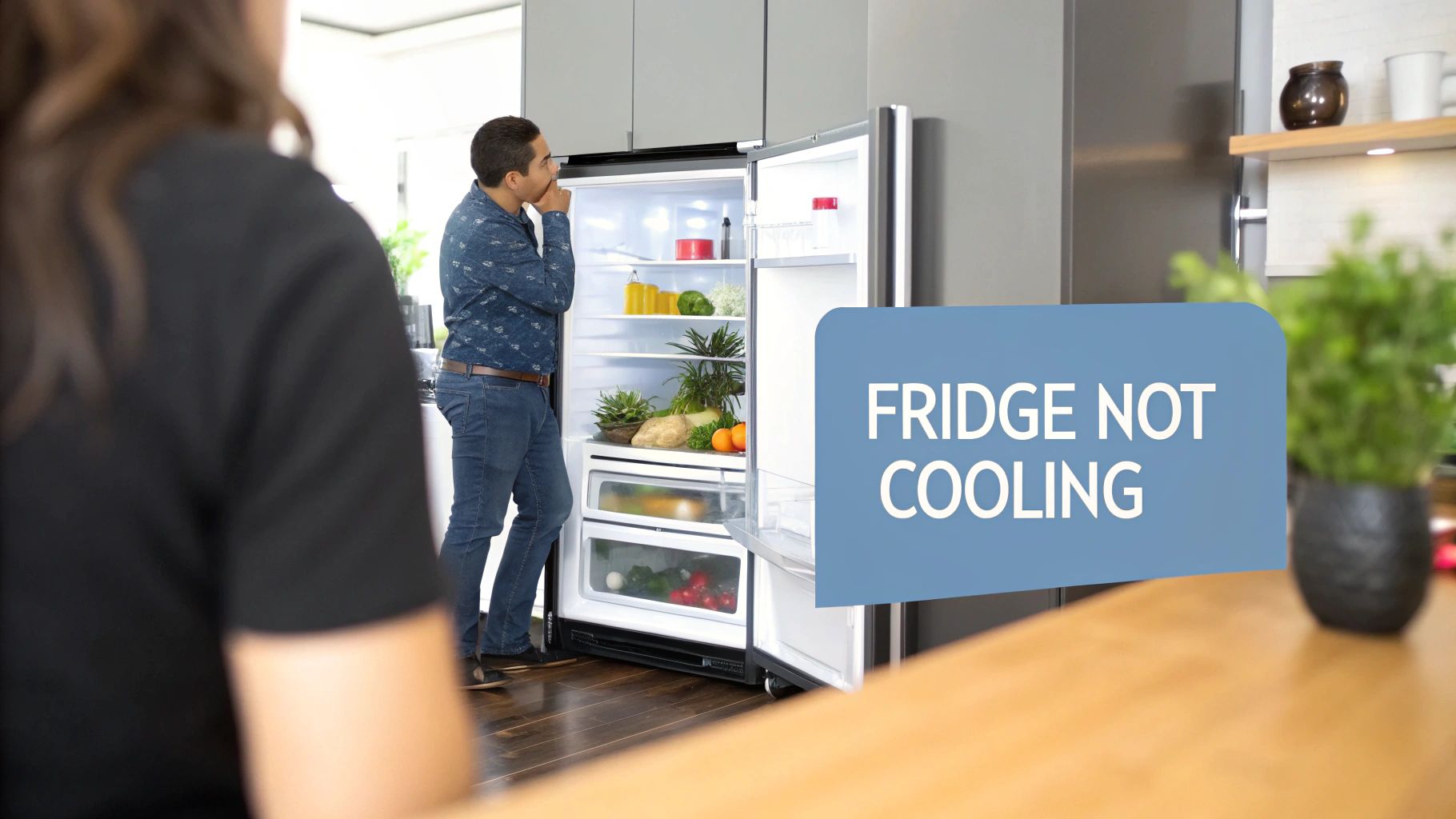
When your compressor refrigerator isn't cooling, it means the heart of your appliance has stopped working correctly. The compressor's job is to circulate refrigerant, a specialized gas, through a sealed system of coils to remove heat from inside the fridge. If this process is interrupted, the entire cooling cycle fails, causing temperatures to rise and putting your food at risk.
Homeowners typically notice several clear symptoms indicating a compressor-related failure:
- Warm Interior: The most obvious sign is that the refrigerator and freezer compartments are no longer cold. Food may feel cool but not properly chilled or frozen.
- Constant Running: The refrigerator motor seems to run non-stop without cycling off. This indicates the compressor is working overtime but failing to reach the set temperature.
- Unusual Noises: You may hear a loud humming, buzzing, or a distinct "click-clack" sound from the back of the unit. This often signals the compressor is struggling to start or has an electrical fault.
- Complete Silence: If the fridge is completely silent but the interior light works, the compressor may have failed entirely and is not attempting to run at all.
Recognizing these signs early can help prevent further damage and food spoilage. For a deeper dive into temperature issues, see our guide on refrigerator temperature problems.
Causes of Compressor Refrigerator Failure
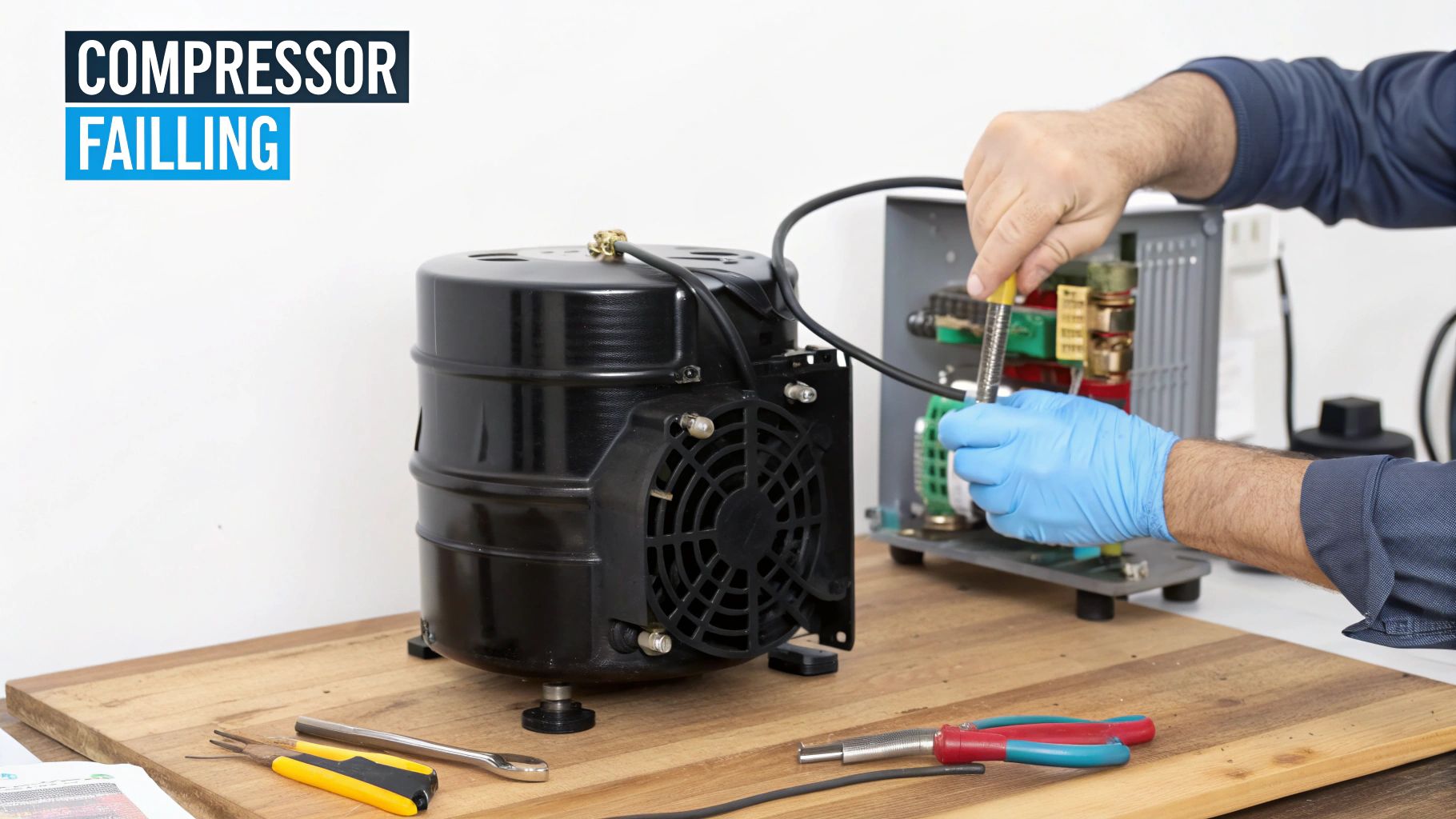
A range of issues, from simple electrical faults to major mechanical breakdowns, can cause a compressor refrigerator to fail. The table below details the most common causes, their descriptions, and the associated difficulty and safety risks of repair.
| Cause | Description | Difficulty | Risk |
|---|---|---|---|
| Faulty Start Relay | This small electrical part gives the compressor the power boost it needs to start. When it fails, you'll hear a click, but the compressor won't run. | Medium | High – Involves direct contact with high-voltage wiring. Risk of severe electric shock if the appliance is not properly disconnected and discharged. |
| Dirty Condenser Coils | Coils at the back or bottom of the fridge dissipate heat. If covered in dust and debris, they can't release heat effectively, causing the compressor to overheat and fail. | Low | Low – Basic maintenance. Unplug the refrigerator first to avoid any electrical risk. Coils may have sharp fins. |
| Condenser Fan Motor Failure | This fan blows air over the condenser coils to cool them. If the fan motor fails, the compressor overheats, leading to poor cooling and eventual compressor failure. | Medium | High – Requires replacing an electrical component near the compressor. Risk of electric shock and improper installation can cause further damage. |
| Refrigerant Leak | A leak in the sealed refrigerant system allows the cooling gas to escape. Without enough refrigerant, the compressor runs but cannot produce cold air. | High | High – Refrigerant is a hazardous material that requires specialized equipment and certification to handle safely and legally. Exposure can be harmful. |
| Overload Protector Failure | A safety device that shuts off the compressor if it overheats. If it fails, it may prevent the compressor from starting at all, even when it's cool. | Medium | High – Involves critical electrical components. Incorrect replacement can permanently damage the compressor or create a fire hazard. |
| Internal Mechanical Failure | The internal pistons, valves, or motor windings of the compressor can wear out over time, causing the unit to seize and stop working completely. | High | High – This is a catastrophic failure requiring a full compressor replacement, which involves the sealed system, high-voltage wiring, and refrigerant handling. |
| Thermostat or Control Board Issue | The electronic controls tell the compressor when to turn on and off. A faulty thermostat or main control board can send incorrect signals, causing the compressor to not run or run constantly. | High | High – Diagnosing and replacing electronic boards is complex and requires technical expertise. Misdiagnosis can lead to unnecessary and expensive repairs. |
Safe Homeowner Troubleshooting Steps
Before calling a professional, there are a few safe steps you can take to rule out simple issues. These checks do not require specialized tools and can sometimes resolve the problem without a service call.
SAFETY WARNING: Always unplug your refrigerator from the power outlet before performing any cleaning or inspection. Never attempt to service electrical components like relays, capacitors, or control boards, and never interfere with the sealed refrigerant system. These tasks are for certified technicians only.
- Check Power Supply: Confirm the refrigerator is securely plugged into a working outlet. Test the outlet with another small appliance, like a lamp, to ensure it has power. If not, check your home's circuit breaker panel for a tripped breaker.
- Verify Thermostat Settings: Ensure the temperature controls for both the refrigerator and freezer are set to the manufacturer's recommended levels. Sometimes these dials are accidentally moved during cleaning or daily use.
- Inspect Door Seals (Gaskets): Run your hand along the rubber door seals to feel for any drafts of cold air escaping. Clean the gaskets with warm, soapy water to remove any food debris that may be preventing a tight seal. A poor seal forces the compressor to work harder.
- Listen to the Compressor: Carefully listen for sounds from the back of the refrigerator. A faint hum indicates the compressor is trying to run. If you hear a "click" followed by silence every few minutes, it suggests a problem with the start relay. Complete silence may mean a power issue or total compressor failure.
- Ensure Proper Ventilation: Pull the refrigerator away from the wall to ensure there are at least 2-3 inches of clearance on the back and top. Proper airflow is essential for the condenser coils to dissipate heat.
- Clean the Condenser Coils: If the coils are accessible (usually at the back or underneath), unplug the fridge and use a vacuum cleaner with a brush attachment to gently remove all dust, pet hair, and debris. Clogged coils are a leading cause of compressor overheating.
If you have completed these steps and your refrigerator is still not cooling, stop all troubleshooting. The problem is likely internal and requires professional diagnosis. For your safety, read our guide on whether it is safe to repair your own appliances before proceeding further.
Repair Cost Breakdown
When facing a compressor refrigerator repair, understanding the potential costs is crucial for Alberta homeowners. Please call Advance Appliance Ltd to get exact rates for your specific appliance and location.
Effective starting in 2026, service call fees are no longer waived. The service call fee covers the technician’s travel time, professional appliance diagnosis, and helps support ongoing operational expenses required to deliver reliable, high-quality service. We remain committed to keeping our fees fair, transparent, and aligned with reasonable repairability standards.
Here is a general breakdown of costs for 2024 in the Alberta region:
- Estimated Service call / diagnostic: $120–$250 (not waived)
- Estimated Parts: $150–$650 (varies by brand and model)
- Estimated Labor: $150–$260 per hour
- Additional travel or mileage charges may apply
Important Considerations:
- GST is not included in the estimated prices.
- Prices vary by Edmonton, Calgary, and Red Deer service areas.
- Rates are subject to market and economic changes.
For a more detailed look at appliance repair pricing, visit our average appliance repair cost breakdown.
Failure Rate & Repair Cost Chart
In the appliance repair industry, we closely track component failure rates to better serve homeowners. Based on our internal service data from the previous and current year, a chart comparing failure rates and repair costs for key compressor refrigerator components would show specific trends.
The chart would use gray bars to represent last year's data and light blue bars for the current year. It would reveal that start relays and condenser fan motors are the most frequently failing components, typically due to electrical wear or overheating. Their repair costs are moderate. In contrast, the compressor itself has a lower failure rate but represents the highest average repair cost due to the complexity and price of the part and the labor involved in replacing it within a sealed system. Refrigerant leaks are less common but also carry a high repair cost. This data helps homeowners understand that while some repairs are common and affordable, a direct compressor failure is a significant investment.
Repair vs Replace
Deciding whether to repair or replace a faulty compressor refrigerator requires a careful cost-benefit analysis. We advise homeowners to follow clear guidelines to make a financially sound decision.
The 50% Rule: A widely accepted industry standard is to replace your appliance if the total repair cost exceeds 50% of the price of a comparable new refrigerator. A compressor replacement often falls into this category, making replacement the more logical choice.
Appliance Lifespan: The expected lifespan of a modern refrigerator is typically 10 to 15 years. If your appliance is approaching or has surpassed this age, investing in a major repair like a compressor replacement is often not recommended. The likelihood of other components failing soon after is high.
Brand Differences: High-end brands like Sub-Zero or Miele may be worth repairing even when older, as their replacement cost is substantially higher and parts are built for longevity. For budget or mid-range brands, the cost of a compressor repair is more likely to approach the 50% threshold, making replacement a better option.
Preventive Maintenance Tips
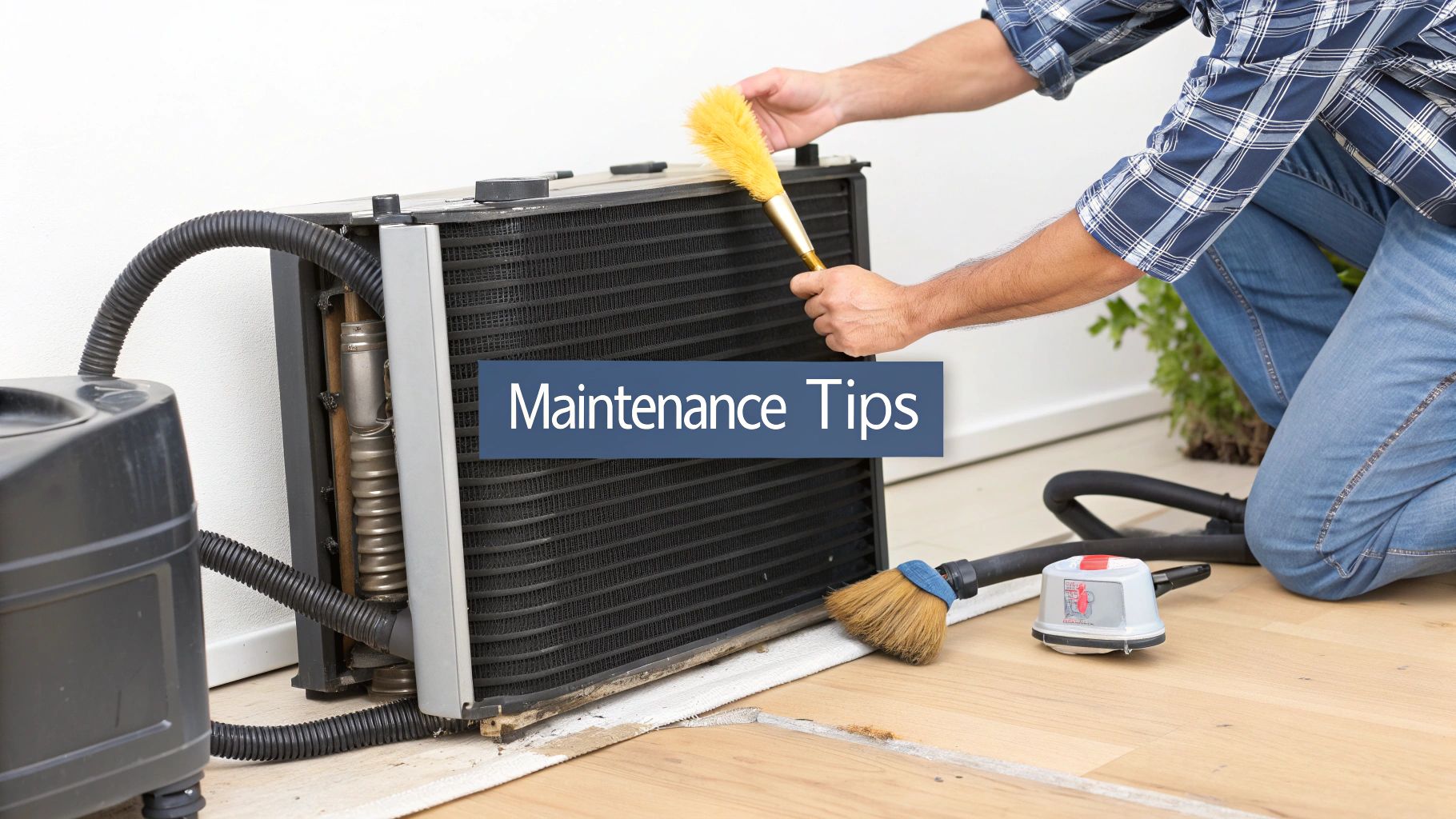
Proactive maintenance is the best way to extend the life of your compressor refrigerator and avoid costly breakdowns. These simple tips can improve efficiency and reduce strain on the cooling system.
- Clean Condenser Coils Biannually: Unplug the fridge and vacuum the coils every six months to remove dust, dirt, and pet hair that insulates them and traps heat.
- Check and Clean Door Gaskets: Wipe down door seals monthly with a damp cloth and mild detergent to ensure they seal tightly. A poor seal makes the compressor work harder.
- Ensure Proper Ventilation: Maintain at least 2-3 inches of clearance around the back and top of the refrigerator to allow for proper air circulation and heat dissipation.
- Set Optimal Temperatures: Keep the refrigerator temperature between 2-3°C (35-38°F) and the freezer at -18°C (0°F). Setting it colder than necessary adds extra strain.
- Don't Overload the Interior: Avoid packing the refrigerator so tightly that air cannot circulate. Proper airflow is essential for efficient cooling.
- Allow Hot Food to Cool: Let hot leftovers cool down to room temperature before placing them in the fridge to reduce the workload on the compressor.
- Replace Water Filter as Recommended: On models with water/ice dispensers, a clogged filter can cause the unit to work harder. Follow the manufacturer's replacement schedule.
- Keep the Interior Clean: Regularly clean spills and debris inside the refrigerator to prevent blockages in air vents and ensure optimal performance.
- Check for Leveling: Ensure the refrigerator is level. An unlevel unit can cause the doors to not seal properly, leading to constant running.
- Schedule an Annual Professional Inspection: Have a certified technician from Advance Appliance Ltd perform a yearly check-up to catch potential issues before they become major failures.
Brand-Specific Notes
Amana:
- Known issues: Start relay failures are common.
- Parts availability: Generally good and affordable.
- Repair difficulty: Low to Medium.
Asko:
- Known issues: Control board issues can mimic compressor problems.
- Parts availability: Can be limited and expensive.
- Repair difficulty: High.
Alliance Laundry:
- Known issues: Not applicable (laundry appliances).
- Parts availability: N/A.
- Repair difficulty: N/A.
Bosch:
- Known issues: Sensitive electronics; inverter failures can be misdiagnosed as compressor failure.
- Parts availability: Good, but can be costly.
- Repair difficulty: High.
Bravos:
- Known issues: Brand name associated with Maytag laundry, not refrigerators.
- Parts availability: N/A.
- Repair difficulty: N/A.
Beko:
- Known issues: Some models have experienced sealed system leaks.
- Parts availability: Improving, but can still have delays.
- Repair difficulty: Medium to High.
Blomberg:
- Known issues: Similar to Beko; control board and sensor issues are common.
- Parts availability: Moderate.
- Repair difficulty: Medium to High.
Café:
- Known issues: Advanced electronics can be complex to diagnose. Fan motors are a common failure point.
- Parts availability: Good, as it's a GE brand.
- Repair difficulty: Medium.
Caloric:
- Known issues: Older brand; parts are now scarce.
- Parts availability: Very limited.
- Repair difficulty: High due to parts scarcity.
Cabrio:
- Known issues: Brand name for Whirlpool laundry, not refrigerators.
- Parts availability: N/A.
- Repair difficulty: N/A.
Crosley:
- Known issues: Often rebranded from other manufacturers; issues vary by model.
- Parts availability: Generally good.
- Repair difficulty: Low to Medium.
Dacor:
- Known issues: High-end electronics require specialized diagnostics.
- Parts availability: Limited and expensive.
- Repair difficulty: High.
Danby:
- Known issues: Common in compact models; thermostat failures are frequent.
- Parts availability: Good.
- Repair difficulty: Low to Medium.
Electrolux:
- Known issues: Defrost system failures can lead to cooling problems that seem like compressor issues.
- Parts availability: Good.
- Repair difficulty: Medium.
Fisher & Paykel:
- Known issues: Unique designs can have complex control systems.
- Parts availability: Can be delayed and costly.
- Repair difficulty: High.
Frigidaire:
- Known issues: Damper control and defrost timer failures are common.
- Parts availability: Excellent and affordable.
- Repair difficulty: Low to Medium.
Frigidaire Gallery:
- Known issues: Similar to standard Frigidaire, with more complex electronics on higher-end models.
- Parts availability: Excellent.
- Repair difficulty: Medium.
GE / GE Profile:
- Known issues: Fan motors (evaporator and condenser) are frequent points of failure.
- Parts availability: Excellent.
- Repair difficulty: Medium.
Gaggenau:
- Known issues: High-end, complex systems. Inverter and control board issues are primary concerns.
- Parts availability: Very limited and expensive.
- Repair difficulty: High.
Gibson:
- Known issues: Older brand, now part of Electrolux. Issues relate to age.
- Parts availability: Limited for older models.
- Repair difficulty: Medium.
Goldstar:
- Known issues: Older brand, became LG. Issues are typical of aged appliances.
- Parts availability: Very limited.
- Repair difficulty: Medium to High.
Haier:
- Known issues: Control board and sensor failures.
- Parts availability: Moderate, but improving.
- Repair difficulty: Medium.
Hisense:
- Known issues: Sealed system and electronics issues on some models.
- Parts availability: Can be difficult to source.
- Repair difficulty: Medium to High.
Hitachi:
- Known issues: Not common in Canada; parts are very difficult to source.
- Parts availability: Poor.
- Repair difficulty: High.
IKEA:
- Known issues: Made by Whirlpool; issues are similar (defrost problems, control boards).
- Parts availability: Good, through Whirlpool channels.
- Repair difficulty: Medium.
Insignia:
- Known issues: Often rebranded Haier or Midea models; electronic failures are common.
- Parts availability: Can be challenging.
- Repair difficulty: Medium.
JennAir:
- Known issues: Similar to KitchenAid/Whirlpool but with more complex features and electronics.
- Parts availability: Good.
- Repair difficulty: Medium to High.
Kelvinator:
- Known issues: Commercial-grade and older residential units; issues are typically age-related.
- Parts availability: Limited.
- Repair difficulty: Medium.
Kenmore:
- Known issues: Varies by manufacturer (Whirlpool, LG, Frigidaire). The model number prefix identifies the maker.
- Parts availability: Generally excellent.
- Repair difficulty: Varies from Low to Medium.
KitchenAid:
- Known issues: Defrost system issues and control board failures.
- Parts availability: Excellent.
- Repair difficulty: Medium.
LG:
- Known issues: Known for linear compressor failures, which were subject to a class-action lawsuit.
- Parts availability: Good, but compressors can be back-ordered.
- Repair difficulty: High, especially for compressor replacement.
Liebherr:
- Known issues: High-end German engineering; dual compressor systems can be complex to diagnose.
- Parts availability: Limited and very expensive.
- Repair difficulty: High.
Magic Chef:
- Known issues: Thermostat and relay issues are common.
- Parts availability: Moderate.
- Repair difficulty: Low to Medium.
Maytag:
- Known issues: Part of Whirlpool; common issues include defrost system problems and faulty relays.
- Parts availability: Excellent.
- Repair difficulty: Medium.
Miele:
- Known issues: Durable but have complex electronic controls that can fail.
- Parts availability: Limited and expensive.
- Repair difficulty: High.
Monogram:
- Known issues: GE's high-end line; complex systems with inverter-driven compressors.
- Parts availability: Good, but expensive.
- Repair difficulty: High.
Panasonic:
- Known issues: Not common in the Canadian refrigerator market.
- Parts availability: Poor.
- Repair difficulty: High.
Roper:
- Known issues: Basic models by Whirlpool; simple and reliable, but relays can fail.
- Parts availability: Excellent.
- Repair difficulty: Low.
Samsung:
- Known issues: Prone to defrost system failures (frozen coils) and fan noise.
- Parts availability: Good, but can have delays on certain electronic parts.
- Repair difficulty: Medium to High.
Sharp:
- Known issues: Less common; can have electronic control issues.
- Parts availability: Limited.
- Repair difficulty: Medium.
Speed Queen:
- Known issues: Not applicable (laundry appliances).
- Parts availability: N/A.
- Repair difficulty: N/A.
Sub-Zero:
- Known issues: Built to last, but dual compressor systems require expert diagnostics.
- Parts availability: Good but very expensive.
- Repair difficulty: High.
Tappan:
- Known issues: Older brand (Electrolux); age-related failures.
- Parts availability: Very limited.
- Repair difficulty: Medium.
Thermador:
- Known issues: Part of Bosch group; complex electronics and inverter systems.
- Parts availability: Limited and expensive.
- Repair difficulty: High.
Thor:
- Known issues: Can have control board and sensor issues.
- Parts availability: Can be challenging.
- Repair difficulty: Medium to High.
Toshiba:
- Known issues: Not common in Canada; parts are difficult to source.
- Parts availability: Poor.
- Repair difficulty: High.
Viking:
- Known issues: High-end units; sealed system and control board issues can occur.
- Parts availability: Limited and expensive.
- Repair difficulty: High.
Whirlpool:
- Known issues: Defrost system issues are very common; relays and fan motors can also fail.
- Parts availability: Excellent and affordable.
- Repair difficulty: Medium.
White-Westinghouse:
- Known issues: An Electrolux brand; similar issues to Frigidaire.
- Parts availability: Good.
- Repair difficulty: Low to Medium.
Wolf:
- Known issues: Companion brand to Sub-Zero; similar high-end build and repair complexity.
- Parts availability: Good but very expensive.
- Repair difficulty: High.
FAQs
How do I know if my refrigerator compressor is bad?
Common signs include the fridge not cooling, a loud buzzing or humming noise from the back, a "clicking" sound as it tries to start, or the compressor being excessively hot to the touch. If the fridge is silent but has power, the compressor may have failed completely.
Can I replace a refrigerator compressor myself?
No. This is a dangerous and complex repair that should only be performed by a certified technician. It involves handling high-pressure refrigerant, high-voltage wiring, and specialized tools like vacuum pumps and welding equipment. Attempting a DIY repair is unsafe and illegal.
What is the average lifespan of a refrigerator compressor?
A typical compressor will last between 10 and 15 years. Its longevity depends on the brand, usage, and how well it is maintained, particularly whether the condenser coils are kept clean.
Is it cheaper to repair or replace a refrigerator with a bad compressor?
In most cases, it is more cost-effective to replace the refrigerator. If the total repair cost (parts, labor, service fee) exceeds 50% of the cost of a new, comparable unit, replacement is the smarter financial choice, especially if the appliance is over 8-10 years old.
Does my refrigerator warranty cover the compressor?
Most manufacturers provide a one-year comprehensive warranty. However, many offer an extended warranty of 5, 10, or even 12 years that specifically covers the sealed system, which includes the compressor. Always check your user manual or contact the manufacturer to verify your coverage before scheduling a repair.
How long does a compressor replacement take?
A professional compressor replacement typically takes 2 to 4 hours. The process involves recovering old refrigerant, brazing (welding) the new compressor into the sealed system, pulling a vacuum to remove contaminants, and recharging the system with the correct amount of new refrigerant.
Final Summary
When your compressor refrigerator fails, it’s crucial to understand the signs, potential causes, and safe troubleshooting steps. While simple maintenance like cleaning condenser coils can prevent many issues, any repair involving the compressor, start relay, or sealed system is a job for a professional. The risk of electric shock and refrigerant exposure makes DIY repair unsafe and ill-advised. For homeowners in Alberta, the safest and most effective solution is to get a professional diagnosis from a certified technician who can accurately identify the problem and recommend the best course of action, whether it's a repair or a replacement.
Reviewed by certified appliance technicians at Advance Appliance Ltd serving Alberta homeowners.
Book Your Repair in Edmonton Today
Call: 587-882-3225
Book Online: https://advanceappliance.ca/scheduler/
Same-day or next-day appointments available. Certified technicians. Warranty on parts and labor.