
When you open the refrigerator, you are met with moderate temps rather than the customary blast of chilly air. The evaporator fan motor, a tiny but crucial part, is frequently to blame if your freezer is remaining cool but the fresh food compartment is warming up. When it malfunctions, your fresh food area becomes dangerously heated even when the cooling system is operating because cold air becomes trapped in the freezer.
What is an Evaporator Fan Motor?
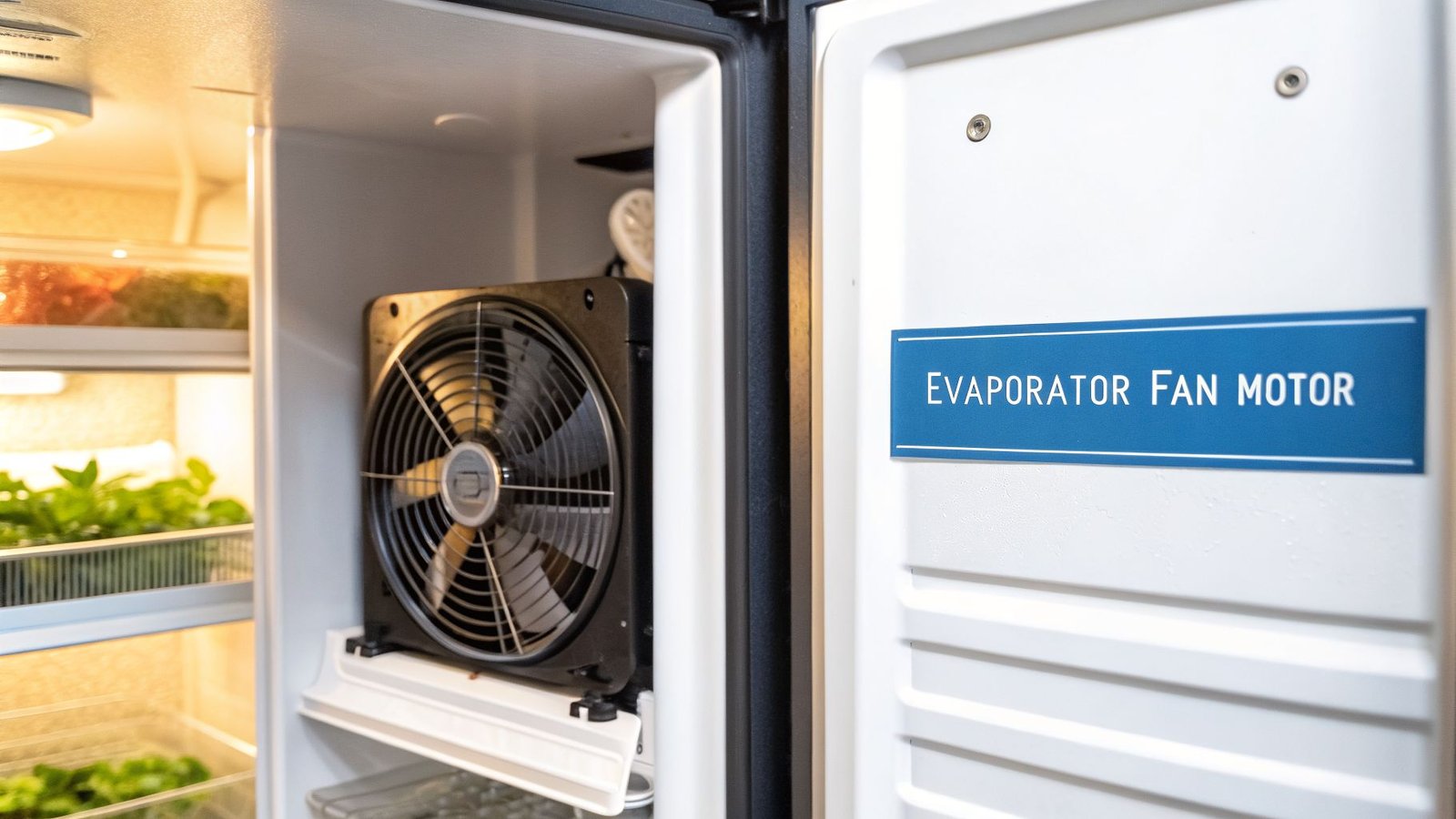
Consider the evaporator fan motor to be the central component of the air circulation system in your refrigerator. Its function is to transport the cold air to its destination rather than to produce cold. In the freezer chamber, the fan is situated behind a panel. It actively forces air through the freezer and fresh food sections by drawing it over the ice-cold evaporator coils.
The circulation system as a whole comes to a complete stop when this fan ceases working. Because your freezer is so close to the cooling source, it may remain cold, but the vital flow of chilled air to the refrigerator area stops entirely. This leads to the confusing situation that many homeowners encounter: the refrigerator doesn’t operate, but the freezer does.
A failed evaporator fan doesn’t mean your entire refrigerator is broken. It’s a specific, repairable issue that prevents cold air from circulating from the freezer to the fresh food section.
Understanding this is the first step toward a fix. While a failed fan requires attention to prevent food loss, not all cooling issues are the same. For a broader look at other potential causes, see our guide on refrigerator temperature problems.
Symptoms of a Failing Evaporator Fan Motor
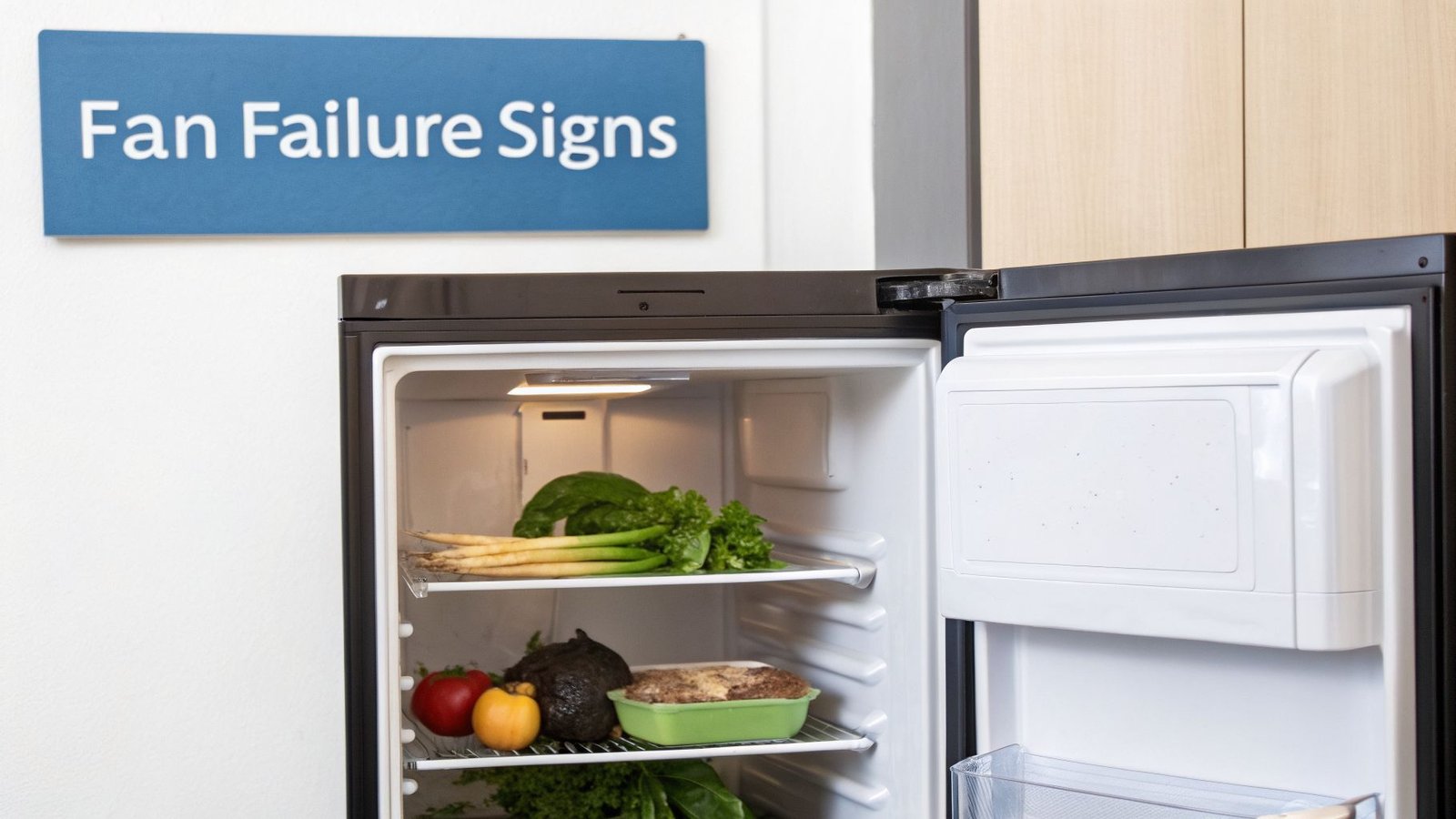
Seldom does an evaporator fan motor fail suddenly. You may prevent a refrigerator full of rotting food by learning to recognize the signs.
A temperature imbalance, where the fresh food area warms while the freezer remains cold, is the most obvious clue. The classic symptom is this. It occurs as a result of a malfunctioning fan that is meant to force frosty air from the freezer into the refrigerator.
Listen for Clues
Another serious warning sign is strange noises. A malfunctioning fan creates a fresh set of sounds, while a healthy refrigerator has a constant, quiet hum.
If you’re not sure what’s normal, our article on refrigerator sounds and noises can help you tell the difference between healthy operation and a cry for help.
When an evaporator fan is on its last legs, you’re likely to hear one of these:
- A high-pitched squealing or chirping: This usually means the motor’s internal bearings are worn out. The sound may be intermittent at first but is a sure sign of mechanical wear.
- A loud buzzing or grinding: This could mean the fan blades are hitting ice or another obstruction. It can also signal that the motor itself is seizing up.
- A constant rattling: This may indicate a loose fan assembly or a motor that is vibrating excessively as it struggles to turn.
On the other hand, silence can reveal just as much. The fan should start when you open the freezer door and press the door switch, which is a tiny plunger that turns the light off and the fan on. Total silence is a warning sign that the motor is either entirely dead or has no power.
Look for Visual Signs
Additionally, you should search your freezer for visual signals. The defrost system, which needs steady airflow to operate properly, can be interfered with by a malfunctioning evaporator fan.
The most telling visual symptom is excessive frost buildup on the back interior wall of the freezer. Without air circulating, moisture isn’t managed properly during the defrost cycle and freezes into sheets of ice around the evaporator coils and vents.
The accumulation of frost may then exacerbate the issue by physically obstructing the fan blades, further taxing a motor that is already under stress. The evaporator fan should be your first concern if you observe frost, strange noises, or uneven cooling.
Common Causes of Evaporator Fan Motor Failure
Seldom does an evaporator fan motor fail for no apparent cause. Its failure is frequently the result of years of continuous operation or a sign of an underlying problem.
Ice accumulation is one of the most frequent offenders. The evaporator coils may develop frost and ice if the refrigerator’s defrost system isn’t operating properly. The fan blades may eventually become blocked by this ice, making it impossible for them to rotate. The motor will put itself under extreme strain until it burns out as it keeps trying to turn.
The Role of Wear and Tear
Simple wear and tear wears down any mechanical component that operates continuously. Thousands of times a year, evaporator fan motors turn on and off. The internal bearings may deteriorate with time. Before the motor entirely dies, you may hear a screeching or grinding sound. The majority of these motors are made to endure between five and ten years, and their parts just reach the end of their useful lives.
Electrical and Environmental Factors
Sometimes the issue is electrical rather than mechanical. A loose wire, a corroded connection, or a fault on the main control board can cut power to the motor. In this instance, your refrigerator won’t chill if the motor doesn’t receive the start signal, even though the motor itself might be fine. Because overheating can also result in motor failure, integrated thermal overload prevention is essential to avoiding irreversible damage.
The surroundings may also be important. When a second refrigerator is stored in an uninsulated garage or a wet basement, moisture can enter into the motor’s housing and corrode electrical contacts or seize internal parts. Finding the underlying cause is essential to a long-lasting fix.
How to Safely Troubleshoot the Problem
Before calling a professional, there are a few safe diagnostic checks you can perform to help confirm if the evaporator fan motor is the issue.
Prioritize safety by unplugging the refrigerator from the wall outlet before doing any internal inspections. In order to avoid electrical shock, this is the most crucial step.
The Door Switch Test
A tiny plunger-style switch in the door frame of your refrigerator is designed to turn off the evaporator fan when the door is opened. This can be used for a brief test.
The refrigerator must be plugged in for this check only. Find the switch by opening the freezer door. Hold it down while pressing. The motor is probably operational if you hear the fan start. A malfunctioning door switch could be the issue, which would be easier to resolve.
This flowchart can help you visualize the next steps based on what you hear.
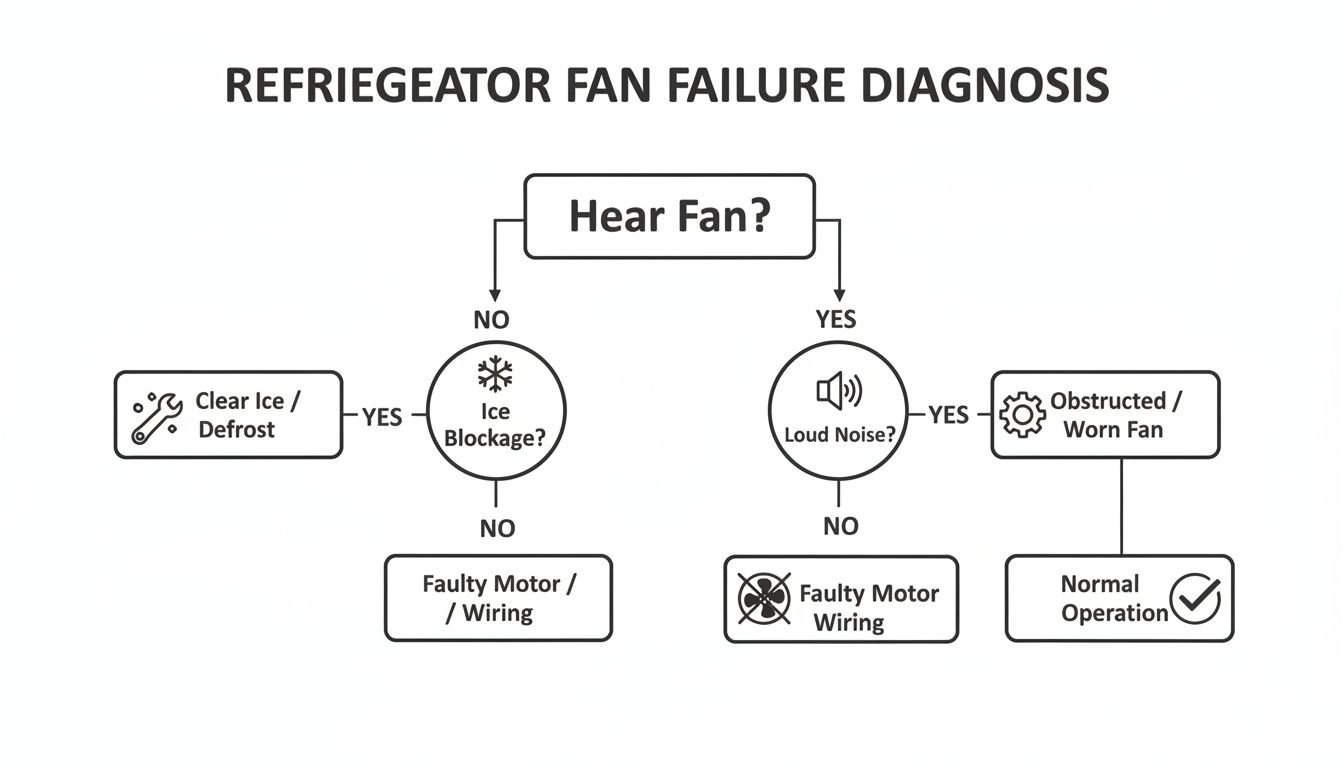
As the chart indicates, hearing the fan suggests issues like worn bearings causing noise. Hearing nothing points to a blockage, an electrical issue, or a failed motor.
The Manual Spin Test
It’s time for a more thorough examination if the door switch test produced quiet. Before continuing, make sure the refrigerator is unplugged once more.
The evaporator fan, which is situated behind a panel at the back of the freezer, must be accessed. The procedure for removing this panel differs according on the brand and model, therefore refer to your owner’s manual.
Once you can see the fan, follow these steps:
- Check for Obstructions: Look for ice buildup or frost that might be physically blocking the fan blades.
- Gently Spin the Blades: With your finger, give the fan blades a light push. They should spin smoothly for a few rotations.
- Feel for Resistance: Pay close attention to any stiffness, grinding, or resistance to movement.
You’ve probably identified the issue if the fan seems rigid or won’t move at all. The motor might be frozen in ice or it might have seized. The problem is most likely electrical if the motor never operates but the blades spin freely.
For most homeowners, this is the point where DIY troubleshooting should stop. Diagnosing electrical parts like the motor or control board without proper tools and training is dangerous. If you’ve completed these checks and the problem persists, it’s time to call a professional.
For more general advice, our guide on how to fix a refrigerator that is not cooling offers additional steps. While these tips cover most household fridges, RV owners might face different issues.
When to Call a Professional Technician
A crucial component of any do-it-yourself appliance repair is understanding your limitations. Certain symptoms are a strong indication to halt and seek professional assistance, even though simple tests can aid in the diagnosis. Without the proper training, a little problem could become a major, costly repair or pose a major risk to public safety.
An electrical problem is most likely if the fan spins easily by hand but never activates while the refrigerator is operating. A dead motor, a broken wire, or an issue with the main control board could be the cause. It takes specialist meters and an understanding of appliance circuitry to trace these electrical routes.
When DIY Becomes Dangerous
Finding the evaporator fan covered in a thick block of ice is another indication that you’re in over your head. A significant ice accumulation suggests a more complicated defrost system failure, although a little frost is typical. This system consists of several parts, such as a timer or control board, thermostat, and defrost heater. A chain reaction could result from any one of these components failing.
Attempting to fix an electrical issue or a systemic defrost failure without professional knowledge is not recommended. Mishandling live wires can cause electric shock, and an incorrect diagnosis will only lead to recurring failures.
If you simply replace a burnt-out fan motor without fixing the underlying cause of the ice buildup, the new motor will likely fail in a short time, and you’ll be back where you started. To understand the risks, you can learn more about whether it is safe to repair your own appliances in our detailed guide.
Trust the Experts for a Lasting Repair
An experienced technician has the diagnostic tools and expertise to safely trace electrical faults and resolve complex defrost system issues. They can correctly identify the root cause and ensure the repair is done right the first time. For help with your repair, consider a refrigerator repair.
Don’t risk your safety or a more expensive repair down the line; let a certified professional handle it.
Frequently Asked Questions
Have questions about your evaporator fan motor? Here are answers to some of the most common questions from homeowners.
How Much Does It Cost To Replace an Evaporator Fan Motor?
The final cost depends on your refrigerator’s brand and model. However, replacing an evaporator fan motor is almost always a cost-effective repair compared to buying a new refrigerator. For a precise estimate based on your specific appliance, it’s best to have a technician diagnose the problem.
Can I Use My Refrigerator If the Evaporator Fan Is Broken?
It is strongly advised against it. While the freezer may stay cold for a short time, the fresh food section will warm up quickly, putting your food at risk of spoilage. Running the refrigerator with a broken fan also forces the compressor to work harder, which can lead to a more serious and expensive failure. It is best to unplug the unit and call for a repair.
How Long Does an Evaporator Fan Motor Replacement Take?
For an experienced technician, this is a quick job. The entire repair, including diagnosis, replacement, and testing, is often completed in about an hour. Since reputable service companies stock common parts, the replacement can usually be done on the same day.
Is a Noisy Fan Always a Sign of Failure?
Not always, but it is a sign that something is wrong. Squealing or grinding sounds often mean the motor bearings are worn or something is hitting the fan blades. Even if the fan is still moving air, the noise is a warning. It is better to have it inspected before the motor fails completely, leaving you with a warm refrigerator.
Don’t let a faulty fan lead to spoiled food and a bigger repair bill. If you need help, the experts at Advance Appliance Ltd offer same-day service to get your refrigerator running again. Book your repair online or call us today!